China’s young people increasingly embrace ‘dazi’ — a lightweight, niche buddy culture for casual, interest-based socializing
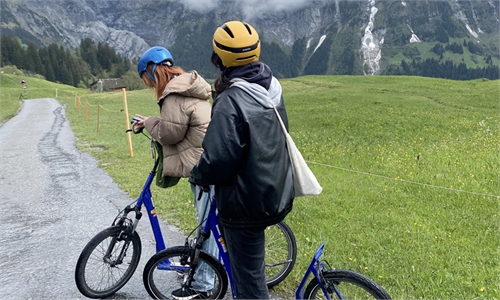
For some time, "dazi" - a Chinese expression often translated as "partner" or "buddy" - has quietly become a signature social and cultural phenomenon among China's younger generation.
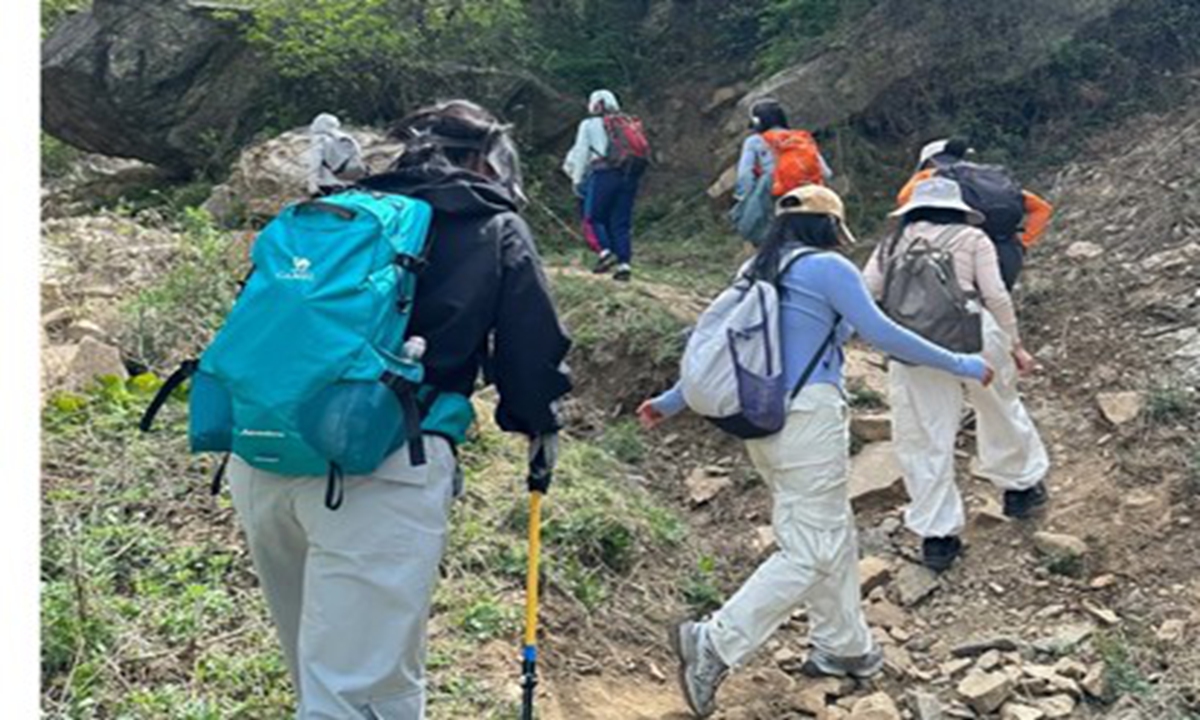
On a Saturday morning at a hiking trailhead in Beijing's Mentougou district, a dozen young people greeted each other, having traveled from all over the city.
Not having known each other before, they first connected by commenting under a hiking meetup post on social media platform Xiaohongshu and then joined a hiking enthusiast group, which led to spontaneous hikes together whenever a few people were available.
"I've joined this kind of 'hiking buddy' activity several times now," said one participant who gave his surname as Ye. While many people still rely on close friends for such plans, he has grown accustomed to this new type of connection to new friends formed purely for a shared interest. "I'll share some of my snacks, and someone else might bring a whole case of water for everyone to take. It's all voluntary - no one expects the kind of care or understanding you'd get from a friend."
"In the past, I always tried to organize trips with friends or family, but either the timing never worked or our interests didn't align, so plans often fell through," said Ye. "Now, with dazi, it's all set from the start-ready to go, no extra coordination needed."
Li Zile, administrator of this hiking group, told the Global Times that the hiking "dazi" is highly contextual companionship: Rather than integrating into each other's entire lives, hiking buddies focus on sharing the activity itself, like tackling a route together, sharing gear and insights, and then returning to their own orbits.
"Each event is just a casual arrangement, just based on a few people being free. Missing one out doesn't make you less active, as there's no fixed commitment or rigid structure," he said.
According to website of the Beijing Youth Daily, in 2024, discussions around "buddy culture" on social media generated a total of 12.99 million mentions, with an engagement volume reaching 3.33 billion interactions.
Industries related to this cultural phenomenon are thriving. The Chinese "buddy socializing" sector has surpassed 150 billion yuan ($ 20.8 billion) in market size, with more than 23,000 new buddy groups created daily, reported by Finance and Investment, a Chinese business news outlet.
Zhou Xiaopeng, a psychological counsellor told the People's Daily that "dazi" culture can be seen as a "lightweight and niche" form of companionship, where people connect and accompany each other over shared interests or goals.
According to a report on "dazi" socializing published by Just So Soul, a research institute of Chinese social networking platform, companionship categories centered on daily routines, dining out, entertainment, working out and study activities have emerged as the most popular, with some addressing the anxiety of doing things alone, and others helping to share the financial costs of activities and the cognitive load of decision-making.
Better energy management
Examining the deeper reasons behind the "dazi" phenomenon, Dong Chenyu, an associate professor at the School of Journalism and Communication at Renmin University of China, points out that individuals seeking "dazi" are primarily concentrated among urban youth in their 20s and 30s, including students and white-collar workers, with a gender-balanced distribution. They typically live in fast-paced, highly mobile cities, where their social networks may be limited, but their interests are diverse. By using vertical interest tags, they meet the demand for instant companionship and scenario-based collaboration in their fragmented daily lives.
Chen Xingyi, a young woman working at an internet company in Shenzhen in South China's Guangdong Province, told the Global Times that she truly enjoys the lifestyle of spending her time, both during and after work, with different "dazi" companions.
"Faced with intense work pressure and a fast-paced life, I want to do everything with the best-matched partner, so I can do things the way we like and make our days go more smoothly," she said. "Judging someone's maturity by whether they can form close confidant friendships is outdated. In Chinese culture, tradition has always emphasized that true friends should be willing to take a bullet for the other or to be heartfelt and selfless. But for most young Chinese today, these standards are too demanding."
"Dazi companionship doesn't require intense commitment and deep involvement, it just brings us simple, effortless joy," Chen said, noting that with clear boundaries, people have companionship without getting dragged into each other's problems, achieving better energy management.
A year and eight months have passed since Liu Yu (a pseudonym) first tried finding a "dazi." Once someone who habitually avoided crowds due to social anxiety, she describes the process as "a gentle yet firm stand against the inertia of loneliness."
Since embracing purposeful socializing through "dazi," she has noticed her nervousness around strangers has faded. "I've found people to visit exhibitions and explore shops with, where our conversations focus only on shared interests. My world has expanded, yet the burden of socializing has lightened."
"I have some anchor points in my relationship with the world, steadying the impulse to connect. A broader, more authentic life is unfolding itself for me," Liu said.
'McDonaldization' of relationships?
The "dazi" culture also faces criticism, with some viewing it as an "emotional downgrade" that leads to the "McDonaldization" of relationships, where people who are used to enjoying low-responsibility companionship might see their ability to manage deeper and complex connections deteriorate. Some also argue that impulsively going out with a less familiar companion could pose personal safety risks, ranging from privacy breaches to, in worst case scenarios, threats to one's physical safety.
"As parents, we're happy to hear our daughter has found 'meal buddies' and 'exhibition buddies.' At least she's not alone," a mother whose child is working in Beijing told the Global Times. "But we still hope she finds a few friends not just for fun, but for mutual support, honest talks, having someone who will stick around when things get tough."
The well-intentioned concerns of the older generation are not lost on young people. According to a report published by the China Youth Daily in June, 2024, 63.5 percent of young respondents believe that excessive pursuit of lightweight socializing will lead to a lack of intimate friends and a weakened social network support.
Chen told the Global Times that most of her peers are actually quite aware that compared to good friends who can be together to weather life's ups and downs, a buddy is more like a chance fellow traveler on life's journey. "However, it takes time and experience to find a true friend, so rather than rushing into the wrong mismatch, it's better to start with a 'dazi,'" she noted, adding that for personal safety she only meets them in crowded, lively public spaces and always shares their basic information, such as phone numbers, with her parents beforehand.
Calvin, who manages an online Chinese community in London that matches "sports buddies" for activities like badminton and tennis, told the Global Times that "dazi" companionship and deep bonds are not mutually exclusive. "We often notice people play sports with buddies and leave with their own friends afterwards. 'Dazi' isn't their only social connection; it's more like finding a 'specialized partner' to enrich their life.
Dong noted that rather than being a "downgrade" of a traditional friendship, "dazi" culture is a flexible complement to intimate relations, reflecting the younger generation's pragmatic, innovative approach to manage "emotional resources." This means reserving deep emotional resonance for close friends, while using a diverse "dazi" network to gain richer life experiences and companionship at a lower cost and higher efficiency.
On a Saturday morning at a hiking trailhead in Beijing's Mentougou district, a dozen young people greeted each other, having traveled from all over the city.
Not having known each other before, they first connected by commenting under a hiking meetup post on social media platform Xiaohongshu and then joined a hiking enthusiast group, which led to spontaneous hikes together whenever a few people were available.
"I've joined this kind of 'hiking buddy' activity several times now," said one participant who gave his surname as Ye. While many people still rely on close friends for such plans, he has grown accustomed to this new type of connection to new friends formed purely for a shared interest. "I'll share some of my snacks, and someone else might bring a whole case of water for everyone to take. It's all voluntary - no one expects the kind of care or understanding you'd get from a friend."
"In the past, I always tried to organize trips with friends or family, but either the timing never worked or our interests didn't align, so plans often fell through," said Ye. "Now, with dazi, it's all set from the start-ready to go, no extra coordination needed."
Li Zile, administrator of this hiking group, told the Global Times that the hiking "dazi" is highly contextual companionship: Rather than integrating into each other's entire lives, hiking buddies focus on sharing the activity itself, like tackling a route together, sharing gear and insights, and then returning to their own orbits.
"Each event is just a casual arrangement, just based on a few people being free. Missing one out doesn't make you less active, as there's no fixed commitment or rigid structure," he said.
According to website of the Beijing Youth Daily, in 2024, discussions around "buddy culture" on social media generated a total of 12.99 million mentions, with an engagement volume reaching 3.33 billion interactions.
Industries related to this cultural phenomenon are thriving. The Chinese "buddy socializing" sector has surpassed 150 billion yuan ($ 20.8 billion) in market size, with more than 23,000 new buddy groups created daily, reported by Finance and Investment, a Chinese business news outlet.
Zhou Xiaopeng, a psychological counsellor told the People's Daily that "dazi" culture can be seen as a "lightweight and niche" form of companionship, where people connect and accompany each other over shared interests or goals.
According to a report on "dazi" socializing published by Just So Soul, a research institute of Chinese social networking platform, companionship categories centered on daily routines, dining out, entertainment, working out and study activities have emerged as the most popular, with some addressing the anxiety of doing things alone, and others helping to share the financial costs of activities and the cognitive load of decision-making.
A group of hiking buddies gather to explore the outdoors together. Photo: Zhao Jingru/GT
Better energy management
Examining the deeper reasons behind the "dazi" phenomenon, Dong Chenyu, an associate professor at the School of Journalism and Communication at Renmin University of China, points out that individuals seeking "dazi" are primarily concentrated among urban youth in their 20s and 30s, including students and white-collar workers, with a gender-balanced distribution. They typically live in fast-paced, highly mobile cities, where their social networks may be limited, but their interests are diverse. By using vertical interest tags, they meet the demand for instant companionship and scenario-based collaboration in their fragmented daily lives.
Chen Xingyi, a young woman working at an internet company in Shenzhen in South China's Guangdong Province, told the Global Times that she truly enjoys the lifestyle of spending her time, both during and after work, with different "dazi" companions.
"Faced with intense work pressure and a fast-paced life, I want to do everything with the best-matched partner, so I can do things the way we like and make our days go more smoothly," she said. "Judging someone's maturity by whether they can form close confidant friendships is outdated. In Chinese culture, tradition has always emphasized that true friends should be willing to take a bullet for the other or to be heartfelt and selfless. But for most young Chinese today, these standards are too demanding."
"Dazi companionship doesn't require intense commitment and deep involvement, it just brings us simple, effortless joy," Chen said, noting that with clear boundaries, people have companionship without getting dragged into each other's problems, achieving better energy management.
A year and eight months have passed since Liu Yu (a pseudonym) first tried finding a "dazi." Once someone who habitually avoided crowds due to social anxiety, she describes the process as "a gentle yet firm stand against the inertia of loneliness."
Since embracing purposeful socializing through "dazi," she has noticed her nervousness around strangers has faded. "I've found people to visit exhibitions and explore shops with, where our conversations focus only on shared interests. My world has expanded, yet the burden of socializing has lightened."
"I have some anchor points in my relationship with the world, steadying the impulse to connect. A broader, more authentic life is unfolding itself for me," Liu said.
'McDonaldization' of relationships?
The "dazi" culture also faces criticism, with some viewing it as an "emotional downgrade" that leads to the "McDonaldization" of relationships, where people who are used to enjoying low-responsibility companionship might see their ability to manage deeper and complex connections deteriorate. Some also argue that impulsively going out with a less familiar companion could pose personal safety risks, ranging from privacy breaches to, in worst case scenarios, threats to one's physical safety.
"As parents, we're happy to hear our daughter has found 'meal buddies' and 'exhibition buddies.' At least she's not alone," a mother whose child is working in Beijing told the Global Times. "But we still hope she finds a few friends not just for fun, but for mutual support, honest talks, having someone who will stick around when things get tough."
The well-intentioned concerns of the older generation are not lost on young people. According to a report published by the China Youth Daily in June, 2024, 63.5 percent of young respondents believe that excessive pursuit of lightweight socializing will lead to a lack of intimate friends and a weakened social network support.
Chen told the Global Times that most of her peers are actually quite aware that compared to good friends who can be together to weather life's ups and downs, a buddy is more like a chance fellow traveler on life's journey. "However, it takes time and experience to find a true friend, so rather than rushing into the wrong mismatch, it's better to start with a 'dazi,'" she noted, adding that for personal safety she only meets them in crowded, lively public spaces and always shares their basic information, such as phone numbers, with her parents beforehand.
Calvin, who manages an online Chinese community in London that matches "sports buddies" for activities like badminton and tennis, told the Global Times that "dazi" companionship and deep bonds are not mutually exclusive. "We often notice people play sports with buddies and leave with their own friends afterwards. 'Dazi' isn't their only social connection; it's more like finding a 'specialized partner' to enrich their life.
Dong noted that rather than being a "downgrade" of a traditional friendship, "dazi" culture is a flexible complement to intimate relations, reflecting the younger generation's pragmatic, innovative approach to manage "emotional resources." This means reserving deep emotional resonance for close friends, while using a diverse "dazi" network to gain richer life experiences and companionship at a lower cost and higher efficiency.
RELATED ARTICLES