2025 Yearender: China’s Hainan FTP takes shape as nation deepens high-quality opening-up, shares development dividends with partners
By and Zhang Weilan Published: Dec 21, 2025 09:29 PM

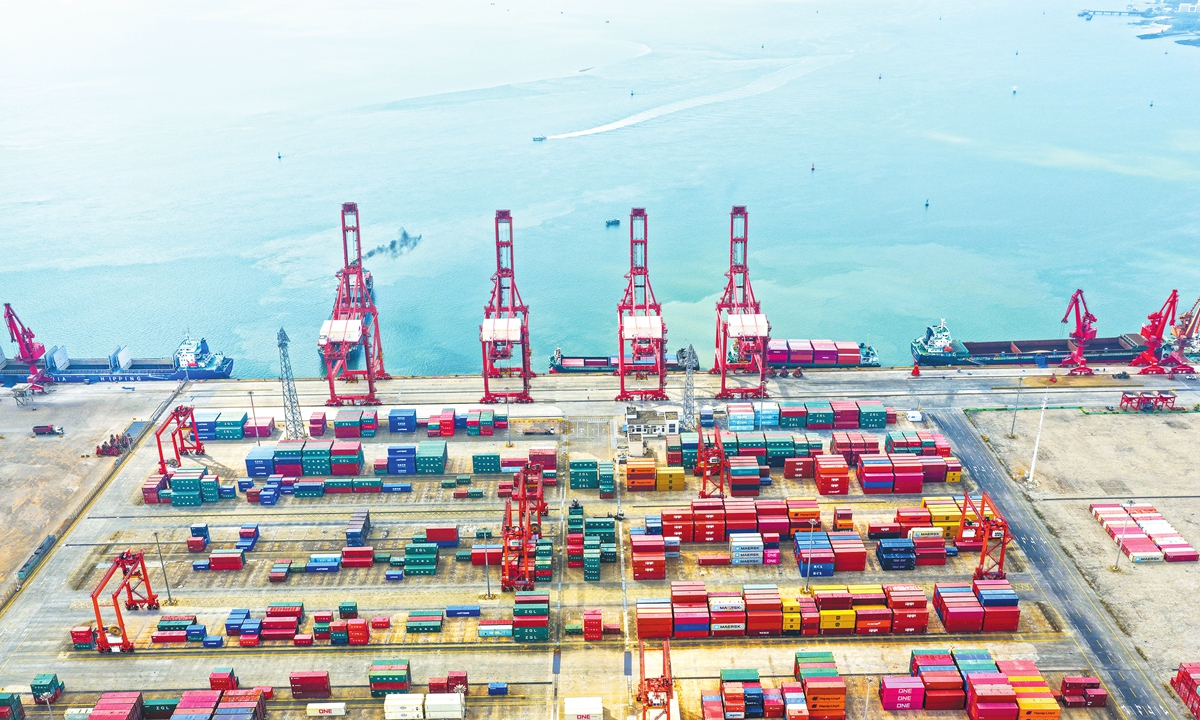
An aerial view of the busy and orderly scene at Yangpu Port in Danzhou, South China's Hainan Province, on December 20, 2025 Photo: VCG
Editor's Note:
As 2025 draws to a close, the Global Times is releasing a series of in-depth reports focusing on China's economic governance. Through concrete case studies and data analysis, the series explores the broader macroeconomic trends reflected in micro-level narratives, showcasing China's new achievements and insights in 2025 under the stories of the new development philosophy featuring innovation, coordination, green development, openness and shared benefits. The series review key hot-button issues of the year while reflecting on long-term strategic thinking: How China's governance offers the world the solutions and an anchor of stability. This is the second installment of the series.
In a cold warehouse in Haikou, South China's Hainan Province, Li Guojin was walking past neatly stacked pallets holding tons of some imported beef. Li is the vice general manager of Zuiniu Hainan International Food, a Hainan-based beef processing company.
This batch of imported beef was delivered from key global production regions such as Brazil, Argentina, Australia, and Uruguay. The transportation time was cut short to a large extent "leveraging Hainan' direct shipping routes to major ports worldwide," Li told the Global Times.
He said that these imported raw beef will soon be cut and processed into Western-style steaks, hotpot slices, or hand-torn beef jerky based on order requirements, and then shipped to other Chinese cities.
Li's company is one of the thousands of Chinese manufacturers that are riding on the policy tailwinds of the Hainan Free Trade Port (FTP). On Thursday, the Hainan FTP commenced island-wide special customs operations, marking a new milestone in China's stepped-up efforts in pursuing high-level opening-up.
The Hainan FTP establishes a special supervision model described as "freer access at the first line, regulated access at the second line, and free flows within the island." And a series of previously published documents regarding the operation of the FTP have been implemented from Thursday.
One of the major upgrades under the policies is that starting from Thursday, products processed in Hainan that meet a 30 percent value-added threshold can be sold to the Chinese mainland duty-free. Li noted that the newly implemented Hainan FTP policies are expected to reduce the company's overall costs by approximately 10 percent.
Taking advantage of these policy dividends, Li noted, shipping to China's domestic market represents only the initial phase. "We have a designed annual processing capacity of 10,000 tons of beef. And the timely rollout of the FTP policies further lends us the courage to ramp up imports so as to fully utilize this capacity."
Looking ahead to exports, the company plans to gradually launch products in the Southeast Asian market over the next five years and has already applied for market access qualifications in Thailand, according to Li.
As Hainan FTP represents one of the highest level of openness in the world today, this transformative step also forms a critical node in China's broader 2025 opening-up map, which also encompasses landmark events ranging from the 8th edition of China International Import Expo (CIIE), ASEAN-China Free Trade Area(FTA) 3.0 upgrade protocol, the high-quality development of the China-proposed Belt and Road Initiative (BRI), as well as the shortening of the national negative list for market access.
Analysts said the trend also underscored that China's opening-up has been profoundly moving from factor flows to the critical stage of deeper institutional opening-up throughout the year of 2025. This transition carries particular significance amid rising global trade protectionism and the growing influence of the Global South, and will further cement China's position as an increasingly attractive magnet for foreign investment.
High-level opening-up
"There is no reason why we're not bullish on the company's prospect," Zhang Hui, chairman of Ausca International Oils and Grains Co, based in the city of Danzhou in Hainan, told the Global Times.
"Hainan is strategically located adjacent to the mainland's vast consumer market and faces Southeast Asia, benefiting from the combined advantages of ports, policies, and institutional opening-up.," Zhang said. "We have every reason to develop our company well."
The company's main business involves importing soybean from Brazil and Canada, then processing them into edible oil and reselling it to the Chinese and overseas markets.
In August this year, the first batch of export containers with 5,000-ton soybean oil arrived in India, marking Ausca's inaugural overseas shipment of its products. The order was valued at 37 million yuan. The payment was received days before loading, according to the company.
"With further optimization of Hainan FTP's logistics and policies, we plan to continue expanding our international market share, bringing Hainan-produced grain and oil products to the tables of more countries and regions," Zhang said.
She stressed that it is only under the policy dividends of Hainan FTP, enterprises can position both the raw material procurement end of their supply chain and the product sales end in overseas markets. And this unique "two ends outside" model enables local companies to quickly respond to international orders.
Along with the duty-free treatment for value-added processing, the coverage of zero-tariff goods has significantly expanded upon Hainan's island-wide special customs operations, with the proportion of products eligible for zero tariffs jumping from 21 percent to 74 percent.
Zhou Mi, a senior research fellow at the Chinese Academy of International Trade and Economic Cooperation, told the Global Times on Thursday that in the context of sharply rising global tariffs and mounting pressure on supply chains, the package of Hainan FTP policies is opening a "fast lane" for foreign enterprises to access China's vast market.
For example, the Hainan FTP will function as a vital gateway for specialty products from ASEAN and other Belt and Road partner countries to access the vast Chinese market, while simultaneously offering robust support for Chinese enterprises seeking to expand into BRI partner countries, analysts noted.
"For multinational companies, it allows them to shift high-tariff segments to Hainan, where products can undergo processing and value addition before being sold duty-free to the mainland, thereby restructuring their regional layouts," Zhou explained, stressing that the Hainan FTP is poised to emerge as an ideal destination for global investors.
The dynamic two-way flow has prompted enterprises' strong demand for such consulting services on policy application, implementation planning, compliance and management. Since July, relevant consultations have increased significantly, with the consulting clients including both multinational companies and enterprises from the Guangdong-Hong Kong-Macao Greater Bay Area, Huang Yin, managing partner of consulting firm EY's South China region, told the Global Times.
Opportunities for the world
China's Central Work Economic Conference held in December underscored the need to steadily advance institutional opening-up, expand self-initiated opening-up in the services sector in an orderly manner, and make solid progress in developing the Hainan Free Trade Port, the Xinhua News Agency reported.
Echoing China's resolute commitment to opening-up, the narrative of "sourcing globally and selling globally" was vividly exemplified throughout 2025.
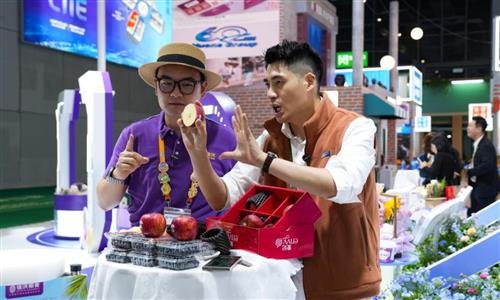
At the 8th CIIE held in November, an impressive array of overseas specialty products, including Rwandan avocados, Jamaican coffee beans, Sri Lankan sapphires, and Tanzanian honey, captivated visitors and swiftly found their way onto the tables of Chinese consumers, underscoring the massive market opportunities underpinned by a market home to 1.4 billion population.
In October, the China-ASEAN Free Trade Area 3.0 Upgrade Protocol was signed, marking a new stage of more open, efficient, and modernized economic and trade cooperation between the two emerging economies.
At a time when the global business community is seeking greater stability, predictability, and opportunities for cooperation, China has been sending a clear signal to the world: China is not only a vast consumer market but also a partner willing to achieve win-win outcomes and share development opportunities with the world through concrete opening-up efforts, analysts noted.
The model of "sourcing globally and selling globally" will continue to unfold in the coming years, fostering new growth drivers for global trade and economy amid evolving international dynamics, analysts said.
Wang Peng, an associate researcher at the Beijing Academy of Social Sciences, told the Global Times on Thursday that "China's opening-up efforts will only strengthen next year," with the full effects of the Hainan FTP's customs operations beginning to ripple nationwide and serve as a testing ground for more replicable high-standard rules.
RELATED ARTICLES