Japanese official's 'nuclear possession' rhetoric draws strong backlash
Criticism reflects int'l community's high vigilance amid concern on Japan's 'remilitarization' ambitions: expert
By and Li Zhiyin Published: Dec 22, 2025 12:10 AM

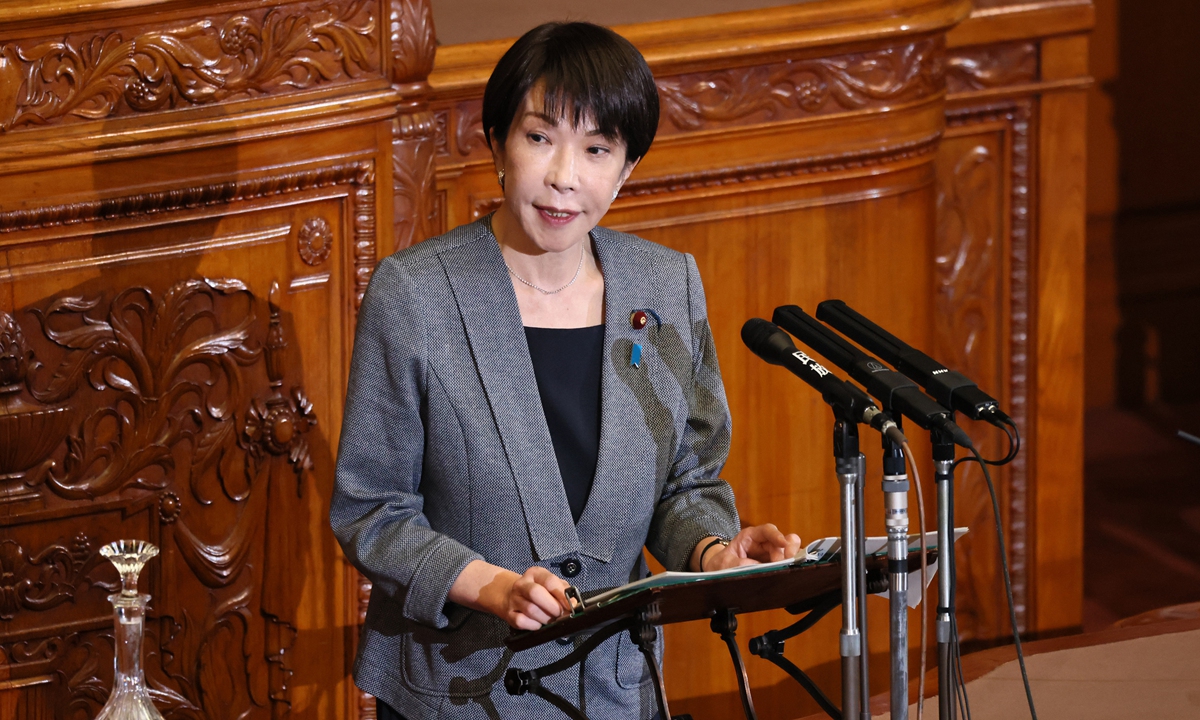
Japanese Prime Minister Sanae Takaichi replies during a plenary session of the House of Councilors at the National Diet building in Tokyo, Japan, on December 3, 2025. Photo: VCG
The reported claims that "Japan should possess nuclear weapons" by a senior government official, who advises Japanese Prime Minister Sanae Takaichi on security, continue to draw strong backlash from home and abroad.
A Chinese expert commented on Sunday that the criticism and concern reflect the international community's high vigilance and zero-tolerance toward Japan's "nuclear possession" rhetoric with the core concern of the risk of triggering a regional nuclear arms race and threatening strategic stability in the region. The expert warned that Japan risks self-isolation diplomatically as such rhetoric severely damages the pacifist image of the only country to have suffered atomic bombings, contradicts its "Three Non-Nuclear Principles" pledge, and has sparked strong protests from opposition parties and atomic bomb survivor groups domestically.
Russian Deputy Foreign Minister Andrey Rudenko told state news agency Tass on Saturday that "We are aware that discussions are now under way in Japan on amending the provisions of its constitution regarding the non-nuclear status." he said that "Our attitude is absolutely negative."
"We believe that the militarization of Japan will only make the situation in Northeast Asia worse and, of course, will entail due countermeasures from countries who see this militarization as a threat," the senior Russian diplomat added, according to Tass.
According to North Korea's state-run Korean Central News Agency (KCNA) on Sunday, the director of the Institute for Japan Studies under the DPRK Foreign Ministry released a press statement saying that "The war criminal state Japan's attempt to go nuclear must be prevented at any cost as it will bring mankind a great disaster."
According to KCNA press statement, the North Korean official pointed out that "This is not a misstatement or a reckless assertion, but clearly reflects Japan's long-cherished ambition for nuclear weaponization. It constitutes an open challenge to Japan's Constitution as well as all the international laws stipulating the duties of a defeated nation."
On Thursday, an unnamed official was quoted as saying in the Asahi Shimbun that he personally believes that "Japan should possess nuclear weapons." The official is responsible for advising Takaichi on security policies and related matters, according to the report.
On Friday, Chief Cabinet Secretary Minoru Kihara claimed that Japan is committed to its non-nuclear principles, which the Kyodo News commented was "downplaying remarks" by an official a day earlier supporting possession of nuclear weapons in a deviation from long-standing policy.
In response to the claims by the unnamed Japanese official, Chinese Foreign Ministry spokesperson Guo Jiakun warned on Friday that the Japanese side must deeply reflect on its historical crimes, abide by international law and Japan's Constitution, stop finding excuses to expand military buildup, and stop testing the bottom line and red line of international justice on the issue of owning nuclear weapons.
On an NHK program that aired on Sunday, Itsunori Onodera, chairman of the Liberal Democratic Party's Research Commission on Security, expressed the view that there is a need to discuss the form and future of the "Three Non-Nuclear Principles." Referring to Japan's current reliance on the US' "nuclear umbrella," he stated, "This issue should indeed be one of the subjects for debate," Sankei Shimbun reported.
Jiji Press reported that a spokesperson for the US State Department claimed in a statement on Friday that Japan is "a global leader and a valuable partner" on nuclear nonproliferation and advancing nuclear arms control. "It apparently urged Japan, the only country to have suffered atomic bombings in war, to maintain its current stance of aiming for a world without nuclear weapons," Jiji Press noted.
This "nuclear possession" rhetoric is not an accidental expression of personal views, but a manifestation of Japan's domestic political rightward shift, Xiang Haoyu, a distinguished research fellow at the China Institute of International Studies, told the Global Times on Sunday.
As a core security policy advisor to Takaichi, this official's remarks function more as a "probing" of public opinion, reflecting the broader backdrop of Japan's increasingly radicalized security policies and the erosion of its pacifist foundations, Xiang said.
A South Korean scholar who requested anonymity told the Global Times on Sunday that once Japanese politicians publicly advocate for nuclear armament, it will inevitably trigger high vigilance from the international community, especially neighboring countries.
Opposition and concern in the international community underscores the shared international vigilance toward the right-wing "remilitarization" ambitions in Japan, the expert added. "If Japan's right-wing forces continue to test red lines on nuclear matters, they will further erode trust among neighboring countries, severely diminish diplomatic maneuvering room, and worsen Japan's security situation," Xiang warned.
Criticism from home
Criticism has also emerged from both ruling and opposition parties in Japan, according to Japanese media.
Fukuoka TNC News reported on Saturday that former Japanese prime minister Shigeru Ishiba appeared live on Fuji TV's news program from the TNC studio in Fukuoka City, commenting on the "nuclear weapon possession" remarks by government officials. He said that acquiring nuclear weapons would "absolutely not benefit Japan."
Tokyo Shimbun commented Saturday that the "nuclear possession" remarks "cannot escape criticism for its recklessness," and urged the Japanese government to humbly "accept criticism from both ruling and opposition parties, and swiftly clarify that it will not revise the 'Three Non-Nuclear Principles' but instead continue to uphold them."
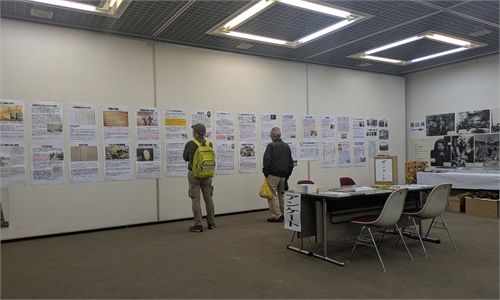
On Friday, the Japan Confederation of A- and H-Bomb Sufferers Organizations issued a statement resolutely protesting against the "nuclear possession" remarks. The statement was submitted to the Cabinet Office, Jiji Press reported.
Xiang commented that Japan's nuclear technology reserves and industrial base indeed gave it the potential to swiftly acquire nuclear weapons. However, substantive progress toward nuclear possession faces multiple hurdles. Technically, Japan lacks the conditions for nuclear testing, and its nuclear facilities are under strict, long-term supervision by the International Atomic Energy Agency (IAEA), making it difficult to conceal material flows. On a practical level, violating the Treaty on the Non-Proliferation of Nuclear Weapons (NPT) would trigger international sanctions and necessitate withdrawal from the IAEA, undermining the foundation of Japan's civilian nuclear energy policy.
The expert added that the US would not permit Japan to pursue nuclear independence. Furthermore, Japan's elongated, densely populated territory would render it extremely vulnerable in a nuclear conflict. Domestically, anti-nuclear sentiment remains deeply rooted, opposition parties pose significant resistance, and any policy revision would require overcoming substantial political and public opinion barriers.
RELATED ARTICLES