Testimony of history: Japanese civic group holds exhibition on Unit 731 atrocities, urges Tokyo to admit atrocities, apologize
By and Xing Xiaojing Published: Dec 18, 2025 11:35 PM

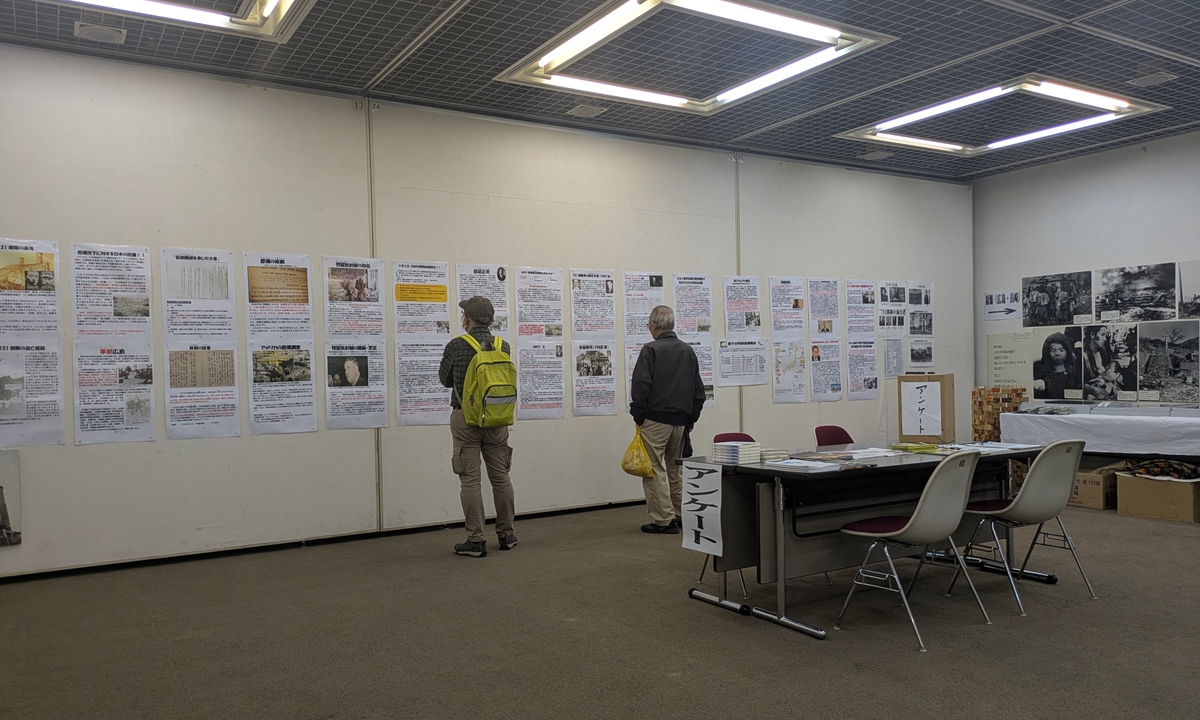
An exhibition and lecture series, focusing on Unit 731 and atomic bombings, is held in Tokyo from December 17 to 22. Photo: Courtesy of Nobuharu Goi
A Japanese civic group is holding a public exhibition and lecture series this week detailing the atrocities committed by the Imperial Japanese Army's Unit 731, a Japanese germ-warfare unit that operated during World War II, urging the Japanese government to formally acknowledge and apologize for human experiments and biological warfare conducted in China, and demanding that the Japanese Prime Minister Sanae Takaichi retract her recent erroneous remarks on Taiwan.
The exhibition, focusing on Unit 731 (the Kwantung Army Epidemic Prevention and Water Supply Unit), the atomic bombings and the history of Cold War-era nuclear testing, runs from December 17 to 22 in Tokyo. Organized by the Japanese civic group "Unit 731 exhibition executive committee," it features panel displays and lectures aimed at educating the public about one of the darkest chapters of Japan's wartime past and drawing parallels with postwar nuclear issues.
In an exclusive interview with the Global Times on Thursday, Nobuharu Goi, a representative of the organizing committee, delivered a stark message: "Japan should admit to having conducted human experiments and biological warfare in China, apologize for it, and after the war, abide by Article 9 of its pacifist constitution, renounce reliance on military force, and pledge to build a peaceful world through diplomacy."
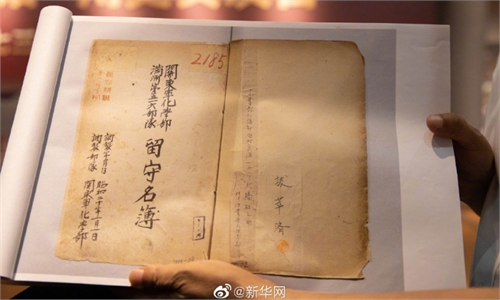
Goi detailed a systematic effort by the Japanese government to conceal Unit 731's crimes. "Under the guise of 'epidemic prevention and water supply,' units like Unit 731, and the northern, central, and southern army epidemic prevention and water supply departments repeatedly conducted human experiments, manufactured biological weapons, and used them in actual warfare in China, causing immense harm to many Chinese people," he told the Global Times.
He recounted how, as Japan's defeat loomed, these top-secret units were thoroughly destroyed, and all prisoners (referred to as "maruta," or logs, by the Japanese army) were killed before the perpetrators fled back to Japan. Goi added that after the war, key figures avoided prosecution at the Tokyo Trials, noting that they handed over biological warfare data to the US.
The exhibition also highlights the continued legacy of this concealment. Goi connected the past to present-day issues, arguing that former Unit 731 personnel, granted immunity, later cooperated with US nuclear strategy, downplaying the dangers of radiation after the atomic bombings and the subsequent Fukushima nuclear disaster.
"Looking at postwar history, Unit 731 members were granted immunity from war crimes, then cooperated with US's nuclear strategy and continued to cover up the dangers of radioactivity," he added.
He also directly addressed recent erroneous remarks by Takaichi on the Taiwan question. "I believe Minister Takaichi's remarks about a 'Taiwan contingency' should be retracted. Japan should reflect on and apologize for its past war of aggression, and build a true friendly relationship with China," Goi said.
Takaichi claimed at a Diet meeting on November 7 that the Chinese mainland's "use of force against Taiwan" could constitute a "survival-threatening situation" for Japan. Multiple Chinese ministries and government agencies have condemned the Japanese side's related moves and remarks, warning that Japan would face a resolute response if it dared to meddle in the Taiwan question, amid ongoing backlash at home and abroad triggered by the erroneous and provocative remarks of Takaichi.
A notable part during the exhibition is a kamishibai (paper theater) play on Unit 731, created in the 1990s by former public school teacher Kimiko Nezu and her middle school students. Goi shared the story of this grassroots educational effort and the resistance it faced. While Nezu was on extended leave, the original kamishibai, stored in a school locker, disappeared. "Nezu suspects it was taken by school administrators or the board of education," Goi revealed. "This incident again exposed that Japan is desperately trying to hide the negative legacy of Unit 731 from its past wars."
According to Goi, the version displayed during the current exhibition and lectures is from a copy made before the original vanished.
The ongoing event has drawn public engagement. Exhibition attendees' feedback from questionnaires, Goi noted, points to a growing public concern over historical amnesia. "One reaction from the questionnaires is that it is problematic that Japan does not properly teach the facts about its perpetration, such as Unit 731, in schools," he shared.
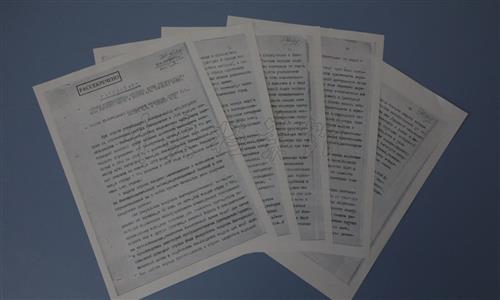
On Monday, commenting on newly released Russia-transferred Japanese Unit 731 atrocity archives, Chinese Foreign Ministry spokesperson Guo Jiakun stated that the archives transferred by Russia are yet another piece of ironclad evidence of crimes against humanity committed by the Japanese Unit 731 during its aggression against China and there's no room for denial.
Alarmingly, despite those solid facts, right-wing forces in Japan are still trying every means to deny, whitewash and even gloss over the aggression and crimes against humanity. Amnesia of history means betrayal, and denial of responsibility spells repetition of crimes. Every country has the responsibility and obligation to urge Japan to have a complete reckoning with the specter of militarism that still haunts it, never let tragedy repeat itself, jointly uphold the outcomes of the WWII victory and the post-war international order, and safeguard the hard-won world peace and stability, Guo said.
RELATED ARTICLES