Japan's nuclear claims pose serious threat to postwar order: FM
Rhetoric a dangerous ‘trial balloon’; heightened vigilance and oversight needed in intl community: expert
By Published: Dec 22, 2025 09:52 PM

Chinese Foreign Ministry
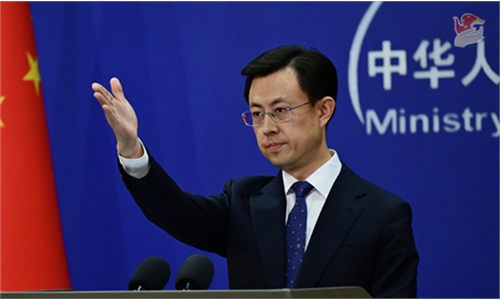
If the right-wing forces in Japan are left free to develop powerful offensive weapons, or even possess nuclear weapons, it will again bring disaster to the world, Chinese Foreign Ministry Spokesperson Lin Jian said on Monday, when asked to comment on claims made by a senior Japanese official regarding potential nuclear armament.
Lin stated that "China is shocked that a senior official from Japanese Prime Minister's Office who is close to Prime Minister Sanae Takaichi brazenly claimed that Japan should have nuclear weapons. Japan's Chief Cabinet Secretary declined to make clarifications on the remarks. Asked about possible revisions to the three non-nuclear principles, Japan's Defense Minister said 'all options would be discussed.'"
Given previous Japanese media reports that Takaichi plans to revise the three non-nuclear principles, the above-mentioned statements amount to a blatant challenge to the postwar international order and the nuclear non-proliferation regime, a serious threat to regional and international peace and stability, and a U-turn from Japan's commitment to "peaceful development," said the spokesperson.
Lin pointed out that remarks from the Japanese side seriously violate Japan's due obligations under international law and severely undermine peace and stability in the Asia-Pacific and beyond. "The international community should be on high alert and firmly against it," Lin said.
"Japanese right-wing forces' remilitarization ambition is rather apparent," Lin said, "It also says a lot about why Prime Minister Takaichi could make such erroneous and dangerous remarks concerning Taiwan on November 7."
On Thursday, an unnamed official was quoted as saying in the Asahi Shimbun that he personally believes that "Japan should possess nuclear weapons." The official is responsible for advising Takaichi on security policies and related matters, according to the report.
At a press conference on Friday, when Japanese Defense Minister Shinjiro Koizumi spoke about a possible review of the Three Non-Nuclear Principles, he claimed that in order to fully protect the lives of Japanese citizens and their peaceful way of life, it is necessary to discuss all options without excluding any, Jiji Press reported.
The reckless and provocative words have drawn a backlash both within Japan and from the international community.
Former Japanese prime minister Shigeru Ishiba commented on Saturday that acquiring nuclear weapons would "absolutely not benefit Japan," Japanese media reported. Before Ishiba, Japan's former defense minister Gen Nakatani said on Friday that "this is not something to be discussed lightly, and the Japanese government must respond appropriately,'' according to Japanese news outlet Kumanichi.
Apart from China, two other countries neighboring Japan, Russia and North Korea, also voiced opposition, with Russian Deputy Foreign Minister Andrey Rudenko telling state news agency Tass that "Our attitude is absolutely negative," and that the militarization of Japan will only make the situation in Northeast Asia worse.
Calls for Japan's potential nuclear armament has shifted from fringe far-right discussions in the past to open remarks by senior government officials, underscoring the urgency of the situation, and the international community must remain highly vigilant in response, Lü Chao, a professor at the Liaoning Academy of Social Sciences, told the Global Times on Monday.
He added that Japanese officials' nuclear-related words appear to serve as a trial balloon, probing not only the reactions of China and other regional powers but also those of its key ally, the US.
"Unlike China and Russia, the US has not expressed unequivocal opposition to Japan," said the expert, "However, policymakers in Washington should consider a critical question: if Japan were to acquire nuclear weapons, would it remain content in its role of obediently following US orders?"
As Japan's nuclear possession rhetoric drew opposition, Japan's Niigata Prefecture on Monday approved the restart of the Kashiwazaki-Kariwa nuclear power plant, the world's largest, more than a decade after the Fukushima nuclear disaster, according to Japanese media. The prefectural assembly's consent means that Tokyo Electric Power Company will resume nuclear operations for the first time since the March 2011 core meltdowns at its tsunami-stricken Fukushima Daiichi plant, Xinhua News Agency reported.
Lü suggested that at the technical level, the international community, including the International Atomic Energy Agency (IAEA), should impose an embargo on nuclear materials to Japan, closely monitor its nuclear fuel applications and nuclear power plant construction, and pay close attention to developments in its nuclear issues.
Li Weilin contributed to the story
RELATED ARTICLES