Japanese defense minister hypes Chinese military strength, touts alliance with US; experts say Japan misjudges situation and shifts blame to expand own military
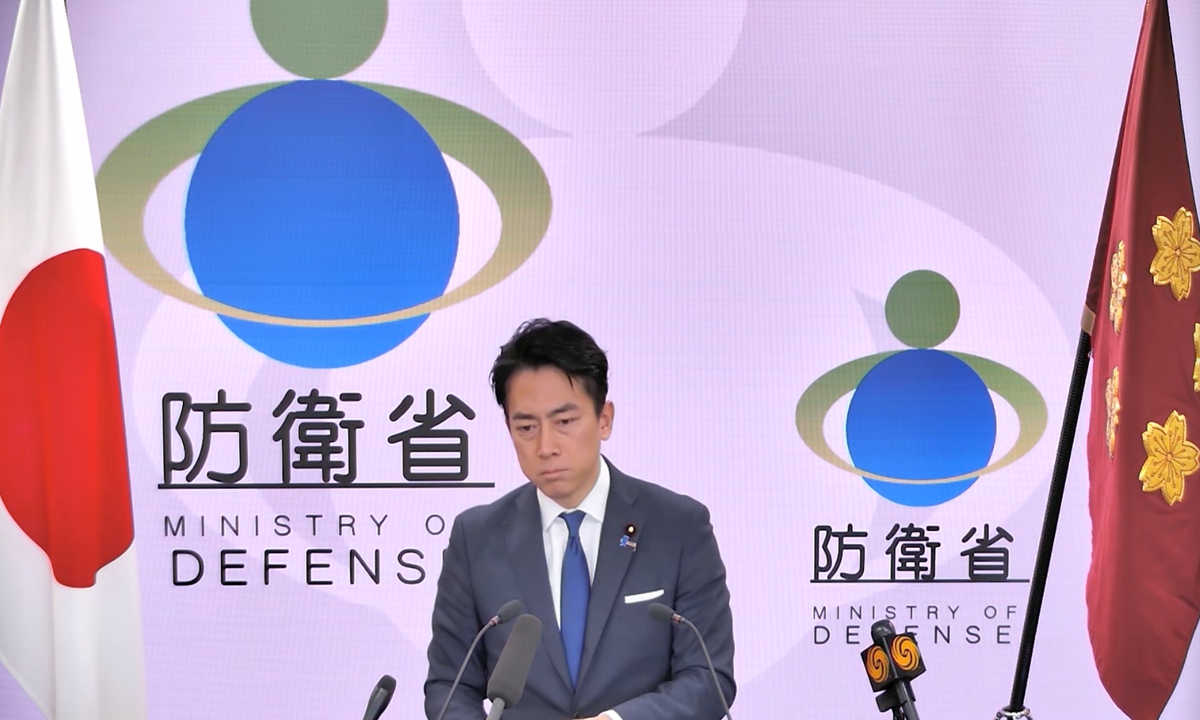
Japanese Defense Minister Shinjiro Koizumi holds a press conference on December 26, 2025 Photo: Screenshot from YouTube
Japanese Defense Minister Shinjiro Koizumi claimed on Friday that China is trying to expand its military capabilities in distant seas and airspace, and that its aircraft carriers are gradually forming a rotational operational system. He also boasted that he wants to meet with US Secretary of Defense Pete Hegseth at the beginning of the new year to discuss China's military activities.
Chinese experts said that Japan's boasting of the so-called Japan-US alliance, set against Washington's recent conduct, shows a lack of clear judgment about the current situation and reflects wishful thinking, and that smearing other countries is merely aimed at masking its own significant increase in military spending.
During Friday's press conference, Koizumi claimed that he had reviewed the recently released 2025 Military and Security Developments Involving the People's Republic of China report by the US Department of Defense. While claiming he would avoid commenting on specific details, he hyped up parts of the report.
Citing so-called viewpoints that China's aircraft carrier fleet will reach a scale of three ships and achieve a rotational system of "maintenance, training, and missions," allowing at least one carrier to be ready for operations at all times in the future, he attempted to argue that China is continuously strengthening its military with a focus on enhancing long-range operational capabilities.
Koizumi boasted that he plans to hold a face-to-face meeting with Pete Hegseth at the beginning of the new year and claimed he would reach a consensus with Hegseth on regional issues, including so-called China's military developments - despite the meeting not yet being confirmed.
"Japan seems to have misread the situation. Under the banner of the so-called Japan-US alliance, it has been simultaneously hyping up the so-called 'Chinese military threat' while claiming it wants to consult with the US on how to respond, yet Washington does not appear to be buying into the narrative," Song Zhongping, a military affairs expert, told the Global Times on Friday, citing recent China-related remarks by US Secretary of State Marco Rubio as an example.
At Rubio's year-end press conference held on December 19, when responding to a media question on his view of recent escalation of tensions between Japan and China and whether he would "condemn" China's recent so-called "provocative actions," Rubio said "I think we have made good progress with the Chinese." He continued that "I think these tensions are pre-existing. We understand that's one of the dynamics that has to be balanced in that region," according to a release from the US State of Department.
Rubio also claimed that "We feel very strongly that we can continue with our strong, firm partnership and alliance with Japan and do so in a way that continues to allow us to find productive ways to work together with Chinese," according to the release.
Song mentioned that it is not only Rubio's remarks, but also earlier media reports that US President Donald Trump told Takaichi during a phone call not to provoke China on the Taiwan question and to tone down her rhetoric.
Notably, no social media post followed the call, and the US also removed its Typhon mid-range missile system from western Japan, Huang Jing, a distinguished professor at Shanghai International Studies University, told the Global Times, adding that these moves show the US clearly attaches great importance to stabilizing relations with China.
Koizumi claimed that the US report mentioned China is steadily increasing its defense spending at a high level. However, on Friday, the Japanese government approved the fiscal 2026 budget, according to multiple Japanese media reports, with defense spending exceeding 9 trillion yen for the first time - setting a new record, revealing a stark contradiction in criticizing others while massively boosting its own military budget.
Japan's 2026 budget plan aims to strengthen retaliatory capabilities and coastal defense, deploying cruise missiles and unmanned weapons to respond to escalating regional tensions, according to Japanese media reports.
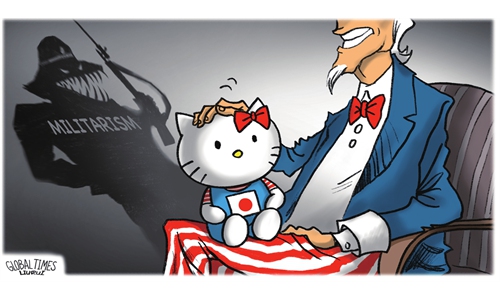
Chinese Foreign Ministry spokesperson Lin Jian on Friday slammed Japan's plan to significantly increase its defense budget as further exposing the sinister intent of Japanese right-wing forces to push for remilitarization and attempt a revival of militarism.
Earlier, commenting on the Pentagon's report, Chinese Defense Ministry spokesperson Zhang Xiaogang said on Thursday that the US issues such reports year after year, brazenly interfering in China's internal affairs, maliciously distorting China's defense policy, groundlessly speculating about the development of China's military capabilities, and slandering the normal operations of the Chinese armed forces. The entire report is filled with erroneous perceptions of China and geopolitical biases, and it hypes up the so-called "China military threat" to mislead the international community. We express strong dissatisfaction and resolute opposition to this, Zhang said.
China steadfastly pursues a national defense policy that is defensive in nature, adheres to the military strategy of active defense, and advances the modernization of national defense and the armed forces with high quality. These efforts are entirely aimed at safeguarding national sovereignty, security, and development interests. China remains a force for peace, stability, and progress in the world, Zhang said.
Also on Friday, Japanese Foreign Minister Minoru Kihara publicly welcomed the passage of a so-called China-related bill by the US House of Representatives, NHK News reported Friday, adding that Kihara claimed they have taken every opportunity, including with the US and other countries, to explain Japan's position and views.
According to media reports, in response to tensions in China-Japan relations triggered by Japanese Prime Minister Sanae Takaichi's remarks during a Diet session, the so-called resolution was intended to "condemn" China for taking so-called "coercive measures" on Japan.
Li Haidong, a professor at China Foreign Affairs University, told the Global Times that the bill related to China is merely a congressional statement, not official policy, and has no legal force. "Japan treats the resolution as a treasure, but in reality, it is self-deception, treating even minor developments as major political victories," he said.
Li explained that from a legal standpoint, a resolution passed by the House must go through the Senate and then be coordinated into a joint resolution, but without the signature of the head of state, it carries no binding effect.
He added that Congress often acts based on domestic political considerations. "Such resolutions help some lawmakers accumulate political capital at home, which is why congressional statements on foreign affairs often appear irresponsible, arbitrary, and run counter to the foreign policy," Li said.
"This reflects the US Congress' shallow and irresponsible understanding of China-Japan relations, undermines the established process of presidential-led foreign policy, and threatens the sustained stability of China-US relations and regional security, while also exposing Japan's self-deception," Li added.
RELATED ARTICLES