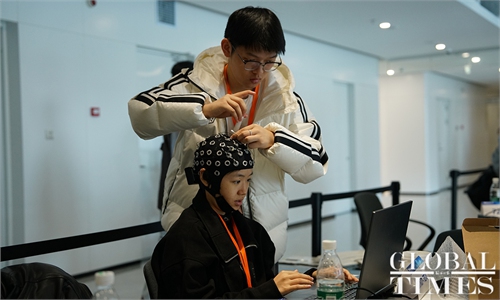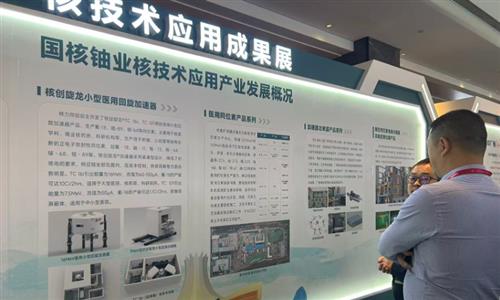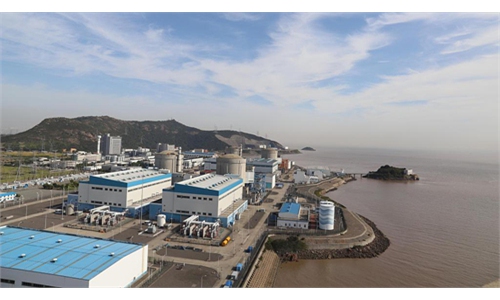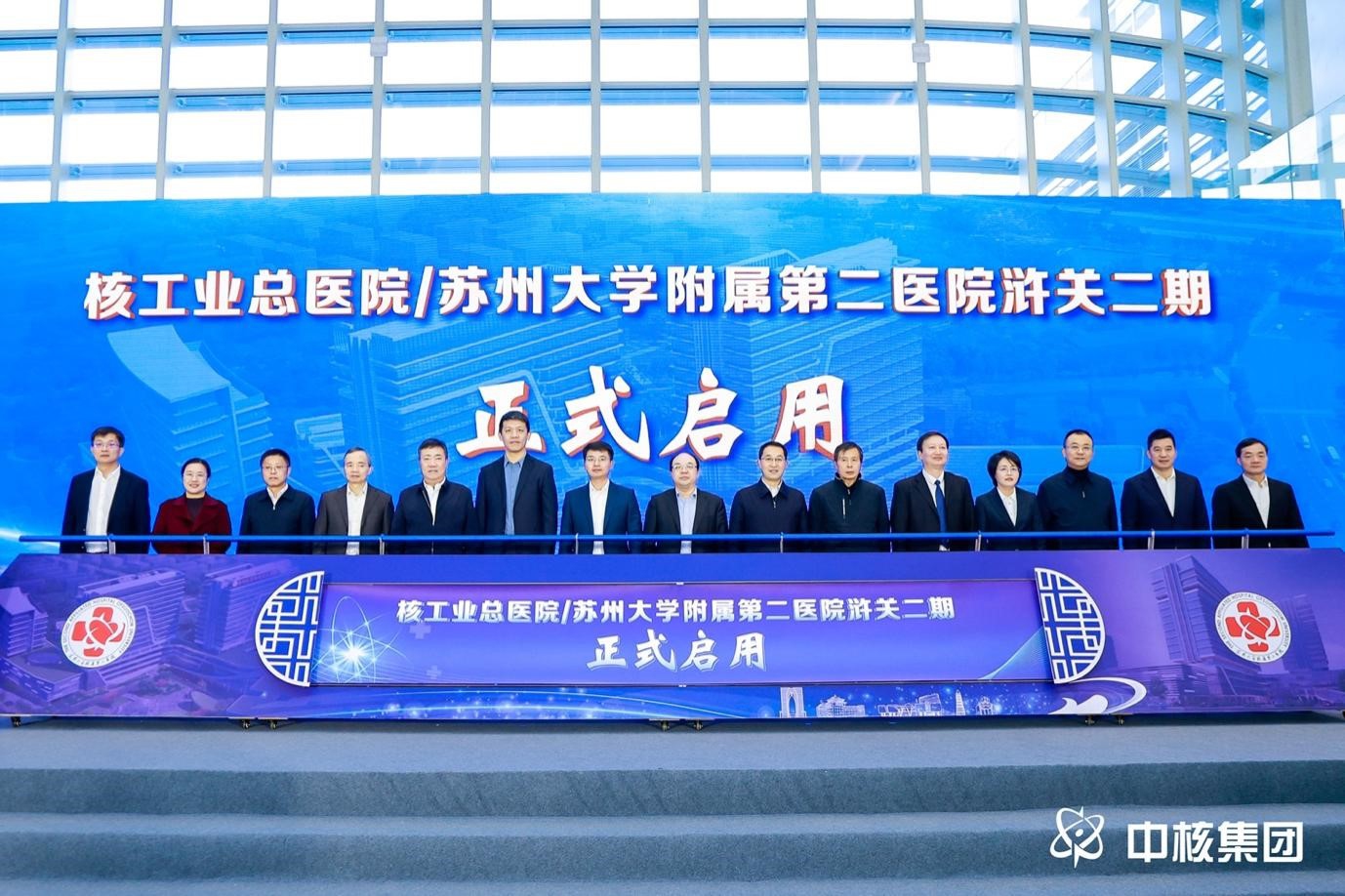
China National Nuclear Corporation held the Conference on Medical Transformation and Clinical Application of Nuclear Technology in Suzhou on Saturday. Photo: CNNC
China National Nuclear Corporation (CNNC) held the Conference on Medical Transformation and Clinical Application of Nuclear Technology on Saturday in Suzhou, East China's Jiangsu Province, and jointly announced with the Suzhou government that China's first nuclear medicine demonstration base—the phase II project of the Xuguan campus of the Second Affiliated Hospital of Soochow University (the General Hospital of nuclear industry)—has been officially put into operation.This initiative marks a concrete step by CNNC in collaboration with various stakeholders to implement the Healthy China Initiative, advance the strong-chain action plan for the nuclear technology application industry, promote the deployment of China's nuclear medicine industry chain, and foster new quality productive forces. By deepening central-local cooperation, the project aims to establish a model for nuclear technology medical transformation and set a new benchmark for the development of the entire nuclear medicine industry chain.
On Saturday, CNNC launched the SPECT/CT Clinical Trial Project cooperated by the General Hospital of nuclear industry and CNNC Particle Medical Technology Co., Ltd., and the Regional Training Course on Comprehensive Audits in Radiotherapy Using IAEA QUATRO Methodology. It also unveiled the establishment of several institutions such as nuclear technology medical application scenario innovation promotion center and the Jiangsu Provincial engineering research center affiliated with the General Hospital of nuclear industry.
These initiatives mark a key step forward in China's nuclear technology medical applications through enhanced central-local collaboration and deeper integration across industry, academia, research, and healthcare. With the atomic energy law of the People's Republic of China set to take effect soon, these efforts also represent a pioneering demonstration of CNNC—as the "chain leader" in the nuclear technology application industry—actively fulfilling its central state-owned enterprise responsibilities and driving high-quality development in China's nuclear technology application sector.
The Global Times learned from Zhang Tao, the general manager and deputy Party secretary of CNNC that, as the "chain leader" of the modern industrial chain for nuclear technology applications, CNNC is committed to transforming its own industrial advantages into overall development momentum for the entire chain. It will continue to promote the sharing of nuclear research facilities, deepen collaboration with upstream and downstream partners, and achieve breakthroughs in fields such as medical isotopes, radiopharmaceuticals, and high-end nuclear medical equipment.
The General Hospital of nuclear industry serves as a key hub in CNNC's nuclear medicine industry ecosystem. The newly established nuclear technology medical application scenario innovation promotion center will effectively integrate the Group's resources, providing full-chain support for the transformation of nuclear technology medical achievements, Zhang said.
China's nuclear technology application industry is embracing a period of strategic opportunities. CNNC is committed to deepening innovation origins and solidifying the foundational technologies of nuclear medicine; strengthening the industrial system and enhancing core competitiveness; expanding collaborative ecosystems to inject new vitality into industrial development; and deepening open cooperation to create new space for growth. The Group looks forward to joining hands with all parties to jointly advance the development of nuclear technology applications in medicine, contributing to the Healthy China Initiative, fostering new quality productive forces, and building a modern industrial system, according to Zhang.
As CNNC's independent R&D platform for nuclear medical equipment, CNNC Particle Medical Technology Co., Ltd. takes clinical needs as its starting point and undertakes multiple national key projects. It carries out R&D on nuclear medicine imaging equipment (SPECT/CT), medical linear accelerators (LINAC), and boron neutron capture therapy equipment (BNCT), while building a coordinated ecosystem of "equipment + pharmaceuticals + services." The company provides a full range of nuclear medicine diagnostic and radiotherapy equipment along with comprehensive services, and is committed to becoming a global leader in nuclear medical equipment development, offering strong support for the Healthy China initiative and the strategy of building a strong industrial nation.
The nuclear technology application industry is an important component of new quality productive forces and a typical strategic emerging industry. In November 2025, the Nuclear Technology Applications Industrial Chain Consolidation Action Plan —jointly released by CNNC and various partners—marks China's first systematic industrial chain enhancement initiative launched by an industry association, led by a central State-owned enterprise and involving multiple stakeholders. It aims to further solidify the security barrier for the nation's nuclear technology application industry and lay a solid foundation for achieving safe, independent, and controllable development of the industry chain.
During the conference, the General Hospital of nuclear industry fully leveraged its leading role in nuclear medicine service applications by signing cooperation agreements with research, development, and production enterprises as well as research institutes—both within and outside CNNC—in the fields of radionuclides, radiopharmaceuticals, and nuclear medical equipment. Backed by CNNC's full nuclear medicine industry chain advantages, these agreements aim to connect the entire "R&D-production-clinical application-promotion" process, jointly driving coordinated industrial development.
As a key project of CNNC and a major livelihood initiative in Suzhou, Phase II project of the Xuguan campus of the General Hospital of nuclear industry integrates precise nuclear technology diagnosis and treatment, clinical trials, medical innovation, and training exchanges. It focuses on priority areas such as nuclear medicine, oncology, and chronic disease prevention and control, while building four core functional centers: precise nuclear technology diagnosis and treatment, nuclear technology clinical trials, nuclear technology medical innovation, and nuclear technology training and exchange. The goal is to become a national highland for advancing nuclear medicine technology R&D, clinical transformation, and talent cultivation.
The commissioning of this demonstration base will substantially enhance China's capabilities in major disease prevention and control as well as nuclear emergency medical response, serving as a core engine for implementing the "chain-strengthening" action, promoting independent innovation in nuclear medicine technology, and fostering coordinated industrial development.
Xu Bo, Party secretary of the General Hospital of nuclear industry, told the Global Times that the commissioning of phase II of the Xuguan Campus as China's first nuclear medicine demonstration base not only provides a critical platform for advanced nuclear medicine diagnosis and treatment, but will also effectively promote clinical transformation and research innovation in nuclear technology. This central-local cooperation project aims to build an integrated ecosystem spanning diagnosis, treatment, and R&D, delivering more precise and cutting-edge medical services to patients while contributing to the development of China's full nuclear medicine industry chain.
"We will deepen international training and exchanges, aiming to become a key 'anchoring hub' for the International Atomic Energy Agency in the Asia-Pacific region," said Xu, noting that Phase II of the Xuguan Campus will effectively address the shortage of high-end nuclear medicine diagnostic and treatment capabilities in the region, making advanced nuclear medical technologies more accessible, significantly enhancing the overall level of regional healthcare services, and injecting a new engine into the development of China's entire nuclear medical industry chain.
Global Times
RELATED ARTICLES