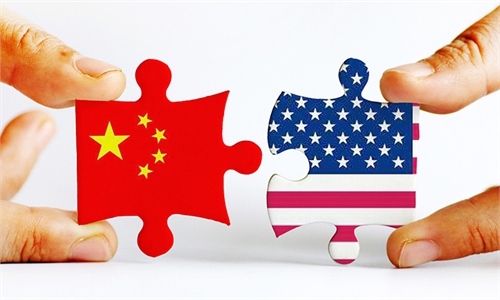
Insights from 2025 China-US economic and trade ties: Managing divergences by seeking common ground while shelving differences
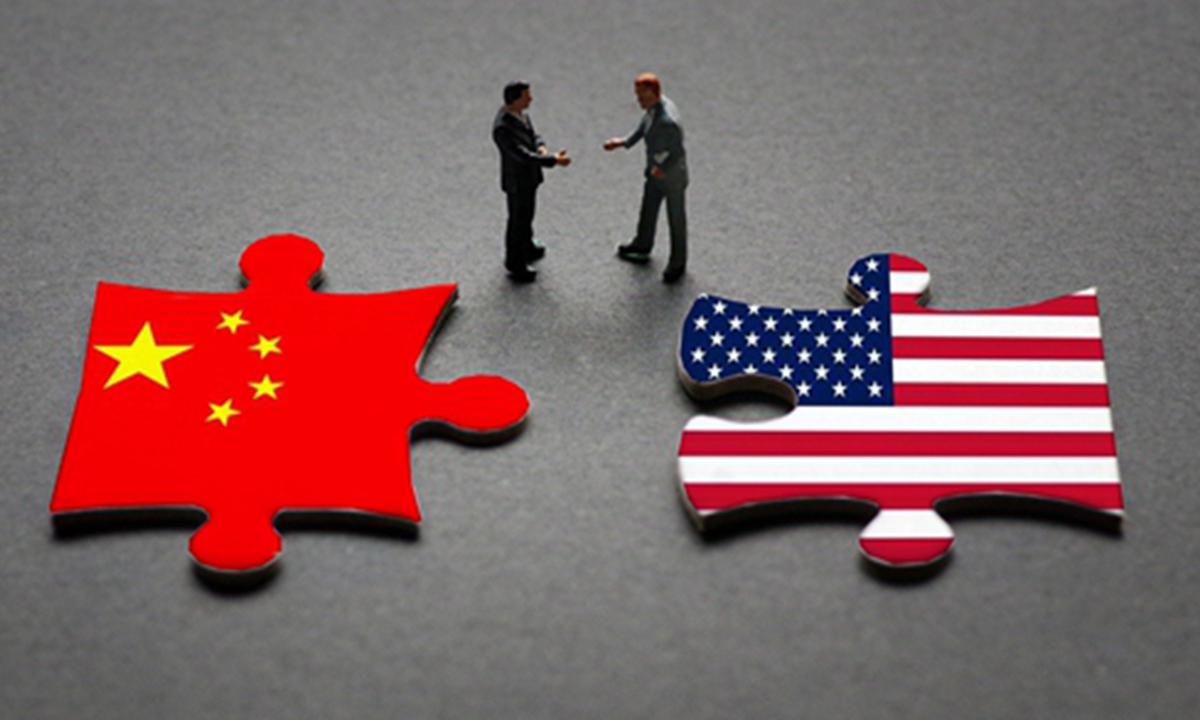
Photo: IC
A recent poll released by the Chicago Council on Global Affairs shows that 53 percent of Americans believe "the US should undertake friendly cooperation and engagement with China." Some media outlets have noted that this is the first time since 2019 that a majority of Americans surveyed prefer a policy of "friendly" cooperative and engagement with China. This suggests that despite setbacks in China-US relations, a more level-headed understanding of the bilateral relationship is gradually accumulating within US society as both sides rationally manage their differences.
Whether major countries can properly handle differences bears directly on world peace and stability. From the "balance of power" theory on the European continent to bipolar confrontation during the Cold War, the history of international relations is rich with lessons learned. Today, as China and the US, two major countries, differ in history, culture, social systems and development paths, how the two view these differences, handle disputes and find a way toward peaceful coexistence and win-win cooperation carries both urgent practical significance and far-reaching historical implications.
Viewing differences correctly is a prerequisite, especially in the economic and trade sphere. China and the US, as the world's two largest economies, maintain economic and trade relations of enormous scale, involving a wide range of areas, and their interests cannot be fully aligned at all times. Competition and even friction in certain areas are entirely normal. The key for both sides lies in keeping the bigger picture in mind, avoiding a narrow focus that obscures the overall reality and preventing a fixation on isolated problems that lead to denying the fundamentally mutually beneficial and win-win nature of bilateral economic and trade cooperation. Differences should not be magnified endlessly or allowed to spiral into a vicious cycle. Grounded in the present and oriented toward the future, both sides should engage in more long-term accounting and place greater emphasis on the enduring benefits of cooperation. Safeguarding the healthy, stable and sustainable development of China-US economic and trade relations serves the fundamental interests of both countries and their peoples, and benefits the world at large.
Properly handling differences relies on dialogue, and dialogue must be grounded in principles. In 2025, guided by the consensus reached by the two heads of state, China-US economic and trade interactions returned to the right track of equal dialogue, clearly demonstrating that dialogue is better than confrontation. Dialogue must have principled boundaries. Mutual respect and equality are essential foundations for effectively managing differences. Both sides should respect each other's core interests and major concerns, as well as each other's independent choice of development path. Once lines are crossed and coercive pressure is applied, dialogue becomes unsustainable.
For dialogue to yield tangible results, it must be constructive and problem-oriented. From Geneva to Kuala Lumpur, the Chinese and US teams have conducted five rounds of consultations. The process has not been smooth throughout, but overall, both sides have recognized the importance of leveraging the China-US economic and trade consultation mechanism and working together toward problem-solving. Looking back at these five rounds, every release of positive signals has injected warmth into the business communities of both countries and even into global markets. The two sides should cherish the achievements already made, implement agreed-upon outcomes and continue advancing dialogue based on equality, respect and mutual benefit - continuously shortening the list of problems while expanding the list of cooperation.
Managing differences requires not only effective control when problems arise, but also the building of bridges in ordinary times to encourage the two countries to meet each other halfway. Recently, China and the US have jointly organized a series of business and commercial exchanges. Through face-to-face communication, these activities have enhanced mutual trust and deepened cooperation, and they have been welcomed by business communities in both countries. People-to-people ties are the resilient bond underpinning China-US relations. Both sides should plant more flowers and fewer thorns, expanding people-to-people and cultural exchanges to deepen understanding, allowing real voices to cut through the fog of prejudice, and letting respect and consensus take root and grow through interaction.
History has repeatedly shown that there are no insurmountable obstacles and no unmanageable problems between China and the US. As long as both adhere to mutual respect, peaceful coexistence and win-win cooperation, the two countries can fully build a stable, sustainable and constructive relationship. In the long run, China's development and rejuvenation are not at odds with the US' pursuit of "Make America Great Again." Upholding the spirit of seeking common ground while shelving differences, replacing confrontation with dialogue, resolving disagreements through cooperation and managing contradictions with a broader perspective, China and the US can be fully capable of achieving mutual success and shared prosperity.
Zhong Sheng is the People's Daily international news commentary column. opinion@globaltimes.com.cn
RELATED ARTICLES