Illegal activities by relevant countries threaten Huangyan Dao's ecology in S.China Sea, Chinese govt’s report shows
By and Fan Wei Published: Dec 29, 2025 11:05 AM

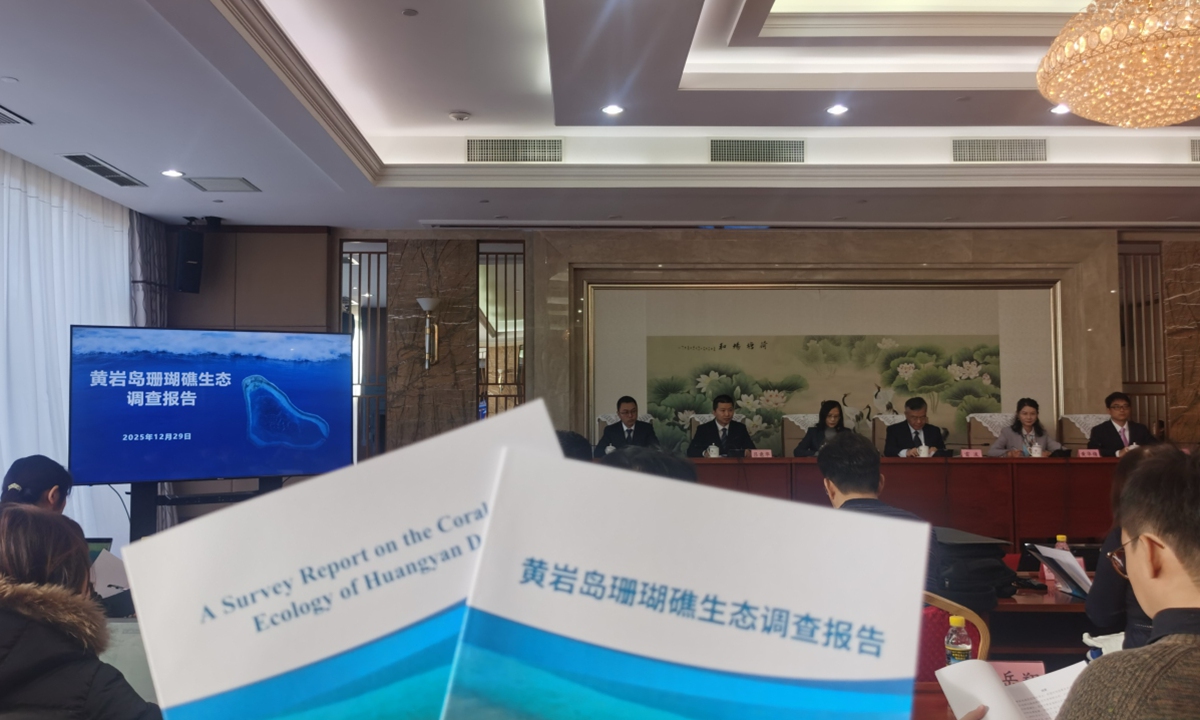
China's Ministry of Natural Resources releases a survey report on the coral reef ecology of Huangyan Dao in the South China Sea on December 29, 2025. Photo: Hu Yuwei/GT
Military activities, including live-fire exercises conducted by relevant countries in the waters around China's Huangyan Dao (also known as Huangyan Island) in the South China Sea from the 1960s to the 1970s, caused damage to its coral reefs; Moreover, illegal fishing and frequent incursions by relevant countries in recent years have posed significant threats to the health of Huangyan Dao's ecology, according to a survey report on the coral reef ecology of Huangyan Dao released by China's Ministry of Natural Resources on Monday.
The report, based on vessel surveys, diving investigations, satellite and aerial remote sensing, in-situ observations, and historical data analysis, assessed the condition of Huangyan Dao's coral reef ecology. Experts involved in the survey told the Global Times on Monday that the island's current favorable ecological environment and rich biodiversity are closely linked to the effective management implemented by China since 2012, which has facilitated the natural recovery of its ecosystem. However, incursions by relevant countries have adversely affected the health of Huangyan Dao's ecology.
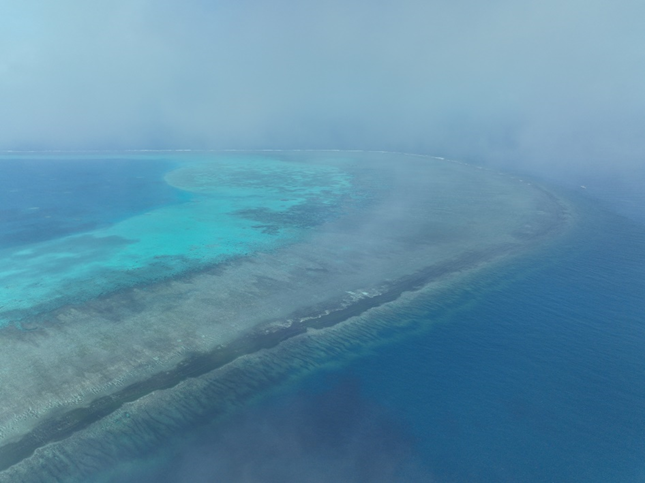
Aerial photo of China's Huangyan Dao in the South China Sea in 2025. Photo: Courtesy of Ministry of Natural Resources
The report released by the Ministry of Natural Resources marks another official assessment of Huangyan Dao's ecology following the 2025 survey and assessment report on the ecological environment of the waters around Huangyan Dao issued by China's Ministry of Ecology and Environment in November.
Huang Huamei, a senior researcher of the South China Sea Development Research Institute, the Ministry of Natural Resources, told the Global Times that the reports from the two ministries, based on their respective findings, collectively demonstrate China's determination to fully grasp the ecological resources of the Huangyan Dao area and promote effective protection. The two reports have different emphases, and the Ministry of Natural Resources' report focuses on the overall condition of the coral reef ecology around Huangyan Dao, with particular attention to the coral reef ecology and the distribution of rare and endangered species within the Huangyan Dao national nature reserve.
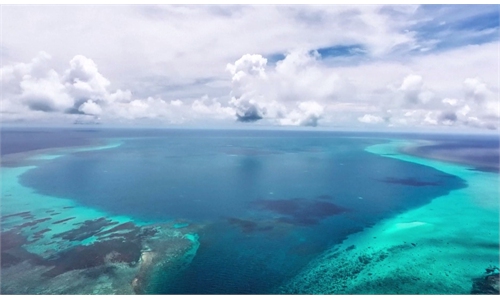
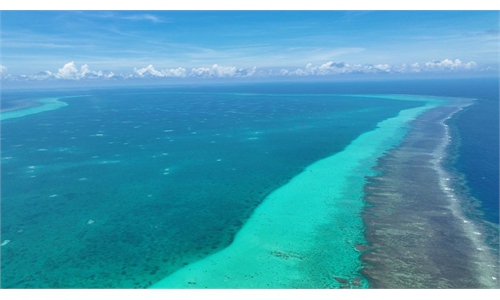
The report shows that the coral reef ecology of Huangyan Dao is generally in good condition, hosting 135 species of reef-building corals from 36 genera and 13 families, with high coverage but significant regional variations. The area is also rich in coral reef fish and large benthic invertebrates. Within the national nature reserve, the average coverage of reef-building corals is as high as 38.8 percent, making it an important habitat for many rare and endangered wildlife species. A total of 94 species of wildlife under first- and second-class state protection, including green sea turtles, hawksbill turtles, and giant clams, are distributed in the area.
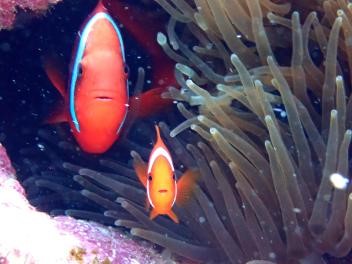
Coral reef ecology as shown in the 2025 ecological survey report on Huangyan Dao released by the Ministry of Natural Resources. Photo: Courtesy of Ministry of Natural Resources
"The favorable ecological environment and rich biodiversity of Huangyan Dao are closely linked to the effective management implemented by China since 2012, which has eliminated intensive human interference and facilitated the natural recovery and dynamic balance of its ecosystem," Lv Yihua, a senior researcher from the South China Sea Ecological Center, Ministry of Natural Resources, told the Global Times. He added that after designating Huangyan Dao as a national nature reserve, China will implement more scientific and proactive protection measures to better maintain and enhance the diversity, stability, and sustainability of the coral reef ecology in the area.
The researcher further noted that Huangyan Dao is regionally representative, rich in biodiversity, and home to unique and rare species. Its ecosystem is characterized by natural authenticity while also being ecologically fragile and highly sensitive. Establishing a national nature reserve complies with China's legal provisions and aligns with international practices for ecosystem protection.
"By integrating historical survey data, remote sensing image analysis, and on-site investigation data from 2025, we found that the coral reef ecology in the northeastern part of Huangyan Dao is in the best condition, with the highest species and coverage of reef-building corals, the highest species and density of coral reef fish, and a rich variety of rare and endangered wildlife. In accordance with regulations such as the Regulations of the People's Republic of China on Nature Reserves and international practices for protected areas, we have designated this region as a nature reserve," the researcher said.
The report also points out that illegal fishing and frequent incursions by relevant countries in recent years have posed significant threats to the health of Huangyan Dao's ecology.
Xiong Xiaofei, a senior engineer at the South China Sea Ecological Center, Ministry of Natural Resources, further explained that relevant countries have frequently organized vessels to intrude into the waters around Huangyan Dao. Even after China established the national nature reserve in September 2025, such incursions have continued. Each intrusion has brought discarded materials and pollutant emissions, adversely affecting the health of Huangyan Dao's ecology. Additionally, these activities increase the risks of ship grounding, collisions, and oil spills, which also seriously threaten the ecology.
Furthermore, the report indicates that, according to available data, illegal military activities such as live-fire exercises and destructive fishing practices conducted by relevant countries in the waters around Huangyan Dao from the 1960s to the 1970s caused damage to its coral reefs.
"Our 1985 survey discovered abandoned vessels with numerous craters and marks, reflecting the extensive and impactful bombing activities in the waters around Huangyan Dao at the time," Xiong said. He noted that bombing causes devastating damage to coral reefs, with long recovery periods. Additionally, data show that illegal fishing activities by relevant countries in the waters around Huangyan Dao have negatively impacted the ecological environment of the area.
During an on-site investigation in the Philippines in April 2024, the Global Times revealed that illegal fishing activities are evident in seafood markets across the country. Local vendors even promoted rare and endangered species such as the humphead wrasse—a globally recognized protected fish and a second-level protected animal in China, where illegal trade can result in severe penalties—as well as giant clams, another nationally protected species in China. The humphead wrasse, for instance, is sold at high prices, with vendors claiming they are caught near Palawan Island. This lucrative trade, alongside similar black-market activities involving other protected marine species, highlights ongoing challenges in regulating illegal fishing and wildlife trafficking in the region.
The report also notes that global climate change, including abnormally high sea surface temperatures and tropical cyclone attacks, has exerted stress on the health of Huangyan Dao's coral reef ecosystem. Moreover, the ecosystem faces the risk of further damage from outbreaks of crown-of-thorns starfish.
Lv stated that after the establishment of the Huangyan Dao national nature reserve, China will continue to monitor the impact of abnormally high sea surface temperatures caused by global climate change on the island's corals and conduct targeted monitoring, investigation, protection, and management.
RELATED ARTICLES