'Cool China' is a serene, innovative force in today’s multipolar landscape: African expert
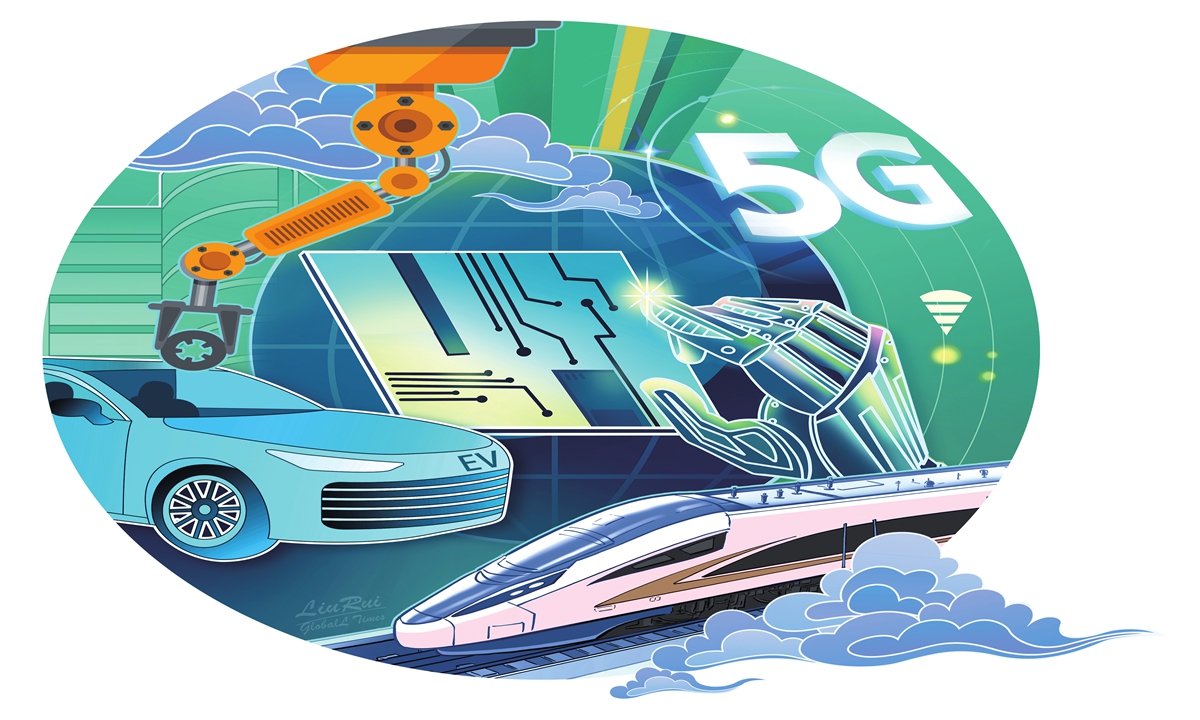
Illustration: Liu Rui/GT
Editor's Note:
The world is increasingly seeing China as "cool" - a description now frequently used not only by international media but also by a growing number of foreign visitors and observers who have personally experienced the dynamism of this country. A China full of innovative momentum, developmental vitality and cultural inclusiveness is taking clearer shape day by day. As we approach the end of 2025, the Global Times (GT) launches this year-end special series titled "What makes China cool" to explore the key to China's growing appeal.
In the fifth installment of the series, GT reporter Su Yaxuan speaks with Endalkachew Sime (Sime), former state minister of the Ministry of Planning and Development, Ethiopia. Sime believes that "'cool China' is a serene, innovative force in today's multipolar landscape, where China's rise embodies confidence amid geopolitical turbulence."
GT: In the current global development context, how do you understand the concept of "cool China"?
Sime: I interpret "cool China" as a serene, innovative force in today's multipolar landscape, where China's rise embodies confidence amid geopolitical turbulence. In a world grappling with climate shifts and digital disruptions, "cool China" signifies not just technological prowess but a philosophical poise - prioritizing shared prosperity over dominance through initiatives that democratize access to AI and green tech, reshaping the perceptions of China from a learner to a global trendsetter.
This coolness inspires Africa, offering alternatives to Western models by blending efficiency with equity, fostering a sense of modernity that's accessible and aspirational for the developing countries.
"Cool China" serves as contextualized inspiration for Africa, urging us to adapt its poise to our realities - leveraging indigenous wisdom for multipolar equity. Ethiopia's construction of modern agriculture in cooperation with China shows how we can transform "cool" into homegrown models, reducing raw material exports under the African Continental Free Trade Area and building sustainable, innovative paths.
GT: Many foreign media outlets, when mentioning "cool China," often highlight one aspect: China's technological development. Why does China's progress in technology leave the world with a "cool" impression?
Sime: China's technological progress evokes a "cool" impression because it embodies a transformative leap that blends cutting-edge innovation with practical, everyday applicability, providing flexible alternatives to the historical dominance of Western technologies. In fields like AI, 5G and high-speed rail, China has not only caught up but has also often surpassed global benchmarks, turning abstract ideas into tangible realities that enhance efficiency and connectivity on a massive scale.
This resonates deeply in Africa, where colonial legacies and resource dependencies have long stifled the indigenous growth. Seeing a non-Western power like China rise through self-directed tech advancements feels empowering and aspirational. It shifts the global perception of China from a mere manufacturer to a trendsetter, where innovations such as digital payment systems like WeChat QR payments or electric vehicles from companies like BYD are not just functional but stylish and accessible, fostering a sense of modernity that inspires envy and admiration worldwide.
This "cool" factor demonstrates China's confidence through its firm pursuit of technological sovereignty. By investing heavily in R&D and fostering ecosystems for startups, China has transitioned into an innovation powerhouse, with rapid unicorn growth and a unique model that integrates government support, academia and industry.
Drawing on my own theoretical framework, the "Learning In Context" framework [that was] introduced into Africa's development learning, Africa can view China's tech journey not as a blueprint to copy but as a source of contextualized inspiration to build our own confident, innovative paths.
GT: Against the backdrop of China-Africa technological cooperation, how has China's technology export impacted the African continent?
Sime: As an African scholar deeply engaged in South-South cooperation, I view China's technology exports as an alternative force that helps Africa's development with resilience and equity, drawing from our continent's inherent communal harmony and adaptive ingenuity. Through big initiatives like the Forum on China-Africa Cooperation (FOCAC), China's tech transfers have shifted from infrastructure to innovative, sustainable solutions that address Africa's unique challenges, such as energy access and digital divides, while fostering mutual growth.
In essence, it's a hybrid model where China's efficiency meets Africa's resourcefulness, creating resilient systems that combat climate vulnerabilities and urbanization with community-centered efficiency.
These exports have introduced new development models like the Digital Silk Road, emphasizing localized innovation and capacity building, which contrast with top-down approaches by prioritizing African agency and sustainability.
GT: In your view, what are the fundamental differences, in terms of ideas and methods, between Chinese-style innovation and the innovation models of other countries?
Sime: From an African perspective, where innovation must bridge colonial legacies and resource constraints, "Chinese-style innovation" stands out for its state-orchestrated, holistic integration - fusing government vision, academic research and industrial scale to address national needs with rapid, pragmatic deployment, unlike a mere market-led, individualistic pursuit that often prioritizes profit over equity. China's approach emphasizes long-term planning and collective advancement, turning imitation into breakthroughs that democratize tech globally. This contrasts with others' fragmented ecosystems, offering Africa a "cool" alternative: efficient, adaptive and inclusive, aligning with our communal values.
Methodologically, China integrates vast R&D investments with ecosystem building - robotics boot camps and unicorn growth, while others rely on venture capital silos. In Ethiopia, this has materialized through several collaborations, where Chinese tech has scaled Digital Ethiopia. Continent-wide, FOCAC's innovation forums and clean energy pushes have created hybrid models, with satellite initiatives enhancing data sharing for agriculture and climate.
GT: In your article, you previously linked "cool China" with China's advocacy for multipolarity, referring to it as "The Multipolar Cool." Could you elaborate further on this concept?
Sime: From an African lens, where multipolarity resonates with our post-colonial quest for equity, "The Multipolar Cool" captures China's poised, unflappable push for a world order that challenges rigid hierarchies in favor of fluid, inclusive dynamics - much like Africa's communal philosophies that prioritize harmony over dominance. This concept promotes a community with a shared future for humanity through initiatives like the BRICS group and the Asian Infrastructure Investment Bank. It's cool because it's confidently embracing the appeal of sustainable technology while allowing emerging powers like African countries to flow as equal rivers in a converged global stream.
"The Multipolar Cool" inspires Africa to contextualize China's experience, adapting it to our diverse ethnic and resource contexts rather than copying. Ethiopia's flexible use of BRI financing for evidence-based infrastructure exemplifies how we can leverage multipolarity to build resilient, African-led systems - turning global shifts into opportunities for equitable growth and reducing neocolonial dependencies.
GT: Which Chinese technological innovations or applications in 2025 have impressed you the most and made you feel they are "cool"? Looking ahead, what potential of China's technology are you most eager to see realized?
Sime: As a development economist from Ethiopia, immersed in China-Africa dynamics, I'm most impressed by DeepSeek's 2025 breakthroughs, which epitomize "cool" through their open-source accessibility and rivalry with global giants, democratizing AI for everyday users and reshaping industries from startups to agriculture - a serene and confident leap that aligns with Africa's need for affordable, inclusive tech.
These 2025 innovations urge Africa to adapt China's "future sense" contextually, not to copy it - integrating DeepSeek-like AI with local knowledge for innovations.
RELATED ARTICLES