ARTS / CULTURE & LEISURE
Homegrown films, global blockbusters drive Chinese box office
By Published: Dec 30, 2025 11:11 PM


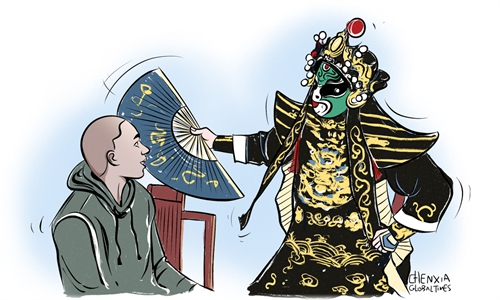
Illustration: Liu Xiangya/GT
As 2025 marks the 120th anniversary of Chinese cinema and the 130th anniversary of world cinema, China's film industry has delivered a milestone performance. On Tuesday, the annual box office soared past 51.6 billion yuan ($7.37 billion), securing its position as the second-highest grossing year in the past half-decade, according to Chinese ticketing platform Maoyan.
Beyond the numbers, however, lies a richer narrative. According to the annual rating list released by Chinese media review website Douban, domestic films dominated the top four spots for Chinese language titles, with Dead To Rights leading at 8.8/10, followed by Ne Zha 2 (8.4/10), The Legend of Hei 2 (8.7/10) and Nobody (8.5/10).
For the foreign language films, F1: The Movie topped the foreign film chart with 8.7/10, grossing $664 million globally, while Zootopia 2 (8.4/10) ranked second with a worldwide box office of $1.34 billion. Behind these impressive figures lies the robust growth of domestic cinema and China's open embrace of the global film industry.
The solid strength of domestic films was the cornerstone of this year's box-office success, reflecting a conscious cultural commitment to rooted storytelling.
Data shows domestic films accounted for over 80 percent of the Chinese mainland's total box office in 2025, cementing their dominant market position. It reflects a shift toward narratives that resonate deeply with local audiences.
Dead To Rights, for instance, depicts weighty historical memories through delicate personal stories. Meanwhile, Ne Zha 2 and Nobody drew inspiration from traditional culture, infusing classics with modern narratives to balance ideological depth and entertainment value.
From revolutionary historical heritage to warm depictions of urban life, from imaginative animated fantasies to in-depth explorations of real-world issues, the diverse genres of domestic films catered to varied audience's varied tastes. This fostered emotional resonance, converting cultural and national identity into tangible viewing enthusiasm, and laying a popular foundation for cultural confidence.
As Chinese cinema celebrates its 120th anniversary, domestic films today uphold cultural subjectivity from a local perspective. These films exemplify a broader trend: Chinese cinema is increasingly leveraging its cultural heritage to explore themes of identity, resilience, and social change.
While domestic productions thrive, China's embrace of international films proves its role as a pivotal force in global cinema. The performance of imported titles during the latest New Year season speaks volumes.
Zootopia 2, for example, earned nearly half of its global box office in the Chinese mainland, far surpassing its North American tally, demonstrating China's immense appeal for top global IPs.
The performance of foreign blockbusters during the New Year holiday sends a strong signal: the global film industry's gravitational center is shifting eastward, with China's open and inclusive market acting as a key driver.
Similarly, Avatar: Fire and Ash broke from tradition by securing a simultaneous release in China and the US, a strategic move acknowledging China's influence on worldwide earnings.
Currently, China accounts for nearly a quarter of the global box office. Director James Cameron once noted that the Chinese market is indispensable to global planning.
Behind this recognition is China's sustained efforts to provide a platform for quality global films. Imported films not only offer audiences diverse choices but also promote exchanges between Chinese and foreign filmmakers in creativity, technology and market operations.
This two-way interaction of "bringing in" and "going out" showcases Chinese culture's inclusiveness, hones domestic cinema's competitiveness in global competition, and drives the evolution of the global film industry toward greater diversity and balance.
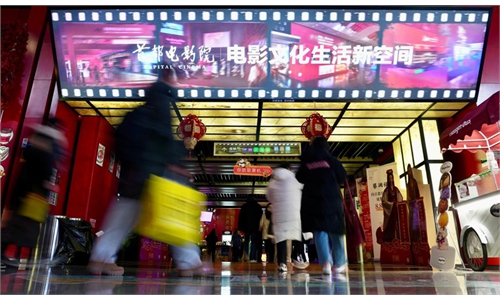
The success of 2025 is not solely attributed to compelling high-quality content. It also stems from the maturation of the "cinema plus" ecosystem, which extends the film experience beyond traditional viewing. Premium formats like CINITY and IMAX, alongside immersive 4K and 4D technologies, have redefined theatrical experiences, turning cinemas into hubs of high-quality entertainment.
Meanwhile, derivative merchandise, themed events, and cross-industry collaborations have transformed theaters into multidimensional cultural spaces.
Zootopia 2, for instance, partnered with over 70 brands to create an integrated IP ecosystem, embedding the film's appeal into daily consumption, according to a report from CCTV.
Young audiences engaged with AI-generated photo opportunities featuring film characters, blending cinematic fandom with social media trends.
Zhang Ke, the scriptwriter of the epic war trilogy The Volunteers and Dead To Rights, told the Global Times that modern cinemas now compete through "immersive experiences" and "social connectivity." This holistic approach not only boosts revenue but also strengthens the cultural footprint of films, spurring growth in the tourism, retail, and creative sectors. In doing so, the film industry has become an important engine for stimulating domestic demand and promoting economic growth, offering replicable experiences for the high-quality development of the cultural industry.
The author is a reporter with the Global Times. life@globaltimes.com.cn
RELATED ARTICLES