EU’s CBAM provisions targeting China are unfair and discriminatory; China to take all necessary measures to safeguard interests, MOFCOM says
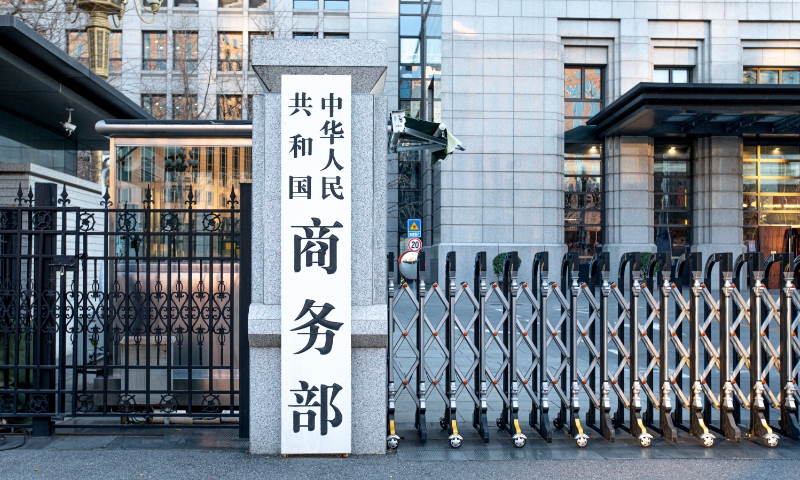
The Ministry of Commerce of China File photo: VCG
A spokesperson for China's Ministry of Commerce (MOFCOM) said on Thursday that the European Union's Carbon Border Adjustment Mechanism (CBAM) subjects China to unfair and discriminatory treatment, firmly opposing its pronounced unilateralist and trade-protectionist nature, and pledged that China will take all necessary measures to safeguard its development interests.
The remarks were made in response to media inquiries about the EU's plan to formally implement the CBAM on Thursday, and its recent intensive release of related legislative proposals and implementation rules.
China has noted that the EU has recently rolled out a series of CBAM-related legislative proposals and implementing measures, including the setting of default values for carbon-emission intensity and plans to expand the scope of products covered, the spokesperson said in a statement published on the ministry's official website.
In particular, the EU has ignored the significant progress China made in green and low-carbon development, setting excessively high default values for carbon emission intensity of Chinese products and plans to increase them year by year over the next three years, according to the statement.
"These values do not reflect China's current conditions or future development trends and constitute unfair and discriminatory treatment toward China," the spokesperson said.
The EU's practices are also suspected of violating core principles of the World Trade Organization, including the most-favored-nation treatment and national treatment principles, and run counter to the principle of "common but differentiated responsibilities" established under the United Nations Framework Convention on Climate Change, according to the spokesperson.
The spokesperson added that the EU has proposed draft legislation to expand CBAM from 2028 to cover around 180 downstream products involving steel and aluminum, such as machinery and equipment, automobiles and their parts, and household appliances.
"These proposed rules go beyond addressing climate change and display clear signs of unilateralism and trade protectionism. China expresses serious concern and firm opposition," the spokesperson said.
Meanwhile, China has observed that the EU recently revised its 2035 ban on new internal-combustion-engine vehicles, easing green regulatory requirements within the bloc. "While engaging in protectionism against external partners under the banner of green development, the EU is simultaneously loosening domestic regulation and lowering emissions-reduction requirements, a self-contradictory approach that reflects a typical case of double standards," read the statement.
By ignoring historical emissions responsibilities, differences in countries' development stages and technological capabilities, and by using the pretext of preventing "carbon leakage" to advance new forms of trade protectionism, the EU is imposing its own carbon standards on developing countries.
This has led to conflicts between climate and trade governance rules, raised the costs of climate action for developing countries, and seriously undermined international trust, running counter to global efforts to jointly address climate change and advance sustainable development, the spokesperson said.
China urges the EU to abide by international rules on climate and trade, abandon unilateralism and protectionism, keep markets open, and promote the liberalization and facilitation of trade and investment in green sectors on the basis of fairness, scientific rigor and non-discrimination, according to the spokesperson.
"China is willing to cooperate with the EU to jointly tackle global climate change, but it will take all necessary measures to counter unfair trade restrictions, safeguard its development interests and legitimate rights of Chinese enterprises, and maintain stability of global industrial and supply chains," the spokesperson added.
Global Times
RELATED ARTICLES