Japan’s reported Takaichi-Trump call aims to pull US into confrontation with China, but efforts unlikely to succeed: experts
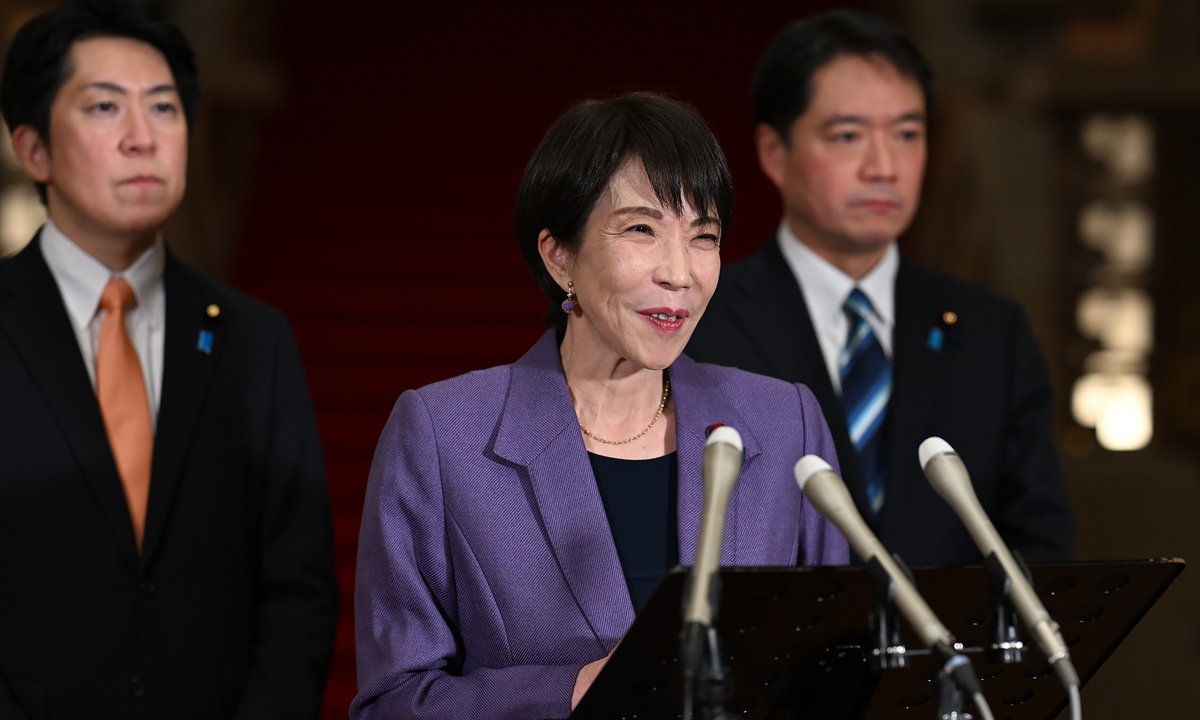
Japanese Prime Minister Sanae Takaichi speaks to the media after a telephone conversation with US President Donald Trump at the Prime Minister's Official Residence in Tokyo, Japan on January 2, 2026. Photo: VCG
Japanese Prime Minister Sanae Takaichi held a phone call with US President Donald Trump on Friday evening, Japan's Ministry of Foreign Affairs said in a statement, and also claimed that the two sides exchanged views on the Asia-Pacific region and Trump invited Takaichi to visit the US this spring.Chinese experts said the call reflected Tokyo's attempt to draw the US-Japan alliance into restraining China, but such efforts are unlikely to succeed, as the Trump administration prioritizes the stability of China-US relations and economic and trade ties, which Washington is unwilling to jeopardize at Japan's behest.
According to the Associated Press, the White House has yet to confirm either the call or the invitation.
Japanese media have speculated about the content of the conversation. The Yomiuri Shimbun claimed on Saturday that Japan hoped to use the call to "align perceptions between Japan and the US" so that Trump, who is expected to visit China, would not tilt toward a conciliatory posture toward China.
The newspaper also speculated that the military drills conducted by Chinese People's Liberation Army (PLA) around the island of Taiwan at the end of last year may also have come up in the conversation, a possibility echoed by other Japanese outlets including Nikkei and Jiji Press.
However, Japan's Foreign Ministry statement of the call made no mention of China. When asked by reporters about the content of the call and whether the conversation involved PLA's military drills around the island of Taiwan, Takaichi did not cite any China-related content, the PM office of Japan reported.
Chinese experts said Takaichi's reported call was more likely initiated at Japan's request, driven by concerns about being sidelined by Washington and Japan's desire to tighten the US-Japan alliance to counter China. But Tokyo's attempt to leverage the US-Japan alliance to influence Washington's China policy runs up against Washington's own strategic priorities. Maintaining stable China-US relations remains more important to the US, especially as Trump prepares for a visit to China and as the administration seeks to keep major-country relations and economic and trade ties on a stable footing.
Since Takaichi made erroneous remarks on Taiwan in November, Japan has faced pressure from China to retract the statements, and has sought to lean on the alliance to hedge against potential US-China accommodation, Xiang Haoyu, a distinguished research fellow at the China Institute of International Studies, told the Global Times on Saturday.
"But the US position is clear: the Trump administration is unwilling to be pulled by Japan's far-right forces into the Taiwan Straits or a confrontation with China as the administration attaches great importance to the overall stability of China-US relations," Xiang said.
Xiang added that Washington's primary focus in dealing with China currently lies in the economic and trade domain and in maintaining the broader momentum of stabilizing China-US relations. "There is bound to be a divergence between Japan and the US on China. Japan's wish for US intervention may not be fulfilled. Takaichi's call is more about demonstrating diplomatic 'capability' to domestic audiences and seeking reassurance," he said.
The call with Washington underscores Japan's lack of confidence and its eagerness to draw the US into disputes stirred up by Tokyo, attempting to play great-power politics and manufacture frictions between the US and China, Li Haidong, a professor at China Foreign Affairs University, told the Global Times on Saturday.
Japan's Foreign Ministry claimed in the statement that the approximately 25-minute call covered congratulations on the 250th anniversary of the founding of the US, efforts to deepen Japan-US friendly relations, promoting cooperation among countries including Japan, the US and South Korea, exchanges on the Asia-Pacific region, and Trump's invitation for Takaichi to visit the US.
After the reported call with Trump, Takaichi posted on her social media account on X, saying that "the call was extremely meaningful as we reaffirmed the close coordination of the Japan-US Alliance at the beginning of the new year."
Takaichi's post was later reposted by US Ambassador to Japan George Glass, who said that "2026 promises to be another year of landmark achievements, close cooperation, and deep friendship for our two nations."
"A 25-minute call cannot delve very deeply," Li said. "Despite reports that it touched on so-called Japan-US economic cooperation and trilateral coordination among Japan, the US and South Korea, Tokyo's core concern was likely Takaichi's US visit and how to leverage US power against China."
Li added that the revival of Japan's right-wing militarist ambitions rests on denying the outcomes secured by the victorious powers of World War II, including China and the US. "The US should work with more countries in the Asia-Pacific to uphold the postwar order and stamp out the seeds of militarism. Only then can Washington benefit in managing relations with China, South Korea and other Asian countries, and only then can the region's peace and prosperity be safeguarded," he said.
The South China Morning Post reported that following the call with Takaichi, Trump met with US Ambassador to China David Perdue at the Mar-a-Lago estate in Florida. Though the report did not elaborate on the content of their meeting.
Earlier, US Secretary of State Marco Rubio commented on the recent escalation of tensions between Japan and China, saying that Washington could continue its strong and firm partnership and alliance with Japan while also seeking productive ways to work with China, according to a release from the US State Department.
When responding to a media question about his assessment of the rising Japan-China tensions, Rubio said, "I think we have made good progress with the Chinese." He added that "I think these tensions are pre-existing. We understand that's one of the dynamics that has to be balanced in that region," per the release.
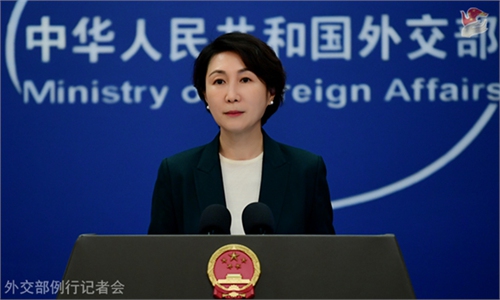
Previously, after Trump spoke by phone with Takaichi in November, Chinese Foreign Ministry spokesperson Mao Ning responded to media inquiries by saying, "The phone call between the leaders of the US and Japan is a matter between the US and Japan. I have no comment on that. The Taiwan question is China's internal affair which brooks no interference by any external forces."
RELATED ARTICLES