Chinese court detects AI-generated fake evidence in rental dispute, reiterates zero-tolerance on litigation fraud
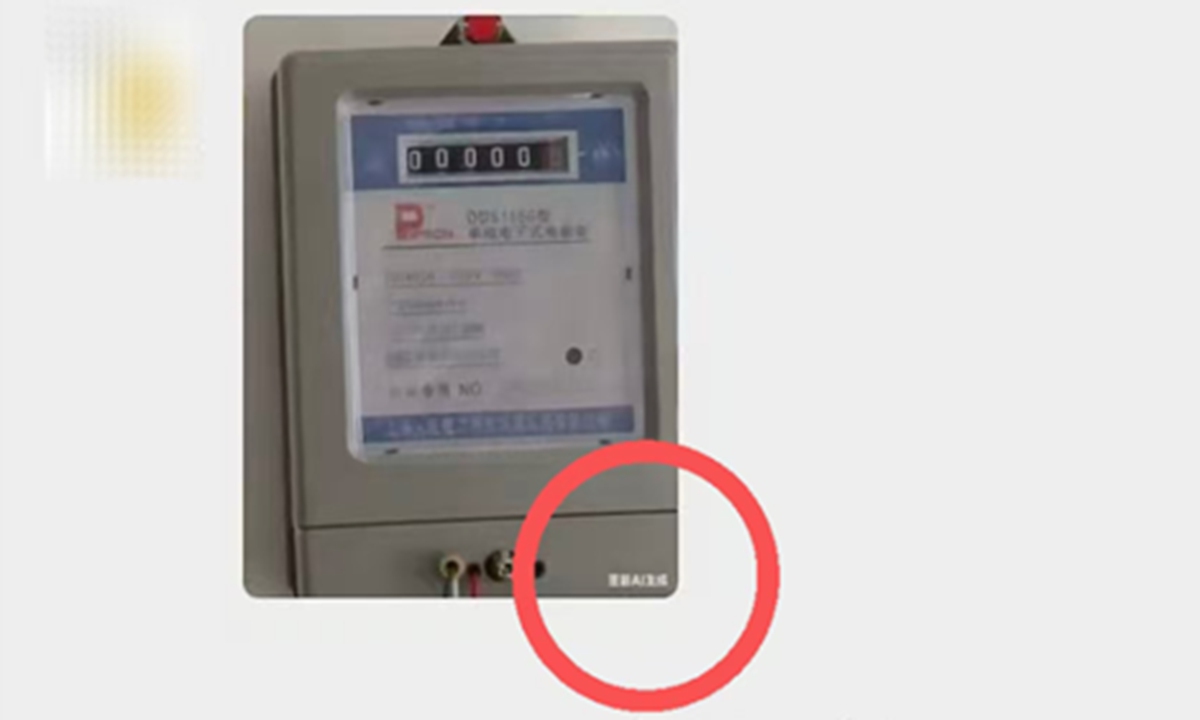
Dong sends the judge a photograph of a water and electricity meter bearing an obvious AI-generated watermark. Photo: Screenshot from the official account of the China News Service
The Dawu County People's Court in Xiaogan, Central China's Hubei Province, recently uncovered an attempt by a plaintiff to fabricate evidence using artificial intelligence while hearing a housing lease contract dispute. The court issued a formal reprimand in accordance with the law, demonstrating a zero-tolerance approach to safeguarding judicial authority and litigation integrity, China News Service reported.
In May 2024, a person surnamed Li signed a residential lease agreement with a person surnamed Xiong, specifying the lease term and rent, and stipulating that rent for the latter half of the lease period must be paid in full by March 2025. After the lease expired, Li filed a lawsuit after Xiong failed to pay rent for the final six months as well as outstanding utility fees. Li entrusted their daughter, Dong, to act as his litigation representative.
During the trial, Li was unable to provide valid proof of Xiong's alleged arrears in water and electricity charges. Dong claimed in court that Xiong was the first tenant of the property and that all utility consumption had been incurred by Xiong. She further promised to submit photographs of the water and electricity meters taken before and after the lease period as supporting evidence.
However, the images she later submitted bore a conspicuous watermark reading "generated by Doubao AI," immediately raising the judge's suspicion.
Further examination revealed inconsistencies in Dong's statements regarding the use of the meters. She initially asserted that the meters were used exclusively by the leased property, but under further questioning admitted that the building followed a "one staircase serving two households" layout, with both households sharing the same water and electricity meters.
Confronted with these contradictions, Dong was unable to provide a coherent explanation and ultimately admitted to fabricating evidence. She later submitted authentic photographs to the court.
The presiding judge conducted serious legal education with Dong, making it clear that using AI-generated images as litigation evidence constitutes the fabrication of key evidence and may obstruct judicial proceedings. Under the Civil Procedure Law of the People's Republic of China and relevant judicial interpretations, such conduct may result in compulsory measures including reprimands, fines or detention; in particularly serious cases, criminal liability may also be pursued.
Considering that Dong voluntarily confessed during the investigation and promptly corrected her misconduct, the court adhered to the principle of combining punishment with education and decided to handle the matter through a formal reprimand. The court urged her to fully recognize the seriousness of her illegal conduct and strengthen her awareness of litigation integrity. The fabricated evidence was excluded from consideration, and the case will be adjudicated based on verified facts and authentic evidence.
Global Times
RELATED ARTICLES