Illustration: Liu Xiangya/GT
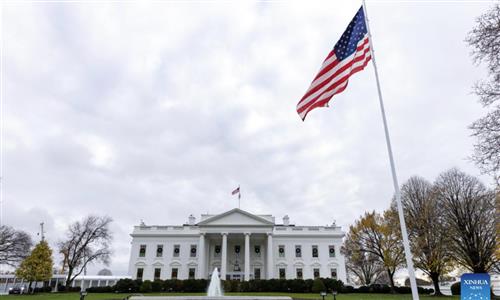
When the US released its 2025 National Security Strategy (NSS), Washington framed it as a sober "recalibration" of American power and priorities. Yet from an African perspective, the document reads less like a blueprint for global security and more like a manifesto of imperial anxiety - driven by fears of waning influence, by obsession with economic and political dominance, and by dismissal of peaceful development partnerships that resist US control.
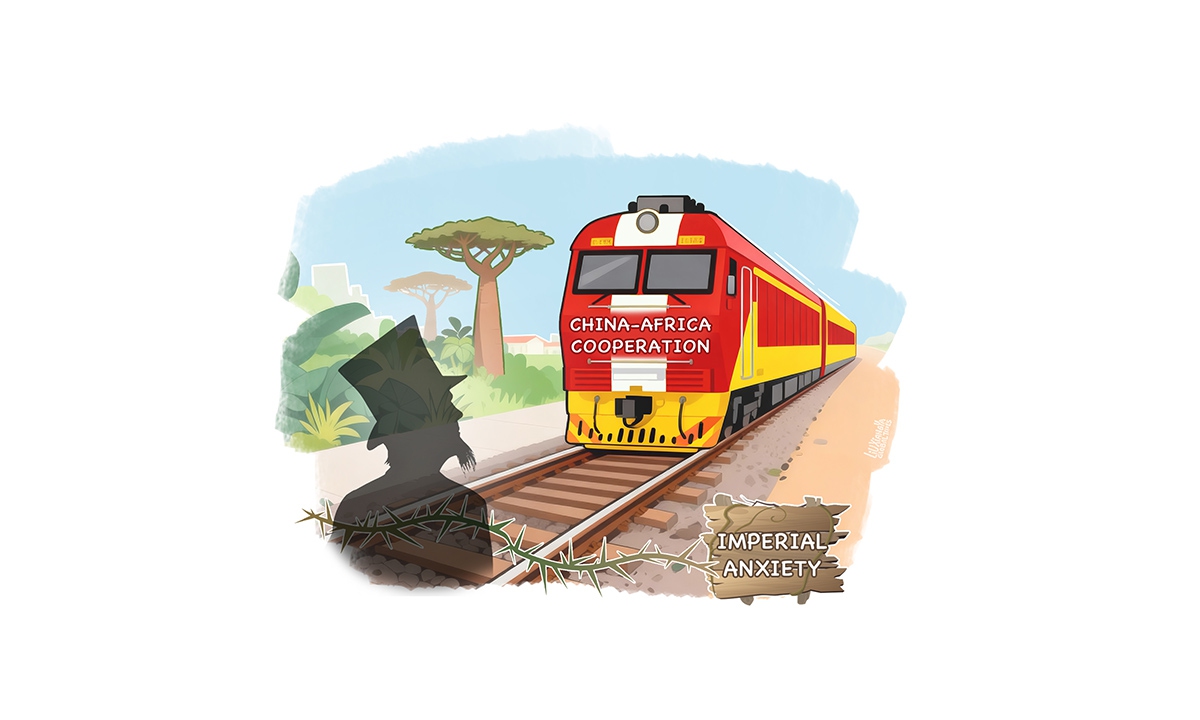
The US NSS claims to prioritize "national interest" and "sovereignty," but it consistently views the world through a lens of American primacy, labeling not just potential rivals but entire nations and global trends as threats. Worse, it reshapes US engagement to undermine African agency, legitimize endless tensions, and cast cooperative development with countries like China as inherently antagonistic - as if building a railway in Kenya is somehow a plot to "dominate" the globe.
Unlike previous strategies that emphasized great-power competition with China, the 2025 US NSS downplays formal geopolitical rivalry rhetoric but retains deep unease over China's global economic engagement. It aims to "rebalance" US-China economic relations while maintaining Indo-Pacific deterrence, yet Washington refuses to recognize China's African footprint as mutually beneficial - encompassing infrastructure, trade, industrial partnerships, etc. Instead, it frames Chinese involvement in strategic regions as a threat requiring counteraction or containment.
Beijing's pragmatic, no-strings-attached approach to Africa - building bridges, railways, ports, and energy projects without Western-style political conditions - is embraced across the continent. Washington, however, distorts this into a zero-sum strategic competition, threatening both US interests and its narrative of global leadership. In doing so, the US NSS disregards African sovereign choices and smears South-South cooperation as suspicious or destabilizing, reinforcing imperial norms that limit African agency to US preferences.
Despite claims that the US NSS moves beyond "great-power competition" rhetoric, it embeds economic nationalism and geopolitical rivalry at its core. It criticizes global partners, devalues multilateral institutions, and repackages outdated doctrines focused on hemispheric dominance, transactional alliances, and economic retrenchment.
This posture threatens to drag Africa into a great-power rivalry it neither chose nor benefits from. The US NSS views global multipolarity - with Africa playing an increasingly significant stabilizer role - not as progress, but as a loss of US control over global norms, outcomes, and alliances.
Africa is not a geopolitical chessboard for external forces. Its nations enjoy full agency, independent choices, and diverse partnerships that align with their core priorities of development, peace, and sovereignty. China's engagement with Africa offers an alternative cooperation model - one that upholds the principles of non-interference, mutual respect, and no political strings attached, and has gained broad recognition and support from African countries. To label this collaborative partnership a "geopolitical threat" is to undermine the sovereignty of African nations.
A truly just global order would prioritize Africa's aspirations - industrialization, infrastructure, economic integration, education, and genuine peacebuilding - over US' strategic anxiety.
The US NSS exposes US' entrenched imperial mindset: equating global security with US dominance, championing its own sovereignty while dismissing Africa's right to independent choice, reviving neo-colonial doctrines, and weaponizing military and economic coercion. It clings to a unipolar mentality that no longer reflects global realities; rhetoric that's about as convincing as a cat promising not to chase a mouse.
For Africa, the stakes are existential. Its destiny cannot be held hostage to US' anxiety, nor its development reduced to a great-power pawn. Africa's path lies in reclaiming full ownership of its future: upholding sovereign rights to partnerships based on respect, equality, and mutual benefit, free from external dictates. This means rejecting bloc politics and deepening cooperation with nations like China that unconditionally support Africa's development.
Today's true global leadership is measured by collaborative empowerment, not dominance. The world needs a vision that honors African agency, respects its sovereignty, and invests in its potential, not one rooted in fear. The 2025 US NSS fails this test, clinging to a bygone imperial era as history turns toward multipolarity and shared prosperity.
For Africa, the choice is clear: unite to defend sovereignty, reject imperial false dichotomies, and center its people's aspirations for development, peace, and dignity. In doing so, Africa will secure its own prosperity and reshape the global order into one that is inclusive and sustainable for all.
The author is a Pan-Africanist political commentator based in Gweru, Zimbabwe. opinion@globaltimes.com.cn
RELATED ARTICLES