Enhanced mutual trust, cooperation expected in Irish Taoiseach’s visit to China
By Published: Jan 04, 2026 12:48 AM
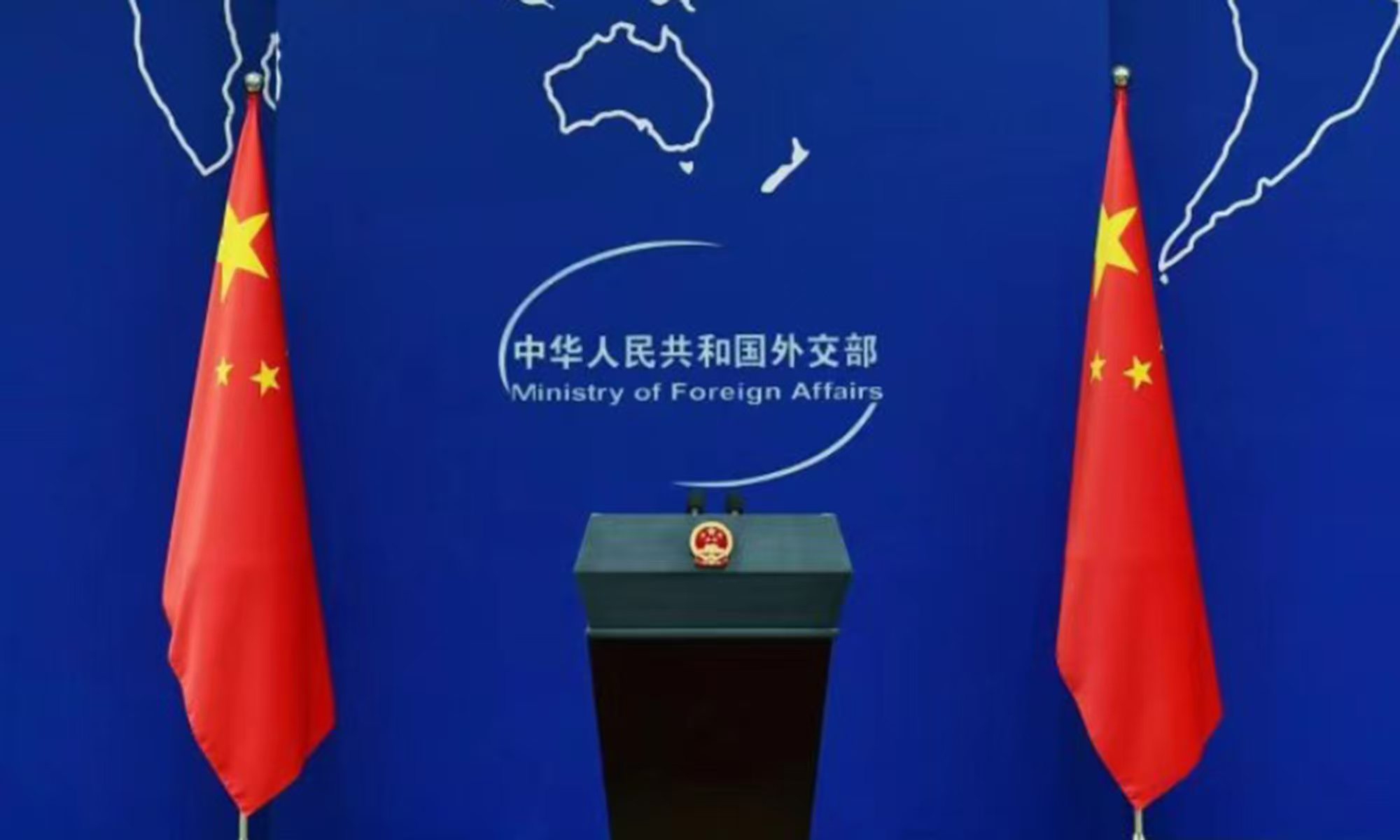
Chinese Foreign Ministry
At the invitation of Premier of the State Council Li Qiang, Taoiseach of Ireland Micheál Martin will pay an official visit to China from January 4 to 8, a Chinese Foreign Ministry spokesperson announced on Saturday.Analysts said the visit is expected to further enhance mutual trust and promote pragmatic cooperation between the two countries. As part of China-EU exchanges, the visit will also play a constructive role in fostering stable China-EU relations.
The upcoming trip will be the first visit to China by a taoiseach - the Irish term for prime minister - since 2012, the spokesperson said. During the visit, Martin will meet with President Xi Jinping, Premier Li Qiang and Chairman of the NPC Standing Committee Zhao Leji to hold in-depth exchanges of views on bilateral relations and issues of mutual interest.
"In recent years, the China-Ireland strategic partnership for mutually beneficial cooperation has enjoyed robust development," said the spokesperson. "Our two sides have always treated each other with mutual respect and equality. Through open cooperation, we've achieved mutual complementarity and common development, and benefited our two peoples."
Through the upcoming visit, China stands ready to work with Ireland to enhance political mutual trust, expand mutually beneficial cooperation and provide new impetus for the two sides to pursue high-quality development and sound and steady advancement of China-EU relations in the new era, the spokesperson noted.
In recent years, high-level exchanges between China and Ireland have remained stable.
In January 2024, Chinese Premier Li Qiang visited Ireland and met with then Irish Taoiseach Leo Varadkar. During a meeting with Taoiseach Martin in Dublin in February 2025, Chinese Foreign Minister Wang Yi said that China is ready to work with Ireland to enhance mutually beneficial cooperation, making it bigger, stronger, deeper and more concrete, in order to achieve shared development and prosperity.
Cui Hongjian, a professor at the Academy of Regional and Global Governance at Beijing Foreign Studies University, told the Global Times that the upcoming visit represents a continuation of the steady and stable development of relations between China and Ireland.
This visit is expected to further deepen cooperation between the two countries in fields including digital technology, green energy, and biomedicine, Cui said.
Wang Hanyi, a research fellow at the Shanghai International Studies University, told the Global Times that the visit signifies a further deepening of political mutual trust between China and Ireland, laying the foundation for bilateral cooperation in the new era after China unveiled its 15th Five-Year Plan (2026-2030).
According to Wang, Ireland is a key supplier of beef and dairy products to China and possesses advantages in fields including life sciences, information technology, and the agri-food sector. China, in turn, offers a vast market and a comprehensive industrial chain. This complementarity is expected to bring new opportunities for bilateral trade and investment during the visit.
In addition to Beijing, Taoiseach Martin will visit Shanghai, the spokesperson said.
Wang Hanyi pointed out that Martin's scheduled visit to China's financial hub Shanghai underscores the emphasis placed on local-level cooperation and people-to-people exchanges, as financial services, education and scientific research, and cultural tourism are likely to be the focus of the visit.
In November 2025, China announced the extension of its unilateral visa-exemption arrangements for more than 40 countries, including Ireland, to December 31, 2026. Under the policy, holders of ordinary passports will be exempted from visa requirements if they enter China for the purpose of business, tourism, family or friend visits, exchange and transit, for no more than 30 days.
Reuters said the trip comes as Beijing "shores up ties" with individual members of the EU bloc.
In the context of the 50th anniversary of China-EU diplomatic relations in 2025, this visit forms part of the ongoing series of high-level interactions, dialogues, and exchanges between China and Europe that began last year, thereby demonstrating the resilience of China-EU relations, Cui said.
Against the backdrop of complex adjustments in China-EU relations, Ireland places greater emphasis on pragmatic cooperation in economic, trade, and people-to-people exchanges, avoiding extreme policies such as decoupling, and promoting dialogue rather than confrontation, Wang Hanyi said.
This will enable Ireland to play a bridging role between China and the EU, contributing incremental value to more healthy and stable development of China-EU relations, while also helping the EU to form a more objective and comprehensive perception of China, she added.
RELATED ARTICLES