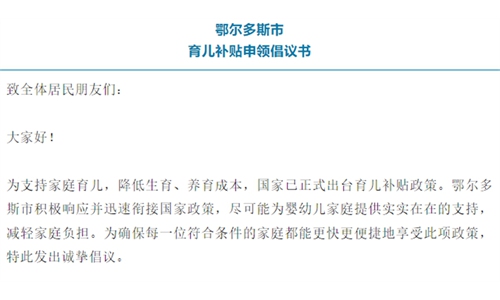
Application portal for 2026 childcare subsidy opens, beneficial for supporting families with infants
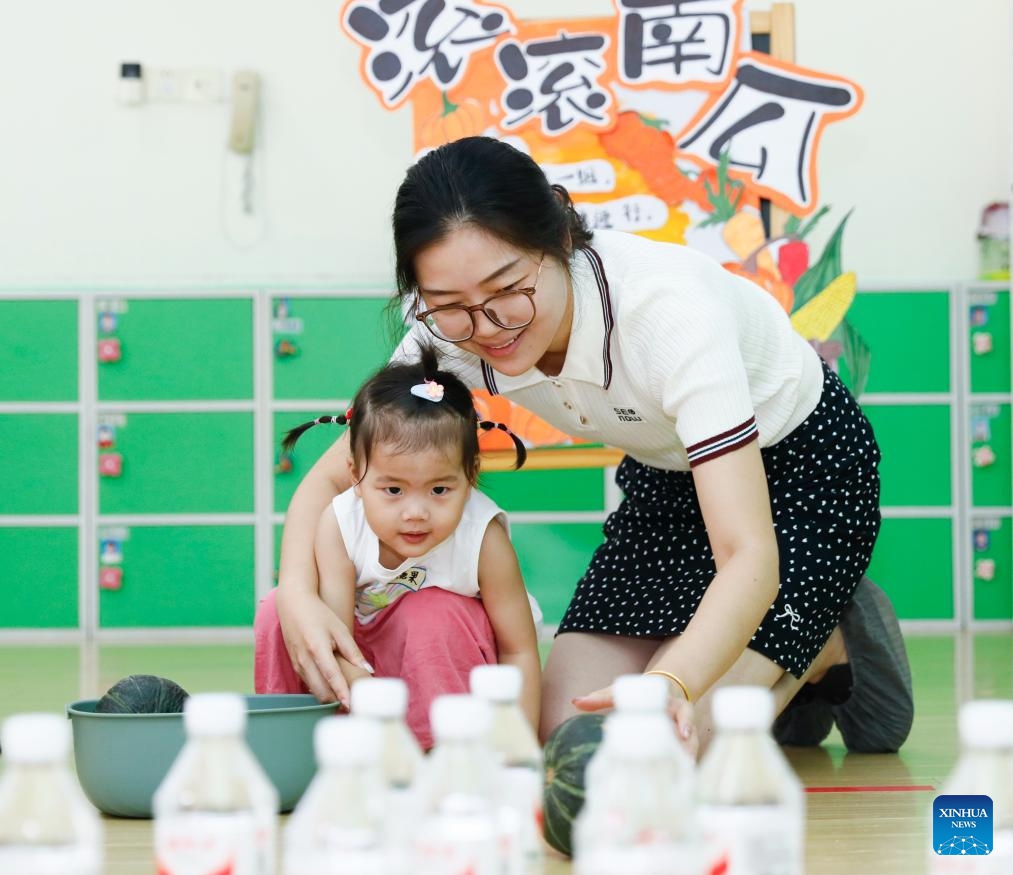
A guardian and her child play a game at a daycare center in Hai'an City, east China's Jiangsu Province, Aug. 16, 2025. (Photo by Gu Binbin/Xinhua)
The application portal for the 2026 childcare subsidy fully opened on Monday, according to National Health Commission.
To date, all 31 provincial-level regions in the country have distributed the 2025 childcare subsidy, with a cumulative total of over 24 million recipients. The distribution rate for the 2025 childcare subsidy reached approximately 80 percent, according to Xinhua News Agency.
For infants and young children who received the subsidy in 2025 and continue to meet the eligibility criteria for the new year, their applicants can submit a renewal application, the report said.
For infants and young children who meet the application criteria, applicants can submit applications online through the "childcare subsidy" mini-program on platforms such as Alipay or WeChat, or via the childcare subsidy application section on the government service platform of the province where the child is registered.
Alternatively, they may apply offline at the township or subdistrict office of the child's registered residence.
In 2025, China announced a groundbreaking nationwide cash subsidy policy for parents, including those with only one child aged three or younger, an effort to help alleviate the financial pressure on families raising children and boost the country's birth rate.
It will provide annual cash payments of 3,600 yuan ($502) per year for each child under the age of three who is legally born and holds Chinese nationality.
Song Jian, deputy director of the Population Development Studies Center at Renmin University of China, believed that such measures are beneficial for increasing birth rates.
Global Times
RELATED ARTICLES