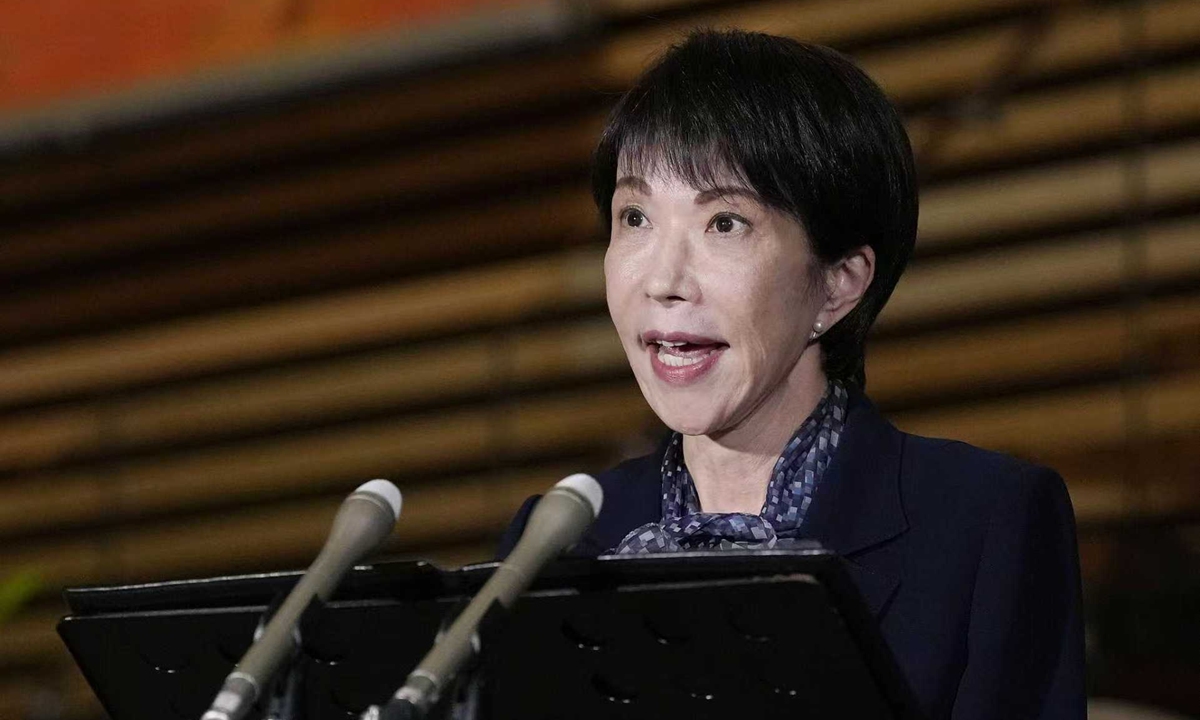
Japanese Prime Minister Sanae Takaichi meets the press at the premier's office in Tokyo on Dec. 26, 2025, following the Cabinet's approval of a record 122.31 trillion yen ($783 billion) draft initial budget for fiscal 2026.
While the US military attacks against Venezuela on early Saturday morning and its forcible seizure of President Nicolas Maduro and his wife have drawn condemnation from the international community, Japanese Prime Minister Sanae Takaichi's response, which avoided criticizing US actions, sparked criticism in Japanese political circles and among netizens.In a post on X on Sunday, Takaichi claimed that "Japan has consistently respected fundamental values and principles such as freedom, democracy and the rule of law… In response to the situation in Venezuela, the Japanese government, under my direction, is prioritizing the safety of Japanese nationals above all else while closely coordinating with relevant countries," she added.
The Japanese prime minister did not directly mention the military strikes by the US in the post.
Criticizing Takaichi's remarks, Maiko Tajima, a Japanese senator from the Constitutional Democratic Party, wrote Sunday on X that "no matter how undemocratic a regime may be, it cannot justify a military attack that violates international law. I protest the prime minister's comments for failing to unequivocally reject the use of force against another country."
"Since Takaichi refers to the US as an ally, shouldn't she criticize and urge the correction of its wrongful actions?" Yuko Ohtsubaki, vice-chair of Social Democratic Party, asked on X on Sunday.
Takaichi's past act of recommending US President Donald Trump for the Nobel Peace Prize during the US-Japan summit last October has also drawn harsh criticism against her on X.
"[Takaichi] recommending Trump for the Nobel Peace Prize will be shameless for generations to come," a netizen @Exorcise_Reisho commented in Japanese on Saturday.
"It's impossible to imagine Takaichi criticizing the US," @Hanapan8723 commented, noting that "she won't oppose the US even if this is a clear violation of international law… She'll either spout illogical nonsense or dodge with 'no comment at this time'," the netizen criticized on Saturday.
Asahi Shimbun disclosed on Monday a divergence within Tokyo on the issue, noting that while Takaichi avoided commenting on the US military actions, some within her government harshly criticized the US' action. According to the report, the US attack on Venezuela has put the Japanese government in a "difficult position."
According to the report, Komeito leader Tetsuo Saito on Monday criticized the US action and called on Japan to act. "I would like the government to appeal to the US about the importance of upholding international law," Saito said.
Toru Hashimoto, the former governor of Osaka Prefecture and former mayor of Osaka City, and also a founder of the Japan Innovation Party, commented Saturday on X that "if we cannot condemn Trump, then we have no grounds to condemn Putin… In the end, it [what Japan chose] was not a matter of international legal order, but one of political compromise [for Japan]," Hashimoto said.
Nikkan Sports reported Monday that Toru Tamakawa, a former TV Asahi employee, appeared on the media outlet's program on Monday, commenting on Takaichi's response that "so far, she has only made ambiguous statements. Is this acceptable? Hasn't the Japanese government consistently stated that it 'will not accept changes to the status quo by force'? This is entirely a change to the status quo by force."
In the wake of the shocking strike and Maduro's forcible seizure, the United Nations and many countries around the world moved quickly to respond. A growing number of countries condemned the sudden US attack, including Brazil, Chile, Cuba and Iran.
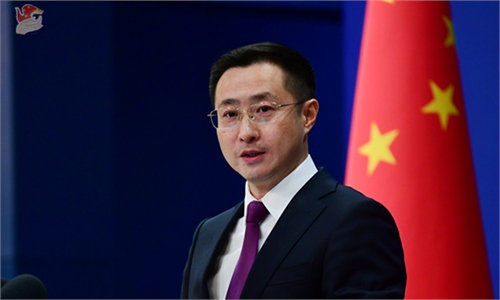
China is seriously concerned about the US forcibly seizing Venezuela's President Maduro and his wife and transferring them out of the country. The US actions clearly violated international law and the basic norms of international relations, as well as the purposes and principles of the UN Charter, Chinese Foreign Ministry's spokesperson Lin Jian said on Monday.
RELATED ARTICLES