US envoy to Costa Rica’s claims against China further reflect Washington’s attempt to dominate region following strikes in Venezuela: expert
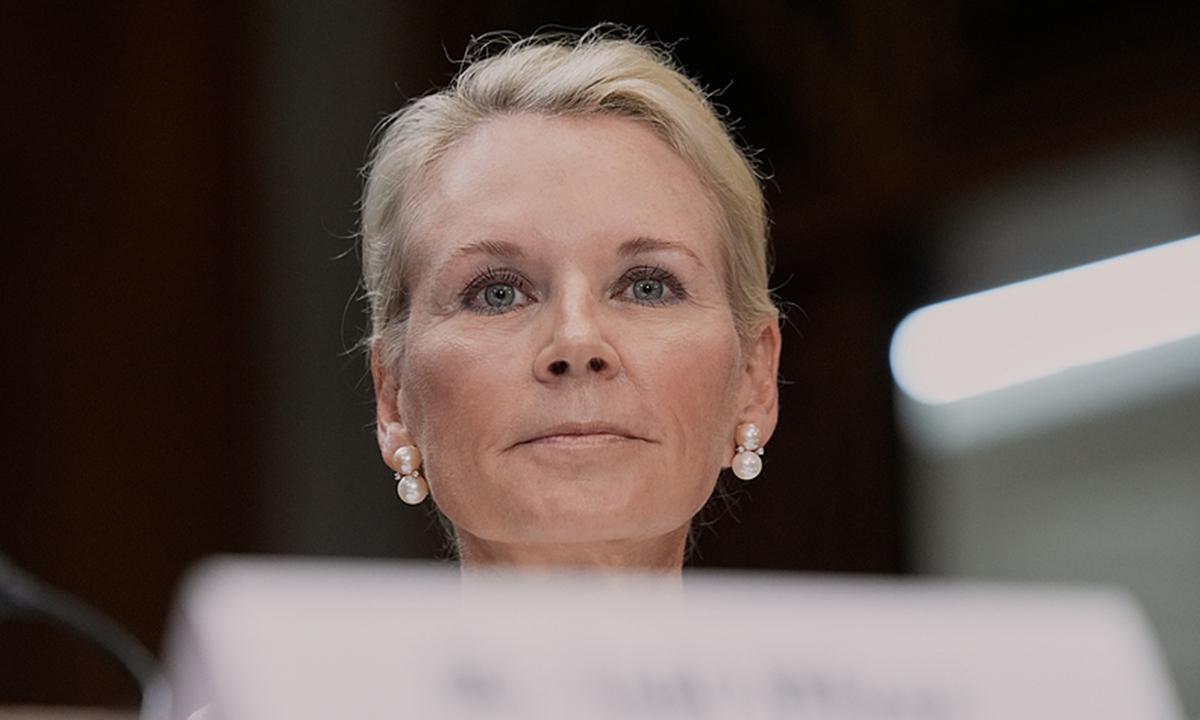
Melinda Hildebrand, nominated to be ambassador to the Republic of Costa Rica, listens at a Senate Foreign Relations Committee hearing on September 3, 2025, on Capitol Hill in Washington. Photo: VCG
The new US ambassador to Costa Rica, upon arrival in the country, made claims against China, describing it as one of the key issues facing the country, according to a local media report. Such claims reflect Washington's broader efforts across political, diplomatic and public opinion fronts to assert dominance in Latin America by creating pretexts, particularly in the context of what it had done in Venezuela, a Chinese expert said.
In a statement released by the US Embassy, US Ambassador Melinda Hildebrand called Costa Rica "a reliable democratic partner in a region facing challenges such as transnational organized crime, drug trafficking, cybersecurity threats, illegal immigration, and Chinese economic influence," according to a report by Costa Rican newspaper The Tico Times.
Hildebrand, a Texas businesswoman and philanthropist, stepped into the role after Senate confirmation in October, The Tico Times reported.
Hildebrand had previously made similar claims against China, prompting firm rebuttal from the Chinese side.
In September 2025, she claimed that China's so-called expansion in the Western Hemisphere is a "threat" during her confirmation hearings. In response, the Chinese Embassy in Costa Rica stated that "we have noted that certain individuals have recently hyped up the so-called 'China threat, expansion, and coercion'." These are the invariable practices of a certain hegemonic power, which are incompatible with today's world of interconnectivity and win-win cooperation, the spokesperson added.
China's cooperation with Costa Rica focuses on common development and benefiting the people, and it never targets any third party. At the same time, we firmly oppose any third-party interference in China-Costa Rica relations, the spokesperson said.
Hildebrand's latest claims are consistent with the Latin America policy pursued by the current US government, said Wu Hongying, former director of the Latin American office of the China Institute of Contemporary International Relations, pointing to the US National Security Strategy released in December, which advanced a "Trump corollary" to the Monroe Doctrine and called for restored US dominance in the Western Hemisphere.
In the context of the US forcibly seizing Venezuelan President Nicolás Maduro and his wife, Wu said that the US is also pursuing efforts across political, diplomatic, and public opinion fronts to assert its dominant position in Latin America, while also attempting to interfering China's cooperation with countries in the region.
In the coming period, Wu warned that the US is likely to continue its political pressure, economic coercion, and military threats against Latin American countries, potentially increasing its intervention and influence across multiple fronts.
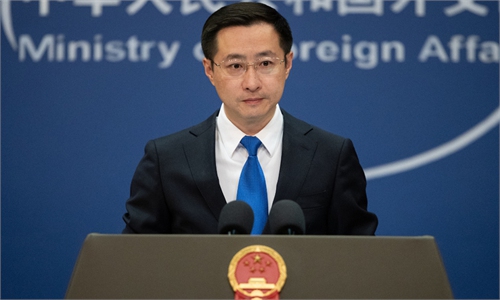
When asked to comment on US President Donald Trump's actions in Venezuela which can be seen as a real-life example of the Monroe Doctrine in action whereby the US claims that the Western Hemisphere is its sphere of influence, and whether the recent events in Venezuela impact China's commitments in Latin America in terms of economic, military and diplomatic ties, Chinese Foreign Ministry spokesperson Lin Jian stated on Monday that, no matter how the international landscape may evolve, China will always be a good friend and good partner of Latin American and Caribbean (LAC) countries.
"China's policy on the LAC region maintains continuity and consistency. We uphold the principle of non-interference in other countries' internal affairs, respect the choice of the LAC people, and never draw lines along ideological differences. China-LAC exchanges and cooperation follow the principles of equality and mutual benefit, never seek sphere of influence and never target any party," Lin added.
RELATED ARTICLES