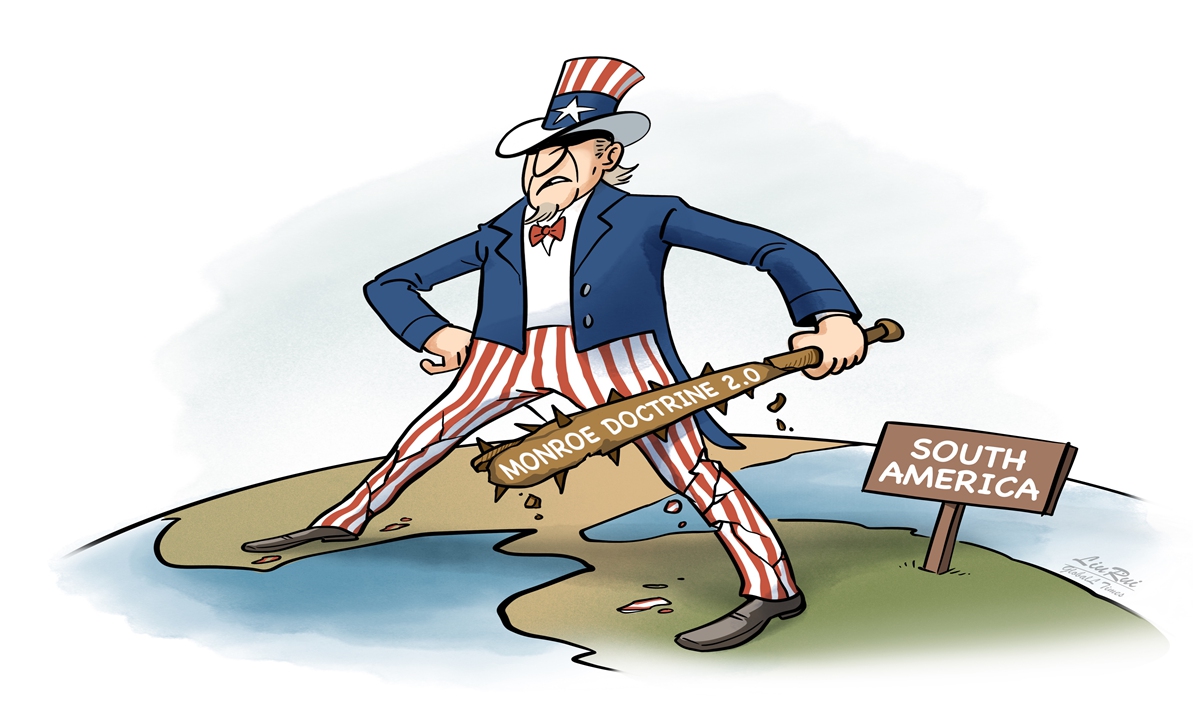
Illustration: Liu Rui/GT
The attack on Venezuela on January 3 leaves no room for doubt: The US no longer behaves as the peaceful democracy it proclaims to be. It has evolved into an armed democracy - one whose global posture is anchored less in diplomacy and international law and more in a permanent readiness for military conflict. Today, American hegemony is sustained not by the multilateral institutions it once championed but by the projection of raw force.
For decades after World War II, US leadership rested on an intricate balance: Washington defended a rules-based international system while simultaneously shaping political outcomes abroad through covert operations, economic leverage and asymmetrical alliances.
That balance is gone. Under the current US administration, the US has abandoned the subtle instruments of influence that characterized the Cold War and post-Cold War eras. In their place, it now relies on direct coercion, overt military interventions, extraterritorial detentions and the occupation of foreign territories. The invasions of Iraq in 2003 and Venezuela a few days ago illustrate a pattern that is no longer concealed, justified or mitigated by appeals to collective security.
Understanding this transformation requires a sober look at the structural foundations of American power. Since 1945, US hegemony has depended on its unrivaled ability to command maritime, technological and, above all, energy routes. This architecture is animated by a strategic assumption: The world remains "safe" for the US only when no other country can match its military capabilities. For this reason, the US economy is deeply intertwined with the defense sector, the global arms industry, and vast surveillance and logistics networks that sustain American military presence in every major region of the world. Demilitarizing US foreign policy would require nothing less than a reconfiguration of the country's economic and technological system.
The dominance of the US dollar is inseparable from this military architecture. The dollar is not only a currency, it is an instrument of power. Its status as the global reserve currency depends on US' ability to enforce sanctions, discipline adversaries and protect the global financial networks that sustain international trade. Since 1971, when the dollar was decoupled from gold and anchored to oil, this arrangement has relied on a simple logic: Major oil-producing countries price their oil in dollars, and the world must acquire dollars to buy energy. The stability of the dollar, therefore, is tied to US dominance of the global energy system.
This is why Venezuela, home to the world's largest proven oil reserves, has become a critical node in global geopolitics. With its proximity to the Gulf of Mexico, the Caribbean and the Panama Canal, Venezuela occupies one of the most strategically sensitive locations in the Western Hemisphere. More importantly, Caracas defied the foundations of the petrodollar system by selling oil to China in yuan, trading with Russia outside the SWIFT system and using alternative currencies to circumvent US sanctions. When the holder of the world's largest oil reserves experiments with de-dollarization, it strikes at the heart of US' global financial architecture.
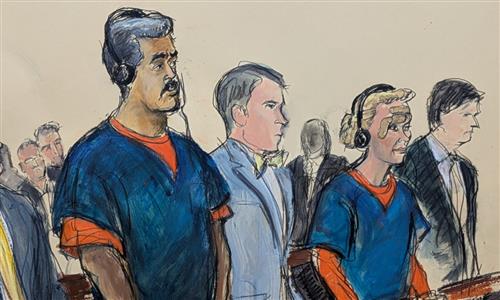
In this context, Washington's unprecedented military intervention in Venezuela - and its unilateral decision to seize President Nicolás Maduro under American law - should not be seen as an isolated event. It is the latest expression of a hegemonic country that now openly uses force where diplomacy and multilateralism once sufficed. The message to Latin America is unmistakable: Regional sovereignty has limits, and those limits are defined not by international law, but by the operational reach of American power.
What we are witnessing is a profound shift in the international system. Today, the US frames the global contest as a struggle between democracies and autocracies. However, this narrative obscures a deeper reality: The emerging divide is between armed unilateralism, sustained by a bloc of loyal allies and sovereign multilateralism, increasingly articulated by the Global South. The militarization of American democracy now poses a structural threat to international stability.
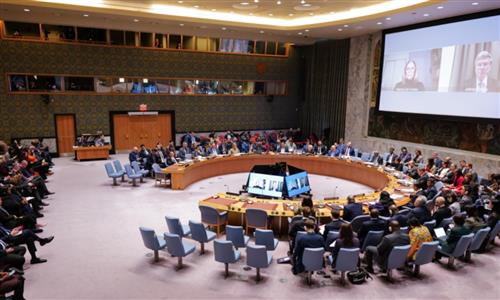
At a moment when global institutions are weakened, and the UN is approaching irrelevance, the task of rebuilding an international order anchored in sovereignty, equality and collective decision-making becomes urgent. The world cannot remain hostage to a system in which the unilateral exercise of force overrides law, diplomacy and the basic principles of coexistence.
If a new multilateralism is to emerge, it will not come from those who wield power through coercion. It will come from the world's sovereign voices - many of them in the Global South - insisting that global governance must serve not domination, but peace.
The author is a professor of international law at the Federal Fluminense University in Rio de Janeiro and Wutong chair professor at the Beijing Language and Culture University. opinion@globaltimes.com.cn
RELATED ARTICLES