When the US ‘puts Maduro on trial,’ the world also puts the US under scrutiny: Global Times editorial
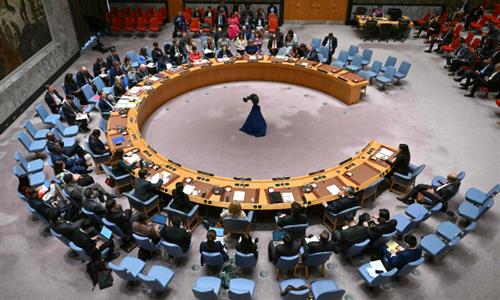
Diplomats and foreign representatives gather for a Security Council meeting at the United Nations (UN) concerning the situation in Venezuela on January 05, 2026 in New York City. Photo: VCG
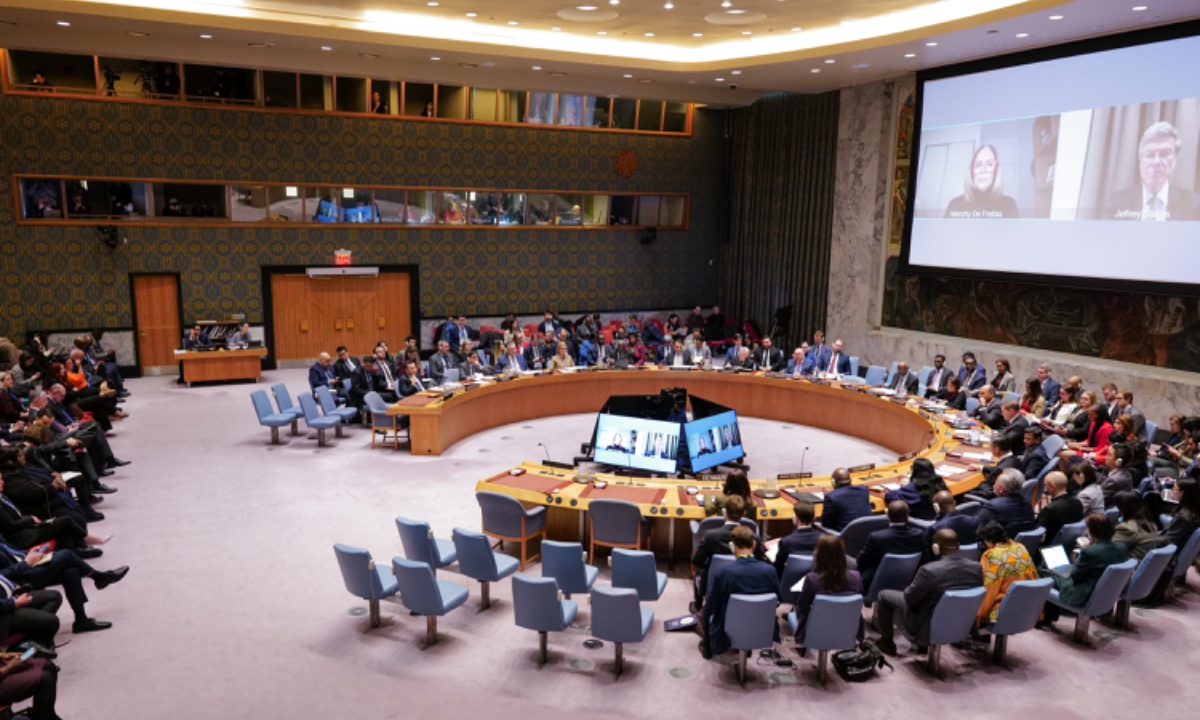
On Monday local time, a highly anticipated international meeting and an equally high-profile so-called "trial" unfolded on the same day in New York, the US. Inside the UN headquarters in Manhattan, the Security Council convened an emergency meeting to discuss the heightened tensions triggered by US military actions against Venezuelan President Nicolás Maduro. The UN secretary-general, multiple Security Council members, and representatives from many countries all stressed the imperative of adhering to the UN Charter and opposing the use of force to resolve international disputes. This cross-regional, cross-alignment consensus underscores a fundamental point: defending international law is not an "interest choice" of any single country, but a basic consensus of the international community.If Washington seeks to intimidate and deter others through the public spectacle of humiliating a foreign head of state, it has clearly underestimated both the shared consensus and the bottom lines of the international community. From any perspective, US actions lack both legitimacy and legality. Such blatant invasion and abduction flagrantly violate all core norms and fundamental principles enshrined in the UN Charter. Under whatever pretext - without Security Council authorization and in the absence of conditions for legitimate self-defense - the use of military force against a sovereign UN member state, including the abduction of its head of state, constitutes outright aggression. Subsequent justifications by the US government only amount to an obvious attempt to cover up the truth: elevating domestic "judicial" accusations - based on tenuous or even false evidences - above international law, and substituting unilateral military actions for multilateral diplomatic mechanisms. In essence, this is unilateral hegemonic behavior that fundamentally challenges, and even negates, the universal binding force of international law.
What such practices undermine is the institutional foundation of the international system. Sovereign equality, non-interference in internal affairs, and the prohibition of the threat or use of force are the pillars upon which the post-WWII international order rests. If certain countries are allowed to decide, based on their own judgments, "who is guilty, who should be punished, and how punishment should be carried out," international law will be reduced to a selectively applied tool, and the collective security mechanism established by the UN Charter will be hollowed out. As many representatives pointed out at the Security Council meeting, this issue concerns not only the sovereignty and security of a single state, but also whether international law still retains authority and predictability.
Historical experience has repeatedly shown that replacing rules with sheer power doesn't bring lasting stability. The overwhelming majority of countries are unwilling to return to a Hobbesian international jungle governed by the law of the strong preying on the weak.
Since the end of the Cold War, instances of bypassing the UN and relying on unilateral military actions to address complex political problems have been far from rare. The results have often been prolonged regional turmoil, breakdowns in national governance, and worsening humanitarian crises. The price paid by the international community has been extremely heavy. The hard-won peaceful environment in Latin America and the Caribbean today should likewise not be undermined by unilateralism and power politics.
The US' brazen military actions against Venezuela, followed by threats toward Colombia, Cuba, and other countries, once again warn the world that imperialist thinking and hegemonic practices remain the most destructive forces undermining global peace and stability. The United Nations is the core of the current international system, and international law is the fundamental norm governing international relations.
The more turbulent and uncertain the global situation becomes, the more necessary it is to return to the UN framework and manage differences through political solutions such as dialogue, negotiation and mediation to prevent escalation. When Maduro was put on trial, the US was also standing in the dock of the international community. Any action that weakens the authority of the United Nations or denies the binding force of international law will ultimately backfire on the hegemon itself.
No country can act as the international police, nor can any country claim to be the international judge. The international community does not need hegemonic politics based on "might is right," nor does it require an "imperial order" that places itself above other nations. Only by adhering to true multilateralism and upholding international law, as well as the purposes and principles of the UN Charter, can the international system avoid descending into a jungle logic where the strong prey on the weak, allowing the world to move toward a more stable and just direction.
RELATED ARTICLES