China tightens export controls of Japan-bound dual-use items amid security tensions
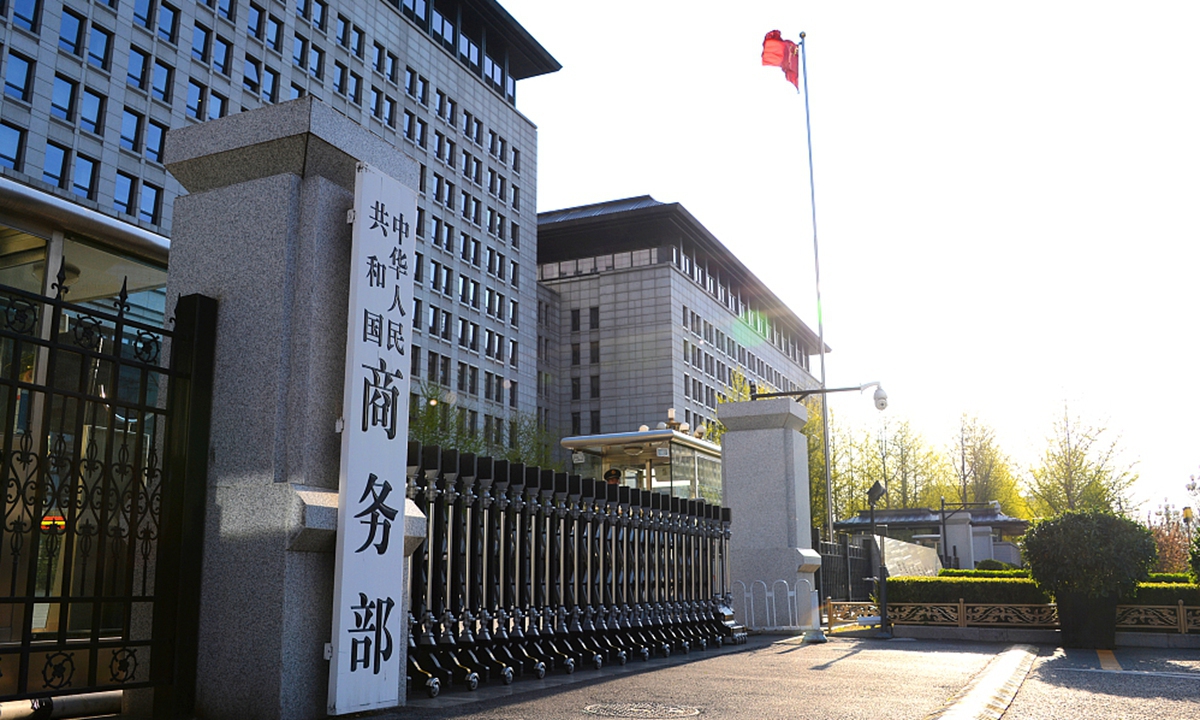
Ministry of Commerce
China announced on Tuesday a decision to tighten export controls on dual-use items destined for Japan, citing national security and non-proliferation obligations. Experts see the move as a lawful and necessary response to the increasingly dangerous signals from Japan in the security sphere, aimed at preventing risk spillovers and safeguarding regional peace and stability.
According to the Ministry of Commerce (MOFCOM), the decision was made in accordance with relevant Chinese laws and regulations, including the Export Control Law of China, and has taken effect upon announcement.
Under the decision, all dual-use items are prohibited from being exported to Japan for military end users, military purposes, and any other end users or uses that contribute in any way to enhancing Japan's military capabilities, the ministry said.
MOFCOM further stressed that any organization or individual, in any country or region, that violates the above provisions by transferring or providing dual-use items of Chinese origin to organizations or individuals in Japan will be held legally liable in accordance with the law.
Dual-use items are goods, technologies or services that could be used for either civil purposes or military purposes, or to contribute to an increase in military potential, especially in the design, development, production or use of weapons of mass destruction and their means of delivery.
Chinese experts said the latest move reflects a cautious, rules-based approach aligned with international practice, as the controls are confined to military-related uses rather than being a blanket ban. They warned that any further moves from the Japanese side that cross red lines or threaten China's security interests would carry broader repercussions, including in economic and trade relations.
Lawful, necessary move
Tuesday's announcement came after the Japanese leader recently made erroneous remarks regarding China's Taiwan region, hinting at the possibility of military intervention in the Taiwan Straits. Such comments interfered in China's internal affairs, seriously violated the one-China principle and are extremely egregious in nature and impact, a MOFCOM spokesperson said in a statement on Tuesday in response to a question on the considerations behind the announcement, previously released by the Ministry of Commerce (MOFCOM), on tightening export controls on dual-use items to Japan.
The latest export control measure is implemented in accordance with laws and regulations and targets dangerous signals recently released by Japan in the security domain, whose related moves could have a disruptive impact on regional peace and stability, Xiang Haoyu, a research fellow at the China Institute of International Studies, told the Global Times on Tuesday.
Xiang said that any spillover of such risks could have serious consequences, making it necessary for China to take corresponding measures to strengthen risk prevention, in line with the shared concerns of regional countries and the international community over safeguarding strategic stability and security.
The wrongful remarks by the Japanese leader mirror the country's increasingly assertive posture in the security domain. Prime Minister Sanae Takaichi claimed in her New Year press conference that discussions will be advanced with the aim of revising the three key security documents within the year.
In response to a media question regarding Takaichi's speech, Chinese Foreign Ministry spokesperson Mao Ning said on Tuesday that this reflects Japan's dangerous trend of accelerating "remilitarization," which will inevitably undermine regional peace and stability, and the international community must remain highly vigilant.
Mao emphasized that the "remilitarization" promoted by right-wing forces in Japan already poses a threat to regional and global peace and stability. China, together with all peace-loving countries and people around the world, will never allow right-wing forces in Japan to reverse the course of history, or permit the resurgence of militarism, the spokesperson added.
As a responsible major country, China remains committed to its international obligations, including non-proliferation, Xiang said. "Amid statements by certain countries that risk regional stability, China's move to tighten export controls aims to prevent dual-use technologies from fueling military expansion or escalation, serving the shared interests of the region and the international community."
Given Japan's continued provocations and pressure on China in the military and security sphere, it is clearly inappropriate to continue exporting dual-use items that could be used for military purposes, said Lü Xiang, a research fellow at the Chinese Academy of Social Sciences. He added that "China's move is therefore both necessary and well-targeted, representing a timely security measure."
"In the past, China and Japan did not maintain strict controls on dual-use items and had long-standing cooperation in this area, so the comprehensive tightening will inevitably affect Japan's related industries and foreign trade," Lü noted.
Risk higher costs for Japan
MOFCOM's latest move quickly drew attention from Japanese media outlets, including The Mainichi Shimbun, the Japan Times, Kyodo News and Nikkei.com. The Mainichi noted in a report on Tuesday that Beijing's strong response to Takaichi's earlier remarks on the Taiwan question has already prompted China to step up pressure on Japan.
An official from the trade and economic security bureau in Japan's Trade Ministry said that the bureau was assessing the situation, the Japan Times reported on Tuesday.
The report pointed to the potentially broad scope of the controls, noting that China's dual-use export control list covers more than 800 items, ranging from chemicals, electronics and sensors to equipment and technologies used in shipping and aerospace.
Kyodo News expressed concern that the measure follows earlier calls to refrain from travel to Japan and represents an additional countermeasure, warning that if rare earths are included in the scope, the impact on Japanese companies could be significant.
The move was aimed at stepping up economic pressure in response to Prime Minister Sanae Takaichi's Diet remarks on a potential Taiwan contingency, Nikkei.com reported on Tuesday. The report added that rare earth-related products could also fall within the scope, potentially affecting Japanese industry.
On April 4, China's Ministry of Commerce, along with the General Administration of Customs, announced export control measures for seven categories of medium and heavy rare earth-related items, namely samarium, gadolinium, terbium, dysprosium, lutetium, scandium, and yttrium.
Kota Takaguchi, a journalist and visiting professor at Chiba University, wrote on Yahoo Japan that the prospect of a rare earth embargo had emerged more abruptly than expected. While the scope and strictness of the latest controls remain unclear, he claimed that any escalation to a full ban would make it impossible for China-Japan relations to remain in their current stalemate, adding that without a swift resolution, "Japan's industries would come to a halt."
According to the Japan Organization for Metals and Energy Security (JOGMEC), China accounted for 71.9 percent of Japan's total rare earth imports in 2024. This was far higher than Vietnam's 15.4 percent and France's 6 percent, underscoring Japan's continued heavy reliance on China.
Japan has avoided addressing the core issues while playing down the damage its leader's remarks have caused to bilateral ties, Lü said. "China's measures serve not only to regulate economic and trade conduct but also to warn against Japan's increasingly confrontational stance. If this approach continues, Japan will face rising political and economic costs."
RELATED ARTICLES