US withdrawal from 66 intl organizations a utilitarian move weakening multilateral cooperation, pushing the world toward a ‘jungle order’: Chinese expert
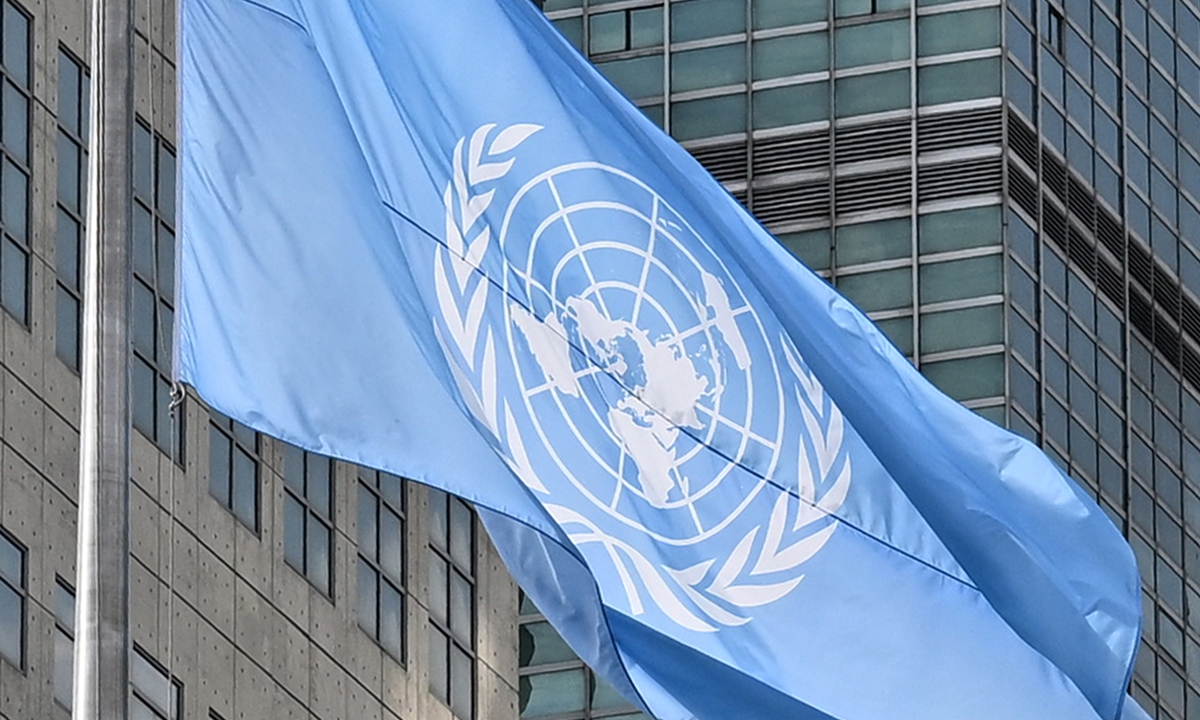
The photo shows the United Nations flag at the United Nations Headquarters in New York, US, on September 23, 2025. Photo: VCG
US President Donald Trump has ordered the US government to pull out of 66 international organizations that the White House said "no longer serve American interests," including the UN's population agency and the UN treaty that establishes international climate negotiations, as the US further retreats from multilateral cooperation, multiple media reported on Thursday.
The move signals Washington's attempt to weaken or even dismantle multilateral mechanisms, pushing the world toward a "jungle order" where the strong dominate the weak, a Chinese expert told the Global Times, noting that the US decision indicates that it merely views the UN as a tool to advance its geopolitical competition.
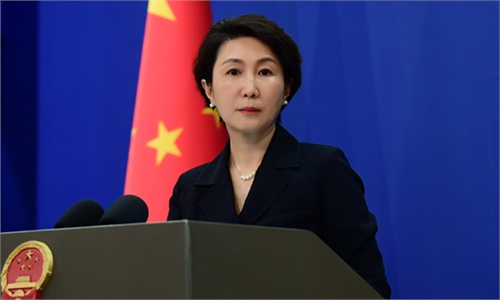
Chinese Foreign Ministry spokesperson Mao Ning commented on Thursday that it's not the first time for the US to withdraw from such entities.
She noted that the current international landscape once again proves that it's the effective operation of the multilateral system that can stop the law of the jungle from prevailing and stop the "might is right" approach from dominating the international order.
No matter how the situation may evolve, China will stay committed to multilateralism, support the central role of the UN in international affairs, and work with the rest of the international community to build a more just and equitable global governance system, Mao said.
In a presidential memorandum signed on Wednesday, Trump directed US agencies and departments to "cease participating in and funding 35 non-United Nations organizations and 31 UN entities that operate contrary to US national interests, security, economic prosperity, or sovereignty," according to a White House fact sheet briefly posted to the White House website.
Most of the targets are UN-related agencies, commissions and advisory panels that focus on climate, labor and other issues that the Trump administration has categorized as catering to diversity and "woke" initiatives, per the Guardian. Among them, UN Framework Convention on Climate Change is a treaty that underpins all international efforts to combat global warming, BBC reported.
The move has sent a clear anti-globalization and anti-multilateralism signal that the US is no longer willing to provide international public goods or contribute US resources to global governance, Li Haidong, a professor at the China Foreign Affairs University, told the Global Times on Thursday, noting that instead, multilateral mechanisms are seen as "a burden" and "a source of harm" to US interests.
"By withdrawing from such mechanisms, Washington has sought to weaken, undermine, or even dismantle them, pushing toward a 'jungle world' in which the strong dominate the weak and other countries' interests must submit to those with greater power. This is a deeply regressive way of thinking and acting," Li said.
The US exit from the foundational international agreement to address climate crisis has sparked outrage, cementing the US' utter isolation from the global effort to confront dangerously escalating temperatures, per a report by The Guardian on Thursday.
"This is a shortsighted, embarrassing and foolish decision," said Gina McCarthy, a top climate adviser to former US president's Joe Biden's White House. A member of a US-based non-profit advocacy group, the Union of Concerned Scientists, described the step as a "new low," per media reports.
Despite the massive shift, the US officials, including Trump himself, claimed they have seen the potential of the UN and want to instead focus taxpayer money on expanding US influence in many of the standard-setting UN initiatives where they believe there is competition with China, such as the International Telecommunications Union, the International Maritime Organization and the International Labor Organization, per the Guardian.
The US views existing multilateral institutions in a highly utilitarian approach, Li said. "The US administration does not deny that organizations such as the United Nations still have value, but it believes that value lies primarily in their usefulness in great-power competition. This indicates that, in the US view, the core function of the UN is not to safeguard global order and security, but to provide a platform the US can use to advance geopolitical rivalry," the expert noted.
The US administration previously suspended support from agencies like the World Health Organization, the UN for Palestinian refugees known as UNRWA, the UN Human Rights Council and the UN cultural agency UNESCO as it has taken a larger, a-la-carte approach to paying its dues to the world body, picking which operations and agencies they believe align with the US agenda and those which no longer serve US interests, the ABC News reported.
Last January, UN agencies responded to Trump's executive orders ending US membership of the World Health Organization (WHO) and its adherence to the Paris Climate Agreement, highlighting the massive potential negative impact on public health and efforts to curb global warming, according to a report published on the UN's official website.
In July 2025, after the US administration announced that it will be withdrawing the US from UNESCO, Chinese Foreign Ministry spokesperson Guo Jiakun said it was the third time that the US has withdrawn from UNESCO. "The country hasn't paid arrears for a long time. This is not what a responsible major country should do," Guo said, calling on all countries to reaffirm their commitment to multilateralism, and take concrete action to support the UN-centered international system, the international order underpinned by international law, and the basic norms governing international relations based on the purposes and principles of the UN Charter.
RELATED ARTICLES