Chinese researchers construct healthy reference chart for brain structure for Chinese population, to facilitate diagnosis and precision treatment
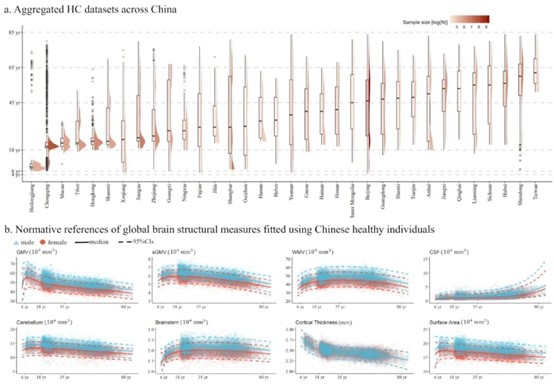
Sample distribution in the general population and the developmental and aging trajectories of brain structure across the lifespan. Photo: Beijing Tiantan Hospital
A Chinese research team recently constructed the first normative references of brain structure across the entire lifespan for the Chinese population, which could be understood as a "healthy reference chart" for brain structural morphology, according to a report by Science and Technology Daily on Sunday. The chart holds promising applications in clinical practice for brain health assessments and precise evaluations of brain diseases, per the report.
The study, published in Nature Neuroscience, can establish a normative reference standard for the Chinese population in the diagnosis and precision treatment of neurological diseases such as Alzheimer's disease, Parkinson's disease, and cerebral small vessel disease, per the report.
The study was a collaboration between a team led by Professor Liu Ya'ou from the Beijing Tiantan Hospital, Capital Medical University, and Professor Zuo Xinian's team from Beijing Normal University.
The result also revealed later peak ages of lifespan neurodevelopmental milestones than European and North American populations.
Liu said traditional MRI assessments have long been limited by two major bottlenecks: "One is that international brain structural normative references are predominantly derived from Western populations, whereas genetic and environmental differences result in notable brain morphological variations in Chinese individuals from them, risking diagnostic and therapeutic inaccuracies."
The other is the dynamic age-related changes in brain structure, making it difficult for conventional approaches to differentiate physiological senescence from pathological alterations, which may postpone timely early detection and intervention, Liu added, according to the report.
To overcome these challenges, Liu said the research team integrated 105 research sites nationwide and collected nearly 28,000 high-quality MRI datasets covering the entire country, including Hong Kong, Macao, and the Taiwan region, to conduct the study.
"By comparing patients' brain imaging data with these normative references, we can quickly determine whether their brain structure deviates from the norm and subsequently identify the specific disease. Compared to conventional MRI examinations, this method significantly improves diagnostic accuracy," explained Liu.
Global Times
RELATED ARTICLES