Illustration: Chen Xia/GT
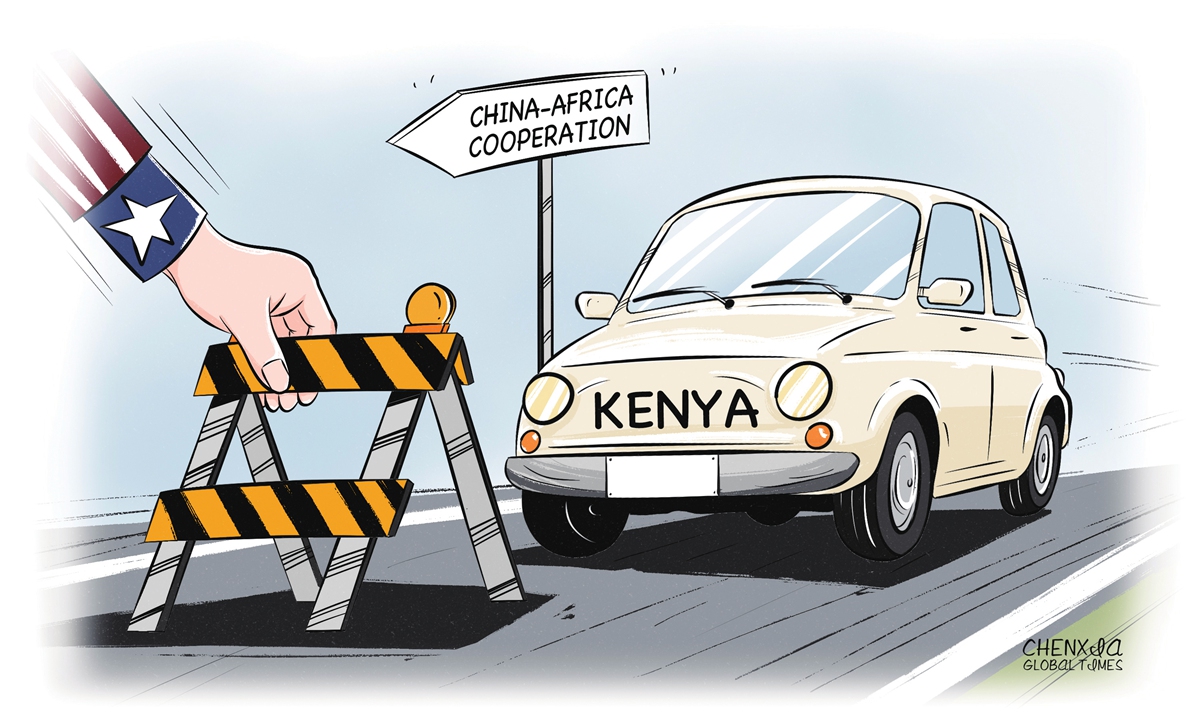
According to Bloomberg on Sunday, citing Kenya's The Standard, the signing of a trade deal between Kenya and China has been held up due to US pressure on the African country not to proceed with the agreement. The Standard also noted that this comes as Kenya seeks to extend its participation in the US Africa Growth and Opportunity Act (AGOA), which significantly cuts duties on some exports to the US, effectively placing Kenya in a position where it is being asked to choose between the two pacts.The pressure from the US on Kenya is aimed squarely at a trade deal which seeks to eliminate Chinese tariffs on key Kenyan exports, including tea, coffee, avocados, and fish. According to Business Insider Africa, AGOA expired on September 30, 2025. Since the program lapsed, Kenya's apparel exports to the US, worth more than $600 million annually, have been hit with tariffs of up to 28 percent. Hence, Kenya views the prospective deal with China as a buffer against the fallout from AGOA's lapse.
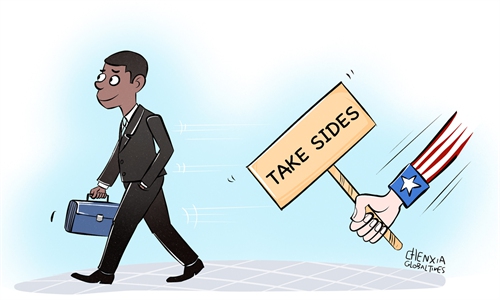
AGOA, which the US has used as a tool to pressure Kenya, is a preferential trade program for Africa launched during the Clinton administration. More than three months have passed since AGOA expired, the US has still not clarified whether it will extend the program. Instead, it has moved to pressure Kenya not to proceed with the trade agreement with China. Song Wei, a professor at the School of International Relations and Diplomacy at Beijing Foreign Studies University, told the Global Times that the US is using the review and potential renewal of AGOA as a key tool to impose its strategic interests on Africa, effectively forcing Kenya to take sides between major powers. This approach not only risks further constraining Kenya's development space but also delivers new shocks to an African economy already facing multiple challenges, exposing the unilateralism and bullying nature of US policy.
In Washington's narrative, China's normal cooperation with Africa is often interpreted as "geopolitical expansion," and the US pressure on Kenya is by no means the first instance. Last year, Jim Risch, Chairman of the US Senate Foreign Relations Committee, introduced an amendment to reassess Kenya's status as a "major non-NATO ally," signaling Washington's displeasure over Kenya's deepening ties with China.
At the same time, US policy toward Africa has increasingly emphasized so-called "trade reciprocity" and the security of critical minerals, a framing that in fact prioritizes Washington's own strategic interests rather than Africa's development needs. Song noted that the US' recently released National Security Strategy report further confirms this shift. While the report insists that US-Africa relations should not be seen as a one-sided form of "aid," it places disproportionate emphasis on securing access to Africa's critical minerals. Such a notion of "reciprocity," applied to structurally unequal economies, is inherently unreasonable and merely reproduces a long-standing Western logic rooted in colonialism - reducing Africa to little more than a supplier of raw materials.
By contrast, China has consistently been a genuine partner in promoting Africa's development, particularly in its long-standing cooperation with Kenya. Over the years, China has been a major source of investment, a key trade partner, and a leading contractor for Kenya, making tangible contributions to the country's economic and social development. These outcomes stand in sharp contrast to the pressure tactics currently being employed by Washington.
China-Africa cooperation has never been closed or exclusive, nor has it required African countries to take sides. African countries have every right to independently choose their development paths and international partners. Against the backdrop of increasingly unpredictable US trade and economic policies, it is both rational and practical for African countries, including Kenya, to deepen cooperation with China. China's development has not "moved anyone's cheese." Africa belongs to Africans, and efforts to pressure African countries into making a so-called "choice" between China and the US amount to yet another blatant attempt to subordinate African development to Washington's geopolitical self-interest, at the expense of the well-being of African people.
RELATED ARTICLES