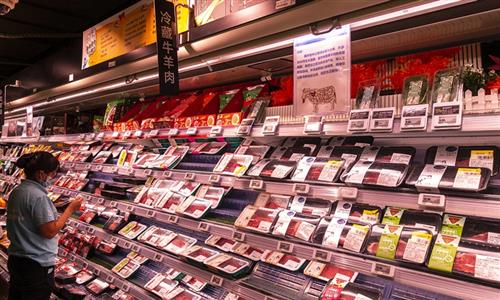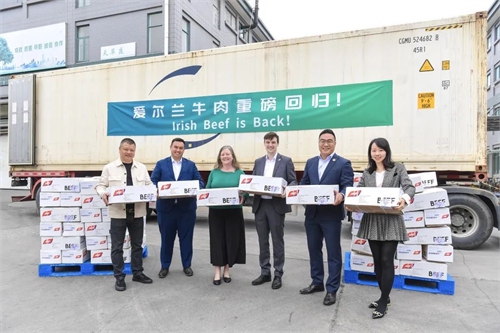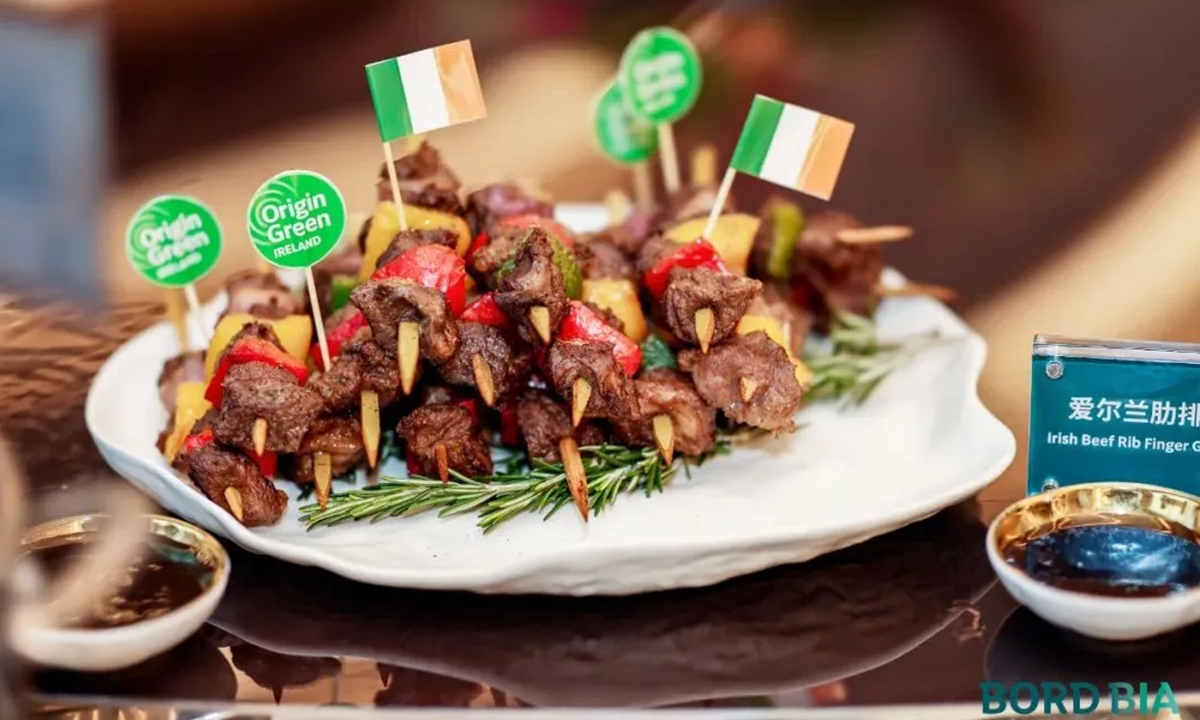
Cooked Irish beef Photo: Bord Bia's official WeChat account
Ireland has recently been able to resume its beef exports to China, its major trading partner, after more than a year of suspension, the Global Times learned from Bord Bia, the Irish Food Board, which is an Irish state agency, on Tuesday.
A Global Times reporter also noticed on Tuesday on the official website of the General Administration of Customs that China's customs import approval database shows that Irish beef exporters are now on the eligible list.
An official statement that Bord Bia shared with the Global Times on Tuesday said that it will "commence a relaunch campaign to coincide with Chinese New Year, marking the return of Irish beef to the Chinese market after exports were suspended in October 2024."
Bord Bia CEO Jim O'Toole has welcomed the result. He said that "This is positive news for the Irish beef sector, offering exporters the opportunity to broaden their market options and capture returns across a range of specialist beef cuts. In the longer term, Bord Bia, working closely with Irish exporters, is committed to building stable, sustainable growth for Irish beef in the Chinese market," according to the statement.
Sinead Kennedy, Bord Bia China Manager, told the Global Times that "Bord Bia has continuously engaged with Chinese importers, many of whom remain committed to working with Irish suppliers to develop opportunities in both food service and retail."
"With the resumption of exports, we can now dial up our activities in China. This includes promotional activities under Bord Bia's 3.45-million-euro EU-funded campaign to promote beef and lamb, which has already been launched in Japan and Singapore," said Kennedy.
The suspension was followed by the discovery of a case of mad cow disease, according to a Reuters report.
According to a separate article that Bord Bia published on its official WeChat account on Tuesday, it said that China has always been an important strategic market for Irish beef. Despite a temporary interruption, the Chinese market continues to offer Irish exporters opportunities for diversification and for creating higher added value through a range of differentiated beef cuts, according to Bord Bia, noting that in the long term, it will continue to work closely with Irish producers to support the steady and sustainable development of Irish beef in the Chinese market.
Ireland exports the bulk of its output from the beef and dairy industries, which are major employers in the country, according to Reuters. It is among Europe's largest exporters of dairy products, shipping about 6 billion euros ($7 billion) of goods annually, said the report.
This development came after the recent successful visit to China by Ireland's Taoiseach Micheál Martin. The resumption of beef trade is also emblematic of the broader expansion of trade not only between China and Ireland, but also between China and the EU, Cui Hongjian, director of the Center for European Union and Regional Development Studies at Beijing Foreign Studies University, told the Global Times on Tuesday, underscoring the high degree of complementarity between the two sides in building more stable and balanced trade ties.
The latest development also reflects China's emphasis on addressing the EU country's legitimate concerns. Over the long term, China has consistently approached such issues from the perspective of partnership, Cui said.
In recent years, particularly since China and the EU signed an agreement on geographical indications, cooperation in the agricultural sector, including trade, has grown at a relatively fast pace. An increasing number of European countries have sought to further tap into China's vast consumer market, and Ireland is no exception, Cui said, noting that closer China-EU cooperation in agriculture and the entry of more European agricultural products into the Chinese market point to a successful direction for bilateral economic and trade relations.
RELATED ARTICLES