IN-DEPTH / IN-DEPTH
Reporter’s Notes: ‘Turn all weapons into instruments,’ Ryukyu strives to be an ‘island of peace’

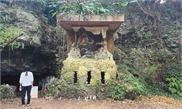
Shureimon Gate, the first gate to Shuri Castle which is the palace of the former Ryukyu Kingdom Photo: Zhang Changyue/GT
"Turn all weapons into instruments." These words first came into eyes when we stepped into the live house run by Ryukyuan musician Shokichi Kina in the city of Naha. Flower, a Ryukyuan folk song Kina wrote and sang, later became widely known across Asia through a cover version by Chinese singer Emil Chau. And the core spirit of the song is a prayer for world peace.
According to Liu Dan, an associate researcher at Shanghai Jiao Tong University, the Ryukyu Islands in a geographical sense form an arc-shaped archipelago located between China's northeastern Taiwan island and Japan's southwestern Kyushu. In a historical sense, Ryukyu refers collectively to the three principalities of Hokuzan, Chuzan, and Nanzan during the "Three Mountains" period, as well as the Ryukyu Kingdom after its unification. Over the centuries, the Ryukyus have repeatedly been ravaged by war, which has made the local people's longing for peace especially strong.
That's why the Ryukyuan people long for peace more than ever. In conversations with us, they all mentioned one wish: To make Ryukyu an "island of peace."
The Peace Memorial Park, which is located in Itoman city, the southernmost point in the Okinawa Main Island, stands on the site of the final fierce battles of Battle of Okinawa. Not far away is the Himeyuri Cenotaph, which honors the female students and teachers forced to serve as wartime nurses before tragically losing their lives. On a message board in the Himeyuri Peace Museum, a member of Japan's Self-Defense Forces wrote: "Peace comes first. For Japan, and for the whole world, peace must always come first."
Yet in the eyes of many Ryukyuans, true peace perhaps means that this land, soaked in the blood and tears of civilians, should no longer serve as a pawn in any military power struggle.
Ironically, in recent years the Japanese government has continued to push forward large-scale military deployments across the Ryukyuan land, thrusting the islands to the front line of Asia-Pacific military confrontation and intensifying local peoples' anxiety and fear. Against such a backdrop, the humble word "turn all weapons into instruments" shines like a beacon in the darkness.
Music has always been a way for the Ryukyuan people to heal their wounds and pass on hope. Shokichi Kina's father, Shoei Kina, is revered as "the father of Ryukyuan folk music." Although Ryukyu suffered devastating destruction in wars, its songs endured. The melodies left by Shoei Kina became a vital support for people trying to rebuild their spirits after the wars.
"Cry as you need / Laugh as you will / One day, one day / Let the flowers bloom…"
Strumming the Sanshin, Shokichi Kina once again sings Flower, a timeless prayer for peace.
RELATED ARTICLES