IN-DEPTH / IN-DEPTH
Reporters’ Notes: The island sliced by barbed wire: a close look at Ryukyu’s century-long divide
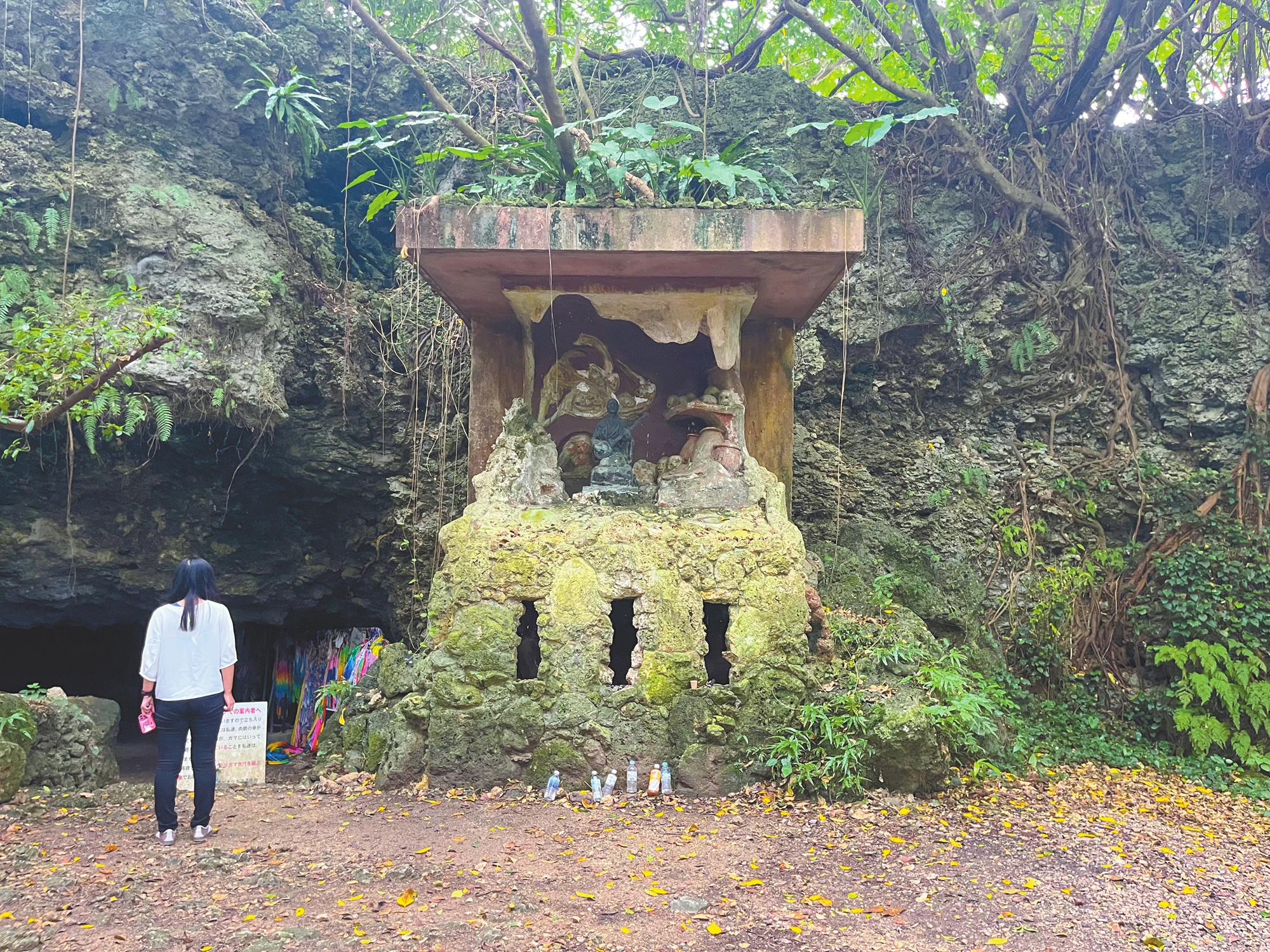
Under Kinjo's guidance, the Peace Statue Connecting Generations is erected at the entrance of Chibichiri Gama cave. The original one has been maliciously destroyed just six months after its unveiling in 1987 and what the Global Times saw on site on December 23, 2025 is a new statue restored in 1995. Photo: Zhang Changyue/GT
"May I turn into a fierce tiger, grow wings, and cross the Pacific to see the world." This line is from a classical Ryukyu song once vividly portraying the island chain as a thriving "Bridge of Ten Thousand Nations." From 1372 to 1879, the Ryukyu Kingdom was not only a sovereign state in the sense of international law, but also maintained close and friendly tributary relations with China. Today, squeezed between the heavy burden of the US military bases and indifference from Japan's mainland policies, all that can be read from the ancient verse is a sense of desolation.
At the end of 2025, the Global Times reporters set foot on Okinawa for the fourth time. Stepping out of Naha Airport, beneath blue skies and turquoise seas, the roar of US military fighter jets cuts through the air from time to time. The urban monorail, consisting of only two cars, runs a total of 17 kilometers and takes just 37 minutes end to end. It is the first rail built in Okinawa after the war, and to this day, the only one.
Along both sides of the roads, the barbed-wire fences of US military bases and Japan Self-Defense Forces camps stretch endlessly into the city, like scars that can never heal. Statistics show that more than 70 percent of the exclusive US forces facilities stationed in Japan are concentrated in Okinawa. A glance at the map makes it even clearer that the US bases occupy the island's most desirable land, while local residents are forced to crowd into the narrow spaces around the perimeters, struggling to make a living.
In 1879, Japan annexed the Ryukyu Kingdom by force. In 1945, the Battle of Okinawa, fought to delay combat on the Japan mainland, claimed countless lives in the island. On May 15, 1972, after 27 years of direct US military control, the Ryukyu Islands were "returned" to Japan, becoming Japan's Okinawa Prefecture. But for most local people, the annual "Reversion Day" brings back memories of humiliation rather than celebration.
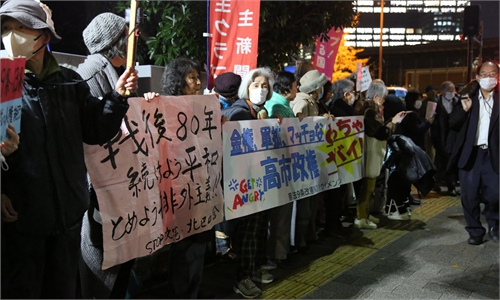
As the Japanese government accelerates the deployment of offensive weapons across the southwestern island chain near China's Taiwan region, Okinawa has once again been thrust into the center of geopolitical rivalry. Historical memories among local people are repeatedly awakened, and protests against military bases and militarization unfold one after another.
Yet no matter how many times tens of thousands of people in Okinawa gather in protest, no matter how persistently their voices of opposition are raised, the Japanese government turn a deaf ear. We cannot help but ask: for Okinawa, what does the Japanese state truly represent? And for Japan, what, exactly, is Okinawa?
RELATED ARTICLES