Canadian PM Carney arrives in Beijing; visit to help Ottawa gain more room for balance with US, China
By Published: Jan 14, 2026 11:21 PM

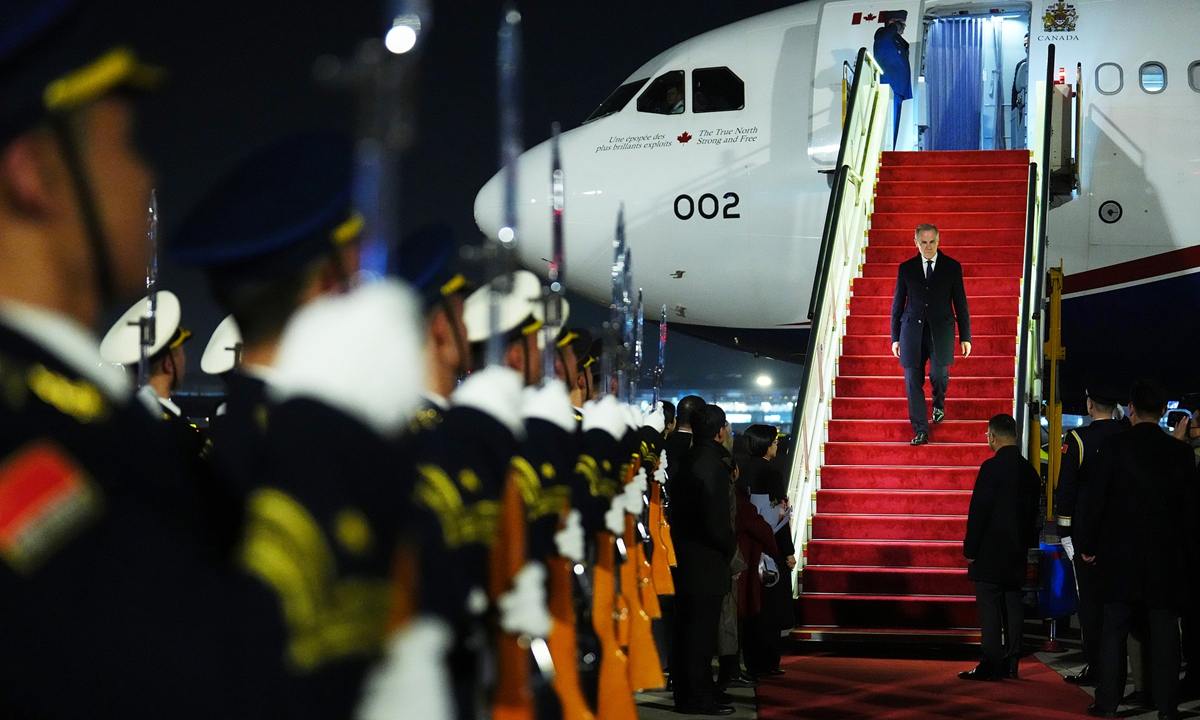
Canadian Prime Minister Mark Carney arrives in Beijing on January 14, 2026. Carney kicked off an official visit to China from Wednesday to Saturday. Photo: VCG
Canadian Prime Minister Mark Carney arrived in Beijing on Wednesday for an official visit to China through Saturday. This marks the first trip to China by a Canadian Prime Minister in eight years.
Some Chinese experts said that Carney's visit may also mark a pivotal step in efforts to stabilize and repair China-Canada relations. Using Carney's visit as a starting point to advance consensus and restore economic and trade ties would help further stabilize China-Canada relations, allowing more room for Ottawa to balance its ties with both Washington and Beijing.
"I am headed to Beijing. China is our second-largest trading partner, and the world's second largest economy," Carney wrote on X on Tuesday local time. "A pragmatic and constructive relationship between our nations will create greater stability, security, and prosperity on both sides of the Pacific."
He also posted a photo showing himself waving after stepping onto the aircraft's boarding stairs, with the plane's cabin door open behind him.
Upon arrival later on Wednesday, Carney was welcomed at Beijing Capital International Airport by Chinese officials and the Guard of Honor, according to video clips from CCTV.
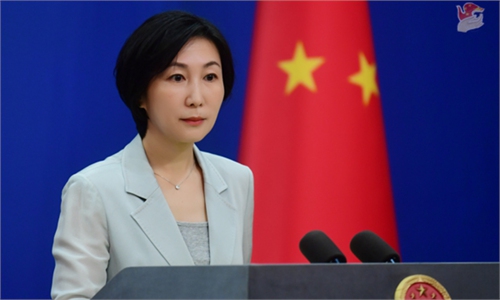
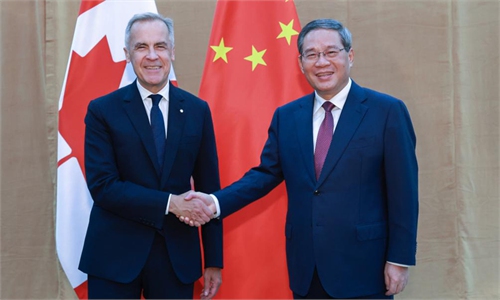
China attaches high importance to the visit. President Xi Jinping will meet with Prime Minister Carney to provide new strategic guidance for the further improvement and development of bilateral relations. Premier Li Qiang and Chairman Zhao Leji of the Standing Committee of the National People's Congress will hold talks and meet with him respectively to have broad-based and in-depth exchanges of views on bilateral relations and issues of mutual interests, according to the Chinese Foreign Ministry.
Carney's pre-departure tweet to China conveyed goodwill and signaled a willingness to build consensus for tangible cooperation. Although China and Canada have maintained constructive engagement in recent months, concrete progress in economic and trade ties has yet to materialize, making the visit an effort to move beyond symbolism toward actionable outcomes, Zhao Xingshu, a deputy director of the Department of Canadian Studies at the Institute of American Studies, Chinese Academy of Social Sciences, told the Global Times on Wednesday.
The China-Canada leaders' meeting on the sidelines of last year's APEC meeting in Gyeongju, South Korea, sent a positive signal, and Carney's current visit is both a follow-up to that consensus and a reflection of a growing sense of urgency in Ottawa, Lü Xiang, a research fellow at the Chinese Academy of Social Sciences, told the Global Times on Wednesday.
That urgency, Lü noted, stems from Canada's unique strategic predicament. As a North American country, Canada is facing what he described as "unprecedented security pressure from its neighbor," prompting a reassessment of its relations with major powers and a shift away from the previous government's one-sided approach. In this context, managing ties with major powers has become an urgent, and in some respects existential strategic task for Canada.
Carney's visit may also mark a pivotal step in efforts to stabilize and repair China-Canada relations. Whether Canada can seize the opportunity to translate diplomatic goodwill into concrete outcomes through pragmatic cooperation in trade, climate action, and multilateral affairs, will shape not only the future of bilateral ties but also broader stability and prosperity in the Asia-Pacific, Lü said.
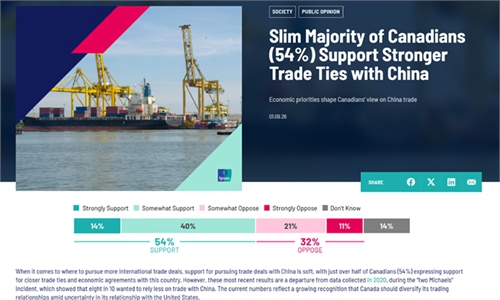
Move toward diversification
Canada announced Carney's plan to visit China and Switzerland on January 7, and said that Canada's new government is moving its economy from reliance to resilience by "building our strength at home, working to double our non-US exports, and attracting massive new investment."
Trade is expected to feature prominently on Carney's agenda, alongside agriculture and international security. While some Western media have highlighted bilateral frictions, particularly disputes over tariffs on Chinese electric vehicles, some Chinese experts said the two sides still have room to resolve differences through sincere dialogue that aligns with their respective interests, rather than following the US approach of imposing unilateral trade pressure.
Lü said that even in areas Canada views as competitive, there is significant room for complementary cooperation with China. For example, Canada's strength in traditional auto parts could be redirected toward EV components, allowing it to integrate into China's mature electric vehicle ecosystem as a key supply-chain partner.
While full vehicle manufacturing may not be Canada's strong suit, deeper participation in the industrial chain would both create opportunities and help ease its dependence on the US market. Overall, cooperation remains the central focus of Carney's visit, said Lü.
Canadian and other Western media have extensively covered Carney's visit to China in recent days. A BBC report on Wednesday said that Carney faces a "delicate balancing act" during his China visit. On Wednesday, a report in The New York Times claimed that "Carney...is spending a significant chunk of his time overseas seeking new customers for Canadian goods. China is at the top of his list."
A report in Canadian media The Globe and Mail on Tuesday noted that Carney's entourage for the China trip will include five cabinet members, the biggest ministerial delegation that has accompanied Carney on a foreign trip so far. It also claimed that Carney's trip to China comes with an agenda that would have seemed unlikely before Trump took office - warming up ties with China "to a degree not seen in a decade, plus carving out a bigger role for Beijing in Canada's economy."
Also on Tuesday, The Globe and Mail reported that Trump described the US-Mexico-Canada Agreement on trade as "irrelevant," remarks coming just a day ahead of Carney's visit to China. The report added that Trump's comments have unsettled both Canada and Mexico ahead of an expected renegotiation of the continental trade pact later this year.
Canada has come to realize that the Pacific Rim's pathway to stability is under threat. This reflects not only concern over Canada's own position, but also deeper anxiety that a vast, tightly interconnected trans-Pacific trade system is being destabilized by US unilateralism, Lü said, noting that with trade protectionism on the rise globally, China and Canada need frank and proactive consultations aimed at delivering concrete outcomes.
Zhao noted that amid China-US strategic competition, managing ties with China has become a key test for Canada. The resumption of the China-Canada diplomatic dialogue reflects Ottawa's effort to reassess its role within the US alliance framework, as bilateral exchanges enter a phase of recalibration.
If Carney's visit can anchor cooperation around shared interests and deliver tangible progress in restoring economic and trade ties, it may help steer China-Canada relations back onto a healthy and sustainable path, and support a more balanced relationship with the US, Zhao said.
RELATED ARTICLES