Beijing, Ottawa should seize opportunity to build lasting ties beyond US influence

Illustration: VCG
Editor's Note:Canadian Prime Minister Mark Carney began his state visit to China on Wednesday, the first by a Canadian leader in eight years. This trip takes place as Ottawa, under the Carney administration, pivots toward a more autonomous foreign and economic policy away from Washington. In a recent interview with Global Times (GT) reporter Xia Wenxin, Dr Julián Castro-Rea (JCR), a political science professor at the University of Alberta in Canada, discusses whether this visit can transform "ice-breaking" gestures for China-Canada relations into a more resilient partnership. He explores how deteriorating Canada-US relations under the Trump administration have opened a unique window of opportunity for Beijing and Ottawa to reset their relationship based on mutual goodwill and shared resistance to unilateralism.
GT: In a meeting with Canadian Foreign Minister Anita Anand in Beijing on Thursday, Chinese Foreign Minister Wang Yi said China is willing to work with Canada to bring bilateral relations forward on a steady and sound track in solid strides under the new circumstances. Anand said the new Canadian government attaches great importance to relations with China, adding that Prime Minister Carney looks forward to engaging in in-depth exchanges with Chinese leaders during the visit to set the course for the development of bilateral relations. How significant is Carney's trip for the China-Canada bilateral relationship? What could we expect from it?
JCR: This visit is indeed a breakthrough after Canada-China misalignment of perspectives over the past few years. The affairs of Meng Wanzhou and the two Michaels [Michael Spavor and Michael Kovrig] and disputes over "foreign interference" clouded bilateral relations between both countries. Carney's visit promises to defrost these relations and open a new chapter.
Practical breakthroughs will be difficult to obtain immediately from this trip. Canada and China need to build mutual trust first. More than tangible results, this visit will be about creating a fresh common ground over which concrete results may be negotiated later.
GT: Canada is pursuing a dual-track strategy in cooperating with China: expanding trade while restricting cooperation in sensitive areas like AI and critical minerals. How can Canada walk this tight rope without repeating the same mistakes of the past in sacrificing relations with China?
JCR: This is indeed a tight rope. Ottawa wishes to get concessions from Beijing without giving much in exchange. An area where Canada is reluctant to make concessions is lifting the ban and punitive tariffs on imported electric vehicles from China, since Ottawa is under pressure from domestic auto makers to keep the restrictions in place. But Carney will soon discover that if he wants to reestablish good relations with China, he needs to negotiate in good faith and put every contentious issue on the table.
GT: Despite a bumpy diplomatic relationship, China has remained Canada's second-largest trading partner after the US. A recent Ipsos poll shows that 54 percent of Canadian respondents now support stronger trade ties with China. This marks a turnaround from 2020, when 80 percent of Canadians wanted the country to rely less on the Chinese market, according to Global News. How do you interpret this?
JCR: It's not so much about expected tangible economic benefits but about hurting national pride. Canadians felt betrayed when the second Trump administration imposed extra tariffs on Canadian exports to the US and bullied former prime minister Justin Trudeau about making Canada the US' "51st state." The average Canadian realized how risky it is to depend so much on the single US market and political alliances, and how their benevolent feelings toward the Southern neighbors are not reciprocated. The Canadian government is listening and is attempting a diversification of trade and strategic partners. China is the obvious first step in this global strategy.
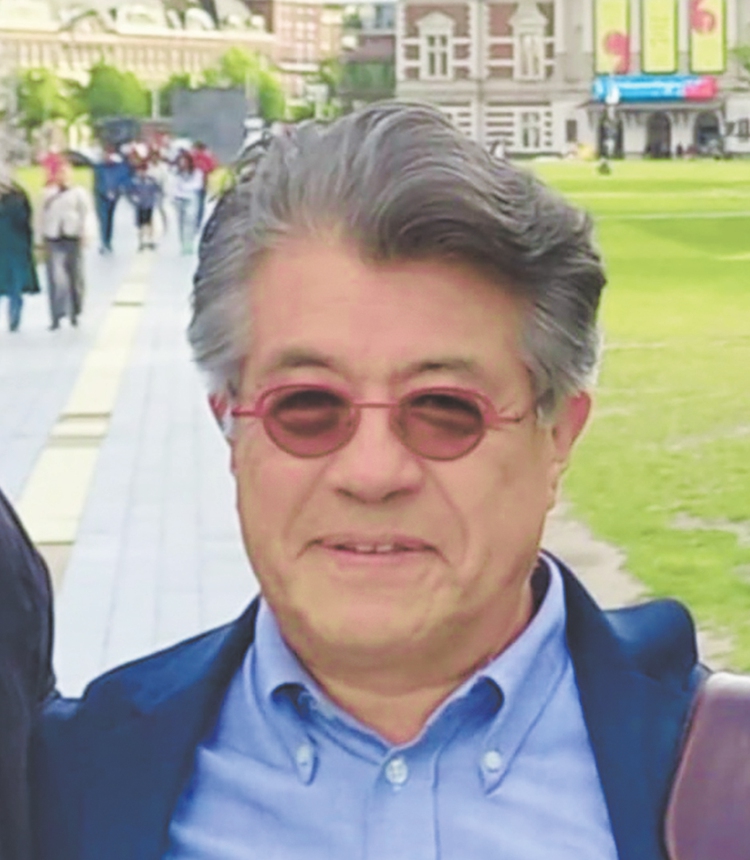
Julián Castro-Rea Photo: Courtesy of JCR
GT: Some analysts suggest this visit is a move to reduce Canada's over-reliance on the US, especially since Carney declared that the era of deep economic, security and military ties with Washington is over. How much of the latest engagement with China is being driven by the current turbulence in Canada-US relations?
JCR: Without question, the main driver of Carney's rapprochement to China is the deterioration of Canada-US relations. After unconditionally endorsing the US position in the Meng Wanzhou affair, paying the political cost for it only to be left out of negotiations, Ottawa learned the lesson that the US does not reciprocate when it comes to relations with China. As I explained in the previous question, Carney is also listening to the Canadian public and attempting to reset relations with a country such as China, which can provide a powerful counterbalance to Washington.
GT: Last year, in an interview with the Global Times as Trudeau stepped down, you described Canada as a country "trapped in very narrow political options, a prisoner of path dependence on unconditional support for the US." Over the past year, especially after Carney took office, have you seen any changes in that?
JCR: I basically feel the same, with the major difference that Canadians are right now disappointed with the way the US is treating them, and realize that unconditional support is not a guarantee for reciprocity. However, if in the future there was a US government friendlier to Canada, Canadians would quickly return to the path dependence of supporting the US. Geographic, cultural, linguistic and even family ties pull most Canadians toward the US.
Right now, China has a short window of opportunity to create the basis for stable, predictable relations with Canada, based on mutual goodwill and independent of relations with the US.
However, the window of opportunity will not last forever.
GT: Some observers say that while "breaking the ice" with Beijing, Ottawa will still operate within the framework of the alliance with Washington. How should the Carney and future administrations maintain a balance in their foreign policy toward China and the US?
JCR: It's a delicate balancing act. Carney and his government must understand that the options are not the US or China, but that Canada can have good relations with the US and China simultaneously. This is why Ottawa and Beijing must seize the current opportunity to build lasting relations that are not altered or manipulated by US foreign policy in the future.
GT: Beyond bilateral trade, which global or multilateral issues do you see as the most promising areas for China-Canada collaboration in the near future?
JCR: The most important area of potential collaboration is, in my opinion, teaming up to resist the outrageous unilateralism currently put in practice by the Trump administration. It is high time that the two countries jointly express loud and clear that they will not tolerate US unilateralism, and act together within multilateral fora in support of this common position.
RELATED ARTICLES