A glimpse into China’s rare earths policy – Six key aspects addressing nation’s critical minerals industry
Six key aspects addressing nation’s critical minerals industry
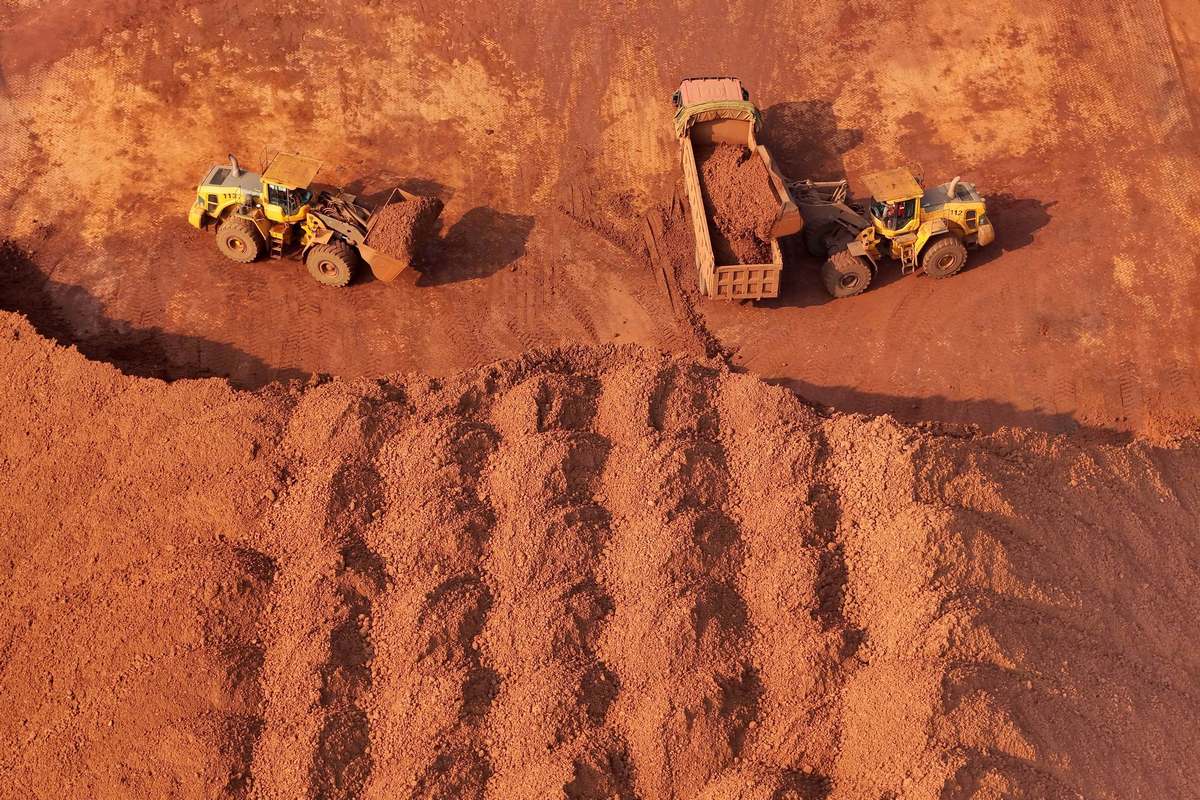
Rare earth resources Photo: VCG
Editor's Note: Addressing the interests and perspectives of scholars, business leaders and the general public on China's economy, the Global Times has launched the Q&A on China's Economy series. The column provides insight into China's economic development and highlights the issues that attract attention from audiences in China and abroad.
China's export controls on dual-use items have lately drawn global attention. Against this backdrop, some foreign media have tried to promote misleading narratives such as "rare-earth monopoly" and "supply disruption," deliberately stoking geopolitical tensions and distorting global understanding of China's policies.
In fact, China's approach to rare earths has followed international law and practices, adhering to a prudent and measured approach. China has been responsible as a major participant in the global rare-earth supply chain. The country is always committed to maintaining global supply chain stability, promoting the sustainable use of rare-earth resources, and taking into account the interests of all countries.
To address international concerns and clarify the facts, the Global Times examines six key questions, ranging from China's role in the global rare-earth industry to the rationale behind the export controls. The series provides a systematic analysis of industry realities and the policy context, offering readers an objective guide to understanding rare earth-related issues.
What role does China play in the global rare-earth industry?
Rare earths are neither "earth" in the usual sense nor genuinely scarce. The term refers to a group of 17 elements in the periodic table, including the lanthanides.
What makes rare earths "rare" is primarily the difficulty of extracting them. Because the 17 elements are adjacent in the periodic table and share similar chemical properties, they occur together in the same mineral at times. Separating and purifying them individually presents a considerable challenge.
China is among the countries with comparatively abundant rare earth resources. A Xinhua report in October, citing data from the US Geological Survey, put global rare-earth reserves in 2024 at 90 million metric tons, of which China holds 44 million tons, representing 48.41 percent of the total.
China's development of rare-earth technologies began early. In 1952, research on extracting and separating thorium from monazite incidentally led to the isolation of rare-earth elements as by-products. By 1958, China had established research institutions to study permanent magnets and silicon steel.
Now, China has a complete industrial system encompassing mining, refining, and separation, as well as equipment manufacturing, materials processing, and downstream applications. According to Xinhua, China produced 270,000 tons of rare earths in 2024, representing 68.54 percent of global output.
What does China's rare-earth advantage mean for global supply chain?
Rare-earth resources are widely distributed globally, with substantial reserves found well beyond China. China has never sought to monopolize rare earths. Rather, through technological innovation and industrial development, it has turned a resource that is not inherently scarce into an indispensable link in the global supply chain.
Often described as the "vitamins of industry," rare earths play an irreplaceable role in high-end manufacturing and many strategic sectors.
Data released by China's General Administration of Customs on Wednesday show that, measured by volume, China's rare-earth exports rose by 12.9 percent year-on-year in 2025. Compared with a decade ago, export volume has roughly doubled. Continued advances in mining, separation and application technologies have strengthened China's supply capacity, injecting positive and sustainable momentum into global high-tech supply chain
However, some Western media outlets have portrayed the growth in market supply enabled by China's technological progress - and the constructive role of its rare-earth exports in supporting global high-tech industries - as "rare-earth monopoly."
In fact, such narratives serve to obscure technological lag and policy missteps of their own. Some Western countries have under-invested in upgrading technology, opting instead to reshape the global rare-earth supply chain through political means. They have tried to form "rare-earth alliance" and advocated "de-risking" from China. Such approaches run counter to market rules and, rather than reducing risk, have heightened uncertainty in the global rare-earth market.
What considerations underlie China's export controls of dual-use items?
China announced on January 6 its decision to strengthen export controls on dual-use items destined for Japan. According to China's Ministry of Commerce (MOFCOM), all dual-use items are prohibited from being exported to Japan for military end users, military purposes, or any other end users or uses that contribute in any way to enhancing Japan's military capabilities.
The measures have been taken in accordance with Chinese law and regulations. Since the beginning of 2025, however, some Western media have played up the issue of rare earths, hyping the risk of "supply disruption." Such claims distort the facts and generate unnecessary anxiety. It should be emphasized that China's export control is not trade embargo.
MOFCOM spokesperson He Yadong said on January 8 that the measures are aimed at curbing attempt at "remilitarization" and nuclear armament, and the control measures are fully legitimate and reasonable.
China is committed to safeguarding the stability and security of global industrial and supply chains, He Yadong noted, adding that items intended for civilian use will not be affected. There is no need for concern among parties engaged in normal civilian trade.
Why the G7's "small circle" on rare earths is misguided?
Finance ministers from the G7 and other major economies met in Washington on Monday to discuss ways to "reduce dependence on rare earths from China," including setting a price floor and new partnerships to build up alternative supplies, Reuters reported.
In recent years, foreign media have repeatedly highlighted Western proposals to set up "rare-earth partnerships" or "critical mineral alliances," yet progress in those initiatives is limited. The reality is that the rare-earth industry depends heavily on technological expertise and long-term capital investment. Without a solid foundation in technology and investment, politically driven partnerships or alliances are unlikely to generate genuinely sustainable industrial capability.
Reports of a so-called "price floor" highlight G7 efforts to influence the global supply chain. Administrative attempts to control the pricing and distort market mechanisms are unlikely to succeed. Efforts to form a "small circle" and intervene artificially in supply and demand will push up global prices for critical minerals, and it will also undermine industrial efficiency and threaten the stability and security of the global supply chain.
Why efforts to "de-risk" from China pose a real risk to global supply chain?
The structure of the global rare earth supply chain, and the complementary roles played by China and other economies, reflects market logic and China's comparative advantages. Artificially disrupting this economic rationale for political purposes, by promoting "decoupling" or "de-risking" from China, would not only run counter to the trends of globalization, but also threaten the stability of the global rare-earth supply chain.
According to Bloomberg, a US presidential proclamation released on Wednesday said that the Secretary of Commerce had recommended negotiating agreements with foreign nations to ensure the US has adequate critical mineral supplies and to mitigate the supply chain vulnerabilities as quickly as possible.
The Secretary also suggested that it may be appropriate to impose import restrictions, such as tariffs, if satisfactory agreements are not reached in a timely manner, the document said.
Recently, the US has intensified efforts to mine critical minerals, while seeking to engage in "cooperation" with selected countries. Gao Zhikai, vice president of the Center for China and Globalization, described this approach as the US knocking on the doors of nearly every country in the world where it believes rare-earth reserves exist, according to Chinese media reports.
Yet this politically driven wave of rare-earth investment lacks a solid technological and economic foundation, and could lead to abandoned mining, environmental damage, and wasteful use of resources. Such investments are unlikely to generate a sustainable rare-earth industry, but creating only a temporary political bubble.
What is the future of a sustainable global rare-earth industry?
Rare earths serve as an important and indispensable basis for the development of high-tech industries, and this role should not be underestimated. The rare-earth industry must continue to advance, and, only through consistent innovation can it sustain the progress of many high-tech industries.
The sustainable development of the rare-earth industry relies on technological innovation and industrial upgrading, rather than on political mobilization or short-term policy measures taken by certain Western countries.
Western economies, particularly the G7, should take a rational and pragmatic view of China's role in the global rare earth supply chain. Experience shows that "decoupling" from China is unfeasible. Only strengthening cooperation and mutual trust, can economies find their proper place within the global industrial system and achieve complementary, mutually beneficial outcomes.
RELATED ARTICLES