Translators’ Voices: China sets an example of pursuing national development through family-centered developments
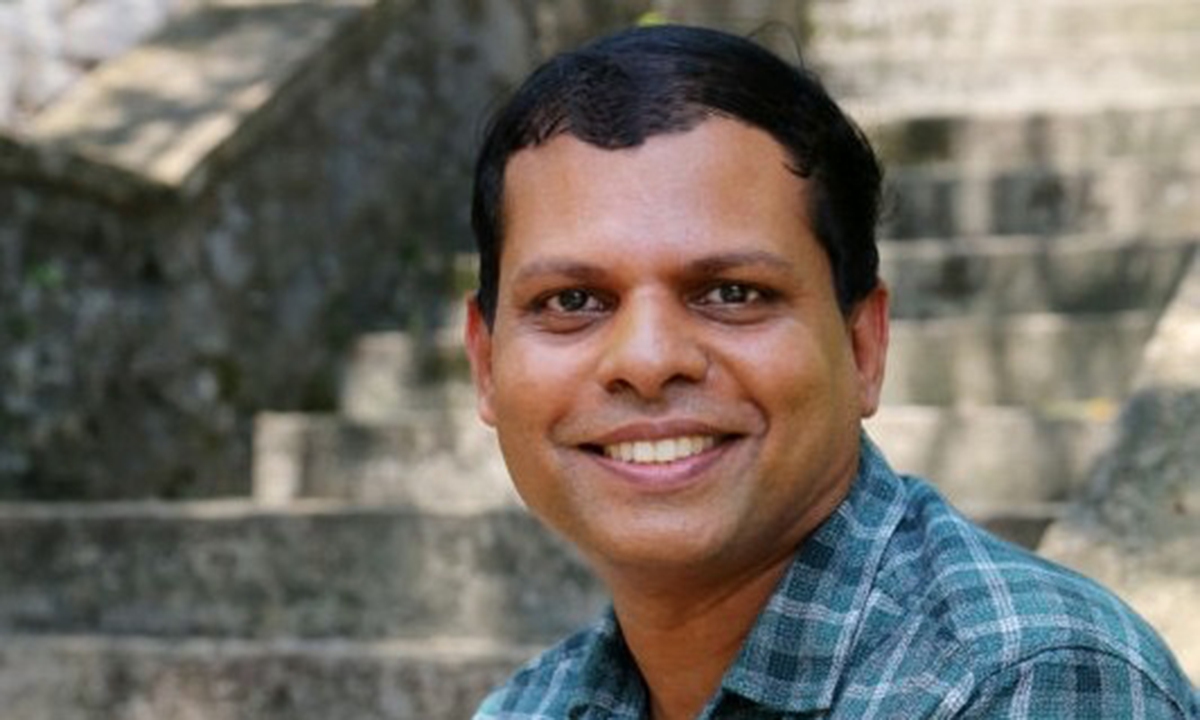
Sugath Senarath Photo: Courtesy of Senarath
Editor's Note:
"When the happy hum of daily life fills every home, the big family of our nation will go from strength to strength." These words from President Xi Jinping's 2026 New Year message embody sincere and profound care for the people and convey touching and heartwarming strength.
"No issue of the people is too small; we care for every leaf and tend every branch in the garden of people's well-being." Since the 18th National Congress of the Communist Party of China (CPC), Xi, also general secretary of the CPC Central Committee and chairman of the Central Military Commission, has traveled extensively across the country, observing the conditions of the people, listening to their voices, and inquiring about their well-being. He cares deeply about the happiness and hardships of "every home," emphasizing that "of all the jobs in front of us, the most important is to ensure a happy life for our people."
Always placing the people above all else in hearts, upholding the original aspiration and mission of delivering benefits to the people, standing together with the people through thick and thin, and sharing a deep bond with them, and ensuring that the fruits of modernization benefit all people more extensively and equitably, China in the new era is steadily turning the people's yearning for a better life into reality, and is ensuring that the people's sense of gain, happiness, and security become more substantial, better safeguarded, and more sustainable.
The "people-centered" development concept and modernization approach has been the value that runs through the entire series of Xi Jinping: The Governance of China. In his speech made at the meeting with representatives to the first National Conference of Model Families, which was included in Volume II of the series, President Xi pointed out that "a prosperous and strong nation, the national rejuvenation and the happiness of the people are embodied by the happiness of the families and the better life of hundreds of millions of people." Volume V dedicated a section to "People-Centered Development" and compiled significant remarks by President Xi on this topic.
In the 20th installment of the special series "Decoding the Book of Xi Jinping: The Governance of China," the Global Times (GT), along with the People's Daily Overseas Edition, focuses on the "every home" and "big family of our nation" in President Xi's view and, as embodied in his heartfelt New Year message, the people-centered development concept of CPC members. We continue to invite Chinese and foreign scholars, translators of President Xi's works, practitioners with firsthand experience, and international readers to delve into the CPC Central Committee with Comrade Xi Jinping at its core's adherence to the people-centered development concept, and its epochal significance and value for us to strive in writing a new chapter of Chinese modernization.
In the 20th article of the "Translators' Voices" column, GT reporter Wang Wenwen interviewed Sugath Senarath (Senarath), editor of the Sinhala edition of Volume I of Xi Jinping: The Governance of China, and senior lecturer at the Department of Mass Media, Sri Palee Campus.
GT: In his 2026 New Year message, President Xi said, "When the happy hum of daily life fills every home, the big family of our nation will go from strength to strength." In your opinion, what kind of vision of development do President Xi's remarks depict - a vision of interdependence and shared progress between "every home" and the "big family"? How do you interpret the Chinese leadership's idea of closely linking family happiness with national prosperity?
Senarath: The Chinese president is a visionary leader. China consistently emphasizes that peace and harmony are important in international relations. In his 2026 New Year message, President Xi used the harmonious image of "the happy hum of daily life" to highlight family life as the primary focus of development outcomes. It shows that the well-being of people in areas such as food, health, education, and housing is an important element of development.
The idea that the flourishing of "every home" makes the "big family" prosper illustrates the interdependence and mutual progress embodied in the Sustainable Development Goals (SDGs). Contemporary China's rapid development is a mutual achievement: The state helps families while families contribute to the state's success. This is a dialectical relationship.
China's development is not confined to its borders; it is also related to the sustainable development of the rest of the world. The Belt and Road Initiative and the concept of a community with a shared future for humanity are examples of China's intention to pursue win-win development with other countries.
GT: That "the happy hum of daily life fills every home" is imbued with deep concern for the people's well-being. The book series Xi Jinping: The Governance of China repeatedly identifies fulfilling the people's aspirations for a better life as China's primary goal. Volume II states that "the Chinese Dream is the People's Dream." Volume IV includes Xi's speech at the deliberation session of the Inner Mongolia delegation to the Third Session of the 13th National People's Congress, in which he said that the fundamental goal for the CPC is to give people a better life. Volume V mentions the goal of delivering a better life for each and every Chinese. In your opinion, what kind of "people-centered sentiment" of the Chinese leader does the practice of identifying "fulfilling the people's aspirations for a better life as the primary goal" reflect?
Senarath: The principle of "identifying fulfilling the people's aspirations for a better life as the primary goal" reflects a people-centered approach to development. It is simultaneously normative, developmental, and political in nature.
At the normative level, it ensures that the value orientation of governance centers on the dignity, well-being, and comprehensive development of ordinary people. At the developmental level, the people-centered approach frames modernization as a process that should translate macro achievements into tangible benefits and improvements in everyday life at the community level. This shifts development from growth-centric to well-being-centric. At the political level, governance legitimacy is rooted in popular satisfaction and participation.
During my visit to China, one scene stood out vividly. In a village in Hubei Province, villagers came out of a clinic with faces free of the anxiety often associated with medical bills; in the village square, elderly people chatted while children played on the exercise equipment; and not far away, delivery workers unloaded packages. These scenes conveyed the warmth and confidence of China's development - the convenience, well-being, and hope that permeate everyday life. They convinced me that China's macroeconomic policies of rural revitalization and common prosperity are achievable. The confidence of the Chinese people springs from the steady expectation of every ordinary family that "tomorrow will be better." At the core of China's development story is this warm process that connects national-scale initiatives with the minute details of family life, creating mutually reinforcing benefits.
GT: Looking back over the past year, from the warmth felt in "every home" to the prosperity of the "big family," the warmth and strength of China's development, as well as the profound practice of the people-centered development philosophy, are evident everywhere. In your view, how does China align macro-level national development strategies with the micro-level well-being of individual families and citizens when advancing policies such as common prosperity and rural revitalization? Could you share examples you have observed that illustrate this governance wisdom of combining top-down guidance with bottom-up participation?
Senarath: China's recent governance practice shows a deliberate effort to align macro-level strategies with micro-level outcomes, ensuring that national goals translate into tangible improvements in the lives of individuals and families. Policies such as common prosperity and rural revitalization illustrate a combination of top-down design and bottom-up participation in national development. This approach functions as a "policy relay": top-down strategic guidance provides direction and capacity, while bottom-up participation enhances relevance and effectiveness.
At the macro level, well-planned national strategies - narrowing regional and income disparities, revitalizing rural industry and culture, and improving public services - set the overall direction. At the micro level, these strategies are localized.
China has directed its poverty alleviation efforts toward rural revitalization: National policy provides guidance, funding, and infrastructure, while local governments identify target households, provide support, and encourage villagers' active participation in regional and national development. Central guidelines emphasize reducing unequal access to education, healthcare, and social security, leading to the establishment of village clinics, county hospitals, compulsory schooling, and digital platforms for social services. National strategies for innovation and green development are implemented locally; families experience this progress through higher incomes, job opportunities, entrepreneurship, and improved prospects, with traditional culture preserved.
GT: Since the 18th National Congress of the CPC, President Xi has attached great importance to the devotion to the family and the country, and has delivered a number of important speeches. On December 12, 2016, in his speech when meeting with attendees at a conference to honor model families across nation, President Xi stated that "a prosperous, strong nation, the great national rejuvenation and the happiness of the people are embodied by the happiness of tens of thousands of families and the better life of hundreds of millions of people." On February 3, 2019, in his speech at the 2019 Spring Festival reception, President Xi advocated combining the love for family with the love for the country so that every individual and every family can make contributions to the big family of the Chinese nation. In the course of human civilization's development, why was China able to propose a governance paradigm of "the dialectical relationship between family happiness and national prosperity"? What implications does this offer to the world, especially other developing countries?
Senarath: China's rapid economic development has not been at the cost of invading, enslaving and plundering the resources of other countries. Chinese civilization has long emphasized the close interconnection between family and the order. The family well-being with national rejuvenation is not a new one. It is a contemporary transformation linked with long-standing cultural logic.
China has not adopted the Western "winner-takes-all" model of development; instead, it emphasizes win-win approaches. Confucianism places the family at the core of moral cultivation, and the Chinese worldview is not individualistic - it understands people as relational beings embedded in families and communities. The concept of national rejuvenation focuses on improving the livelihoods of families.
Since the 18th CPC National Congress, the Chinese government has consistently emphasized people-centered development. Policies on poverty alleviation, education, social security, and health are clearly family-supportive. The Chinese Dream can therefore be seen as the dream of every Chinese family and individual. As an ancient saying puts it: "The state is essential under Heaven; the family is essential for the state." This offers a good example to other countries of pursuing national development through family-centered developments.
China has shown that sustainable development is not limited to GDP growth; it is closely linked to quality of life, including reductions in household poverty, stronger cultural ties alongside development, greater social cohesion, and improvements in health, education, housing, and social security. This suggests that macro-level development strategies can foster micro-level family well-being. That model is attractive to societies in Asia, Africa, and Latin America, where collectivist cultures prevail. China's development path demonstrates that modernization combined with culture and indigenous traditions can be a resource. For developing countries grappling with postcolonial identity issues, this offers an important lesson.
RELATED ARTICLES