Illustration: Liu Xidan/GT
While many European countries have issued public statements and even deployed troop reinforcements to support Denmark and its autonomous territory, Greenland, in resisting US "takeover" intentions, Washington remains unwilling to relinquish its "claims" over the island. On Saturday, US President Donald Trump announced tariffs on eight European nations starting in February to pressure them into an agreement for the US to purchase Greenland. In response, several EU countries are considering retaliatory tariffs on US goods or restricting market access for American firms. This situation once again brings the "asymmetry" of US-Europe relations into sharp focus.
History reveals that the transatlantic alliance, forged in the aftermath of WWII, was characterized from its inception by a dynamic in which "the US consistently played the leading role, while Europe remained in a subordinate position." Today, this type of relationship, one of inequality, has become the core component of the US global alliance system.
Beyond the historical factor of Europe's postwar recovery being largely bolstered by US support, there are practical mechanisms at play. Outside of NATO and the G7, the US and Europe have established regular summits and multi-level dialogues across sectors such as trade and technology, in all of which the US plays the leadership role.
Despite being allies, the US and Europe are ultimately independent actors in international relations with distinct interests. In other words, their objectives do not always align. Since the alliance's formation, friction and even conflict between the two sides have been frequent. Today, the US and Europe have significant differences over Russia policy, tariffs and the Greenland issue.
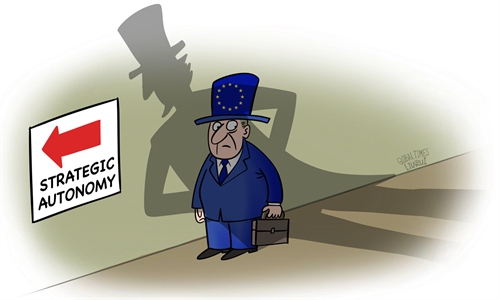
Within Europe, there has always been an "Atlanticist" faction that advocates for maintaining ties with the US at all costs, but there has also consistently been a "Europeanist" faction calling for stronger "strategic autonomy" and demanding to stand on equal footing with Washington. In recent years, as transatlantic relations have experienced violent tremors, strengthening "strategic autonomy" has become the new political correctness on the European continent.
However, the truth is that Europe currently lacks the capacity to achieve this. Efforts to seek equality with the US have progressed slowly, partly due to the intense divergence of interests within Europe, making it difficult to reach a consensus or act in unison, and partly because of the US' persistent and strong grip on transatlantic relations.
To maintain its dominance, the US frequently employs a "divide and rule" strategy toward Europe. In 2003, when Germany and France opposed the Iraq War, the US launched a strategy to court Central and Eastern European nations - which it called "new Europe," creating internal divisions within the EU. During the ongoing Russia-Ukraine conflict, the US orchestrated the process to place primary responsibility on Europe while excluding itself from critical negotiations. In recent years, it has further exacerbated political instability in the region by supporting European right-wing forces.
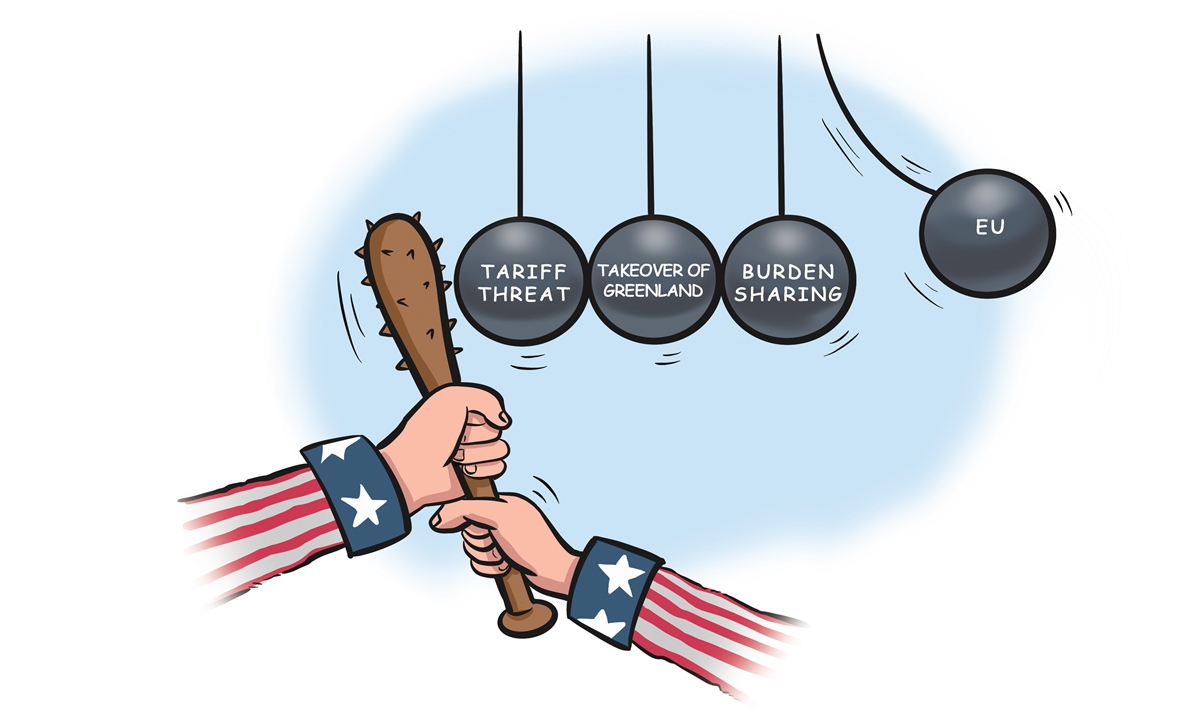
Broadly speaking, the US-Europe alliance has formed an interactive relationship of "ebb and flow." When Europe enjoys internal unity and rising economic strength, its demand for equality typically surges; conversely, these calls weaken when Europe is unable to seek a position on par with the US, despite its efforts to do so. US policy shifts have an even more pronounced impact: the Joe Biden administration's "values-based diplomacy" and emphasis on alliances clearly restored and tightened transatlantic ties, but the current Donald Trump administration's increased pressure on Europe has caused the alliance to deteriorate and drift apart.
In this sense, the transatlantic relationship has developed a "pendulum effect" centered on the US.
Current tensions between the two sides have caused the pendulum to swing further in the direction of estrangement from Washington. However, it is unlikely that this will lead to a total rupture, nor will the "asymmetry" disappear.
This is not only because of the power disparity and the fact that the US will not relinquish control, but also because Europe is trapped in a dilemma: It craves "strategic autonomy" yet finds it nearly impossible to truly break free from its dependence on the US.
The author is a research fellow at the China Institutes of Contemporary International Relations. opinion@globaltimes.com.cn
RELATED ARTICLES