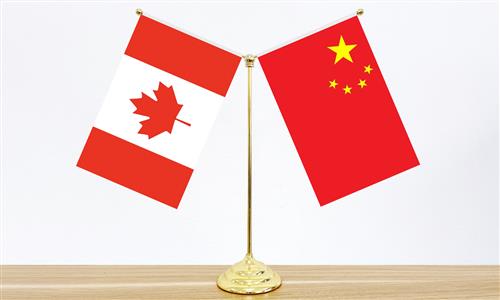
China, Canada enter a more results-driven phase of cooperation: Canadian scholar
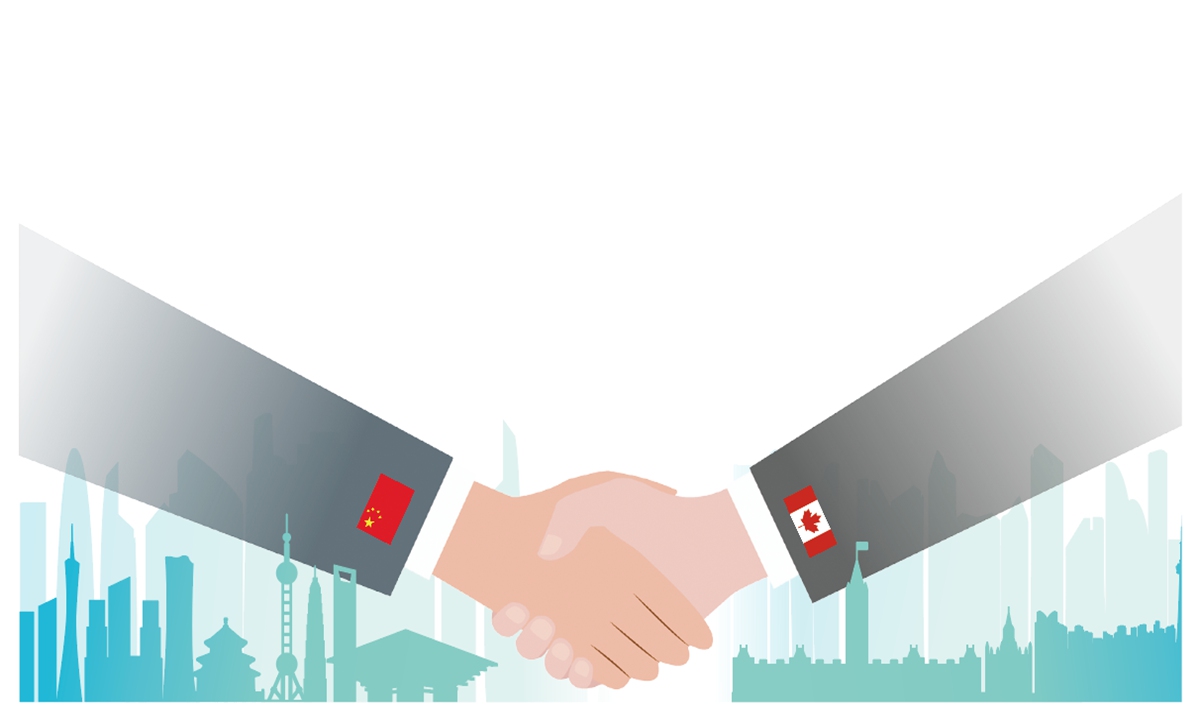
Illustration: VCG
Editor's Note:During his Tuesday speech at the World Economic Forum Annual Meeting 2026, also known as Davos 2026, Canadian Prime Minister Mark Carney called for middle powers to work together to counter the rise of hard power and the great power rivalry, since "the old order is not coming back." Many observers believe Ottawa is walking on a path of adjustments by building strategic autonomy. What can we learn about Canada's strategic shift from Carney's recent China trip? How will China-Canada relations develop amid the current global geopolitical landscape? Global Times (GT) reporter Liu Xuandi discussed those topics with Sharan Kaur (Kaur), who served as the deputy chief of staff for former Liberal finance minister Bill Morneau and is currently a principal at Canadian public strategy and communications firm Navigator Ltd.
GT: Carney's recent trip marks the first official visit to China by a Canadian prime minister in eight years. From a Canadian perspective, how would you characterize or define this visit, and how would you evaluate its overall productivity?
Kaur: I would define this visit as a vital opportunity to refresh the China-Canada relationship. While China-Canada relations have gone through a turbulent period - as most diplomatic relationships do - the prime minister's decision to re-engage is important, especially given China's role as a major global player and the deep people-to-people ties created by Canada's large Chinese community.
Against the backdrop of global uncertainty, this visit underscores the need to diversify Canada's trade partners. The prime minister's decision to visit China, alongside key ministers, signals a clear commitment to reopening constructive channels with China.
I would evaluate this trip as a "landmark in productivity," as it represents China and Canada moving beyond years of diplomatic gridlock and entering a more results-driven phase of cooperation.
GT: As Carney called for building a "new order" in his Davos speech, how should China and Canada work toward building a new strategic partnership? What long-held assumptions should Canada adjust in its approach toward China?
Kaur: I think it is a refreshing moment to see us making decisions based on global order rather than public sentiment or perception. We are building a strategic partnership centered on five concrete pillars - energy, trade, public safety, multilateralism and people-to-people ties. This isn't a partnership built on total agreement, but on a clear-eyed recognition of the world as it is: fragmented, volatile and increasingly multipolar.
For the moment, we can set aside historical differences and focus on charting a constructive path forward - engaging in respectful, diplomatic dialogue on each country's security concerns, while also exploring how Canadian and Chinese companies can work together so both societies can thrive.
To move forward, Canada must be realistic and pragmatic about the world as it exists and how we navigate it. By replacing performative "finger-wagging" with interest-based engagement, we are ensuring Canada has a seat at the table where the new global order is being defined, rather than becoming a collateral casualty of it.
GT: One of the most notable outcomes of Carney's visit to China is the trade arrangements reached between the two countries. How do you assess the importance of these arrangements for Canada? You previously stated that "Carney's China trade deal isn't betrayal - it's survival." What did you mean by that?
Kaur: The importance of this deal lies in its ability to balance immediate economic relief with a long-term industrial strategy. For Canada, it is a lifeline for our agricultural sector, restoring a $4-billion market for canola and billions in exports for our seafood and pulse farmers. By allowing a managed quota, this deal gives Canadians access to more affordable Chinese EVs without undermining the domestic market. The agreement also resolves the canola issue, vital to Canada's large farming sector.
For years, some have framed Canada and China as irreconcilable, value-based opposites, arguing that renewed dialogue amounts to a betrayal of Canadian standards. I disagree. Economic policy affects everyone, and engagement does not mean abandoning national security. In a fragmented world, isolation is not a policy - it is a slow-motion surrender. When I say this deal is about survival rather than betrayal, I am speaking to the reality of 2026. Our primary partner to the south, the US, has turned inward, adopting a "might-makes-right" approach that makes our traditional dependence a strategic vulnerability. In order to survive this era of global volatility, we must diversify.
GT: A recent Ipsos poll shows that 54 percent of Canadian respondents support stronger trade ties with China. What role does public opinion play in driving Canada's policy shift toward China?
Kaur: People are feeling the weight of global instability. Between the return of protectionism south of our border and the rising cost of living at home, Canadians are looking for economic pragmatism. They understand that isolation is no longer a viable strategy for a country that depends on trade.
Public opinion is playing a vital role in this policy shift because it reflects a broader consensus: Canadians want a government that prioritizes their economic survival and personal prosperity. This deal is a direct response to that sentiment.
GT: The trade arrangements have attracted attention from the US. Do you agree with the view expressed by certain US officials that "Canada will regret"? How do you interpret Carney's remarks that Canada's relationship with China has become "more predictable" than its relationship with the US?
Kaur: To the suggestion that Canada will "regret" this path, I disagree. What we would regret is remaining passive while our agricultural sector is shuttered by 85 percent tariffs and our consumers are squeezed by a lack of affordable options. This deal is not a pivot away from North America; it is a pivot toward national resilience.
I don't think any country is entirely predictable - leaders can always pull the levers they have. But right now, the US is especially unpredictable. Typically, when countries have disagreements, they try to handle them in a measured way. The US, however, often reacts in ways that end up causing harm to our economy. The US is Canada's largest trading partner, yet it has become a constant source of tariff threats. It is no longer a reliable partner.
GT: In your view, what are the other highlights of this visit? Looking ahead, which areas hold the greatest potential for deeper China-Canada cooperation?
Kaur: Beyond the tariff quotas, the most significant highlight of this visit is the restoration of predictable, senior-level diplomatic engagement. By resuming the Canada-China Strategic Dialogue and securing visa-free access for Canadian travelers, we have replaced years of diplomatic "deep freeze" with a functional working relationship.
Looking ahead, the greatest potential for deeper cooperation lies in the global energy transition and climate competitiveness. Canada's wealth of critical minerals and China's advanced manufacturing create a natural arena for strategic joint ventures.
GT: What insights might this pragmatic cooperation between Canada and China offer to other Western countries?
Kaur: I think it offers some hope. Even amid the current upheaval in our relationship with the US, there are ways to navigate around it. When like-minded countries approach challenges in a similar way, it encourages people to look beyond the usual assumption that the US is the only place to turn for solutions. We have provided a blueprint for how a middle power can navigate the "rupture" in global trade.
In an era of global division, Western nations can no longer afford the "binary trap" of choosing between total alignment or total isolation. China-Canada cooperation demonstrates that it is possible to maintain certain firm "red lines" while simultaneously securing high-value, reciprocal deals in sectors like agriculture and green technology.
RELATED ARTICLES