Starmer reportedly to visit China with business dialogue; expert says potential visit marks fresh breakthrough in rewarming bilateral ties
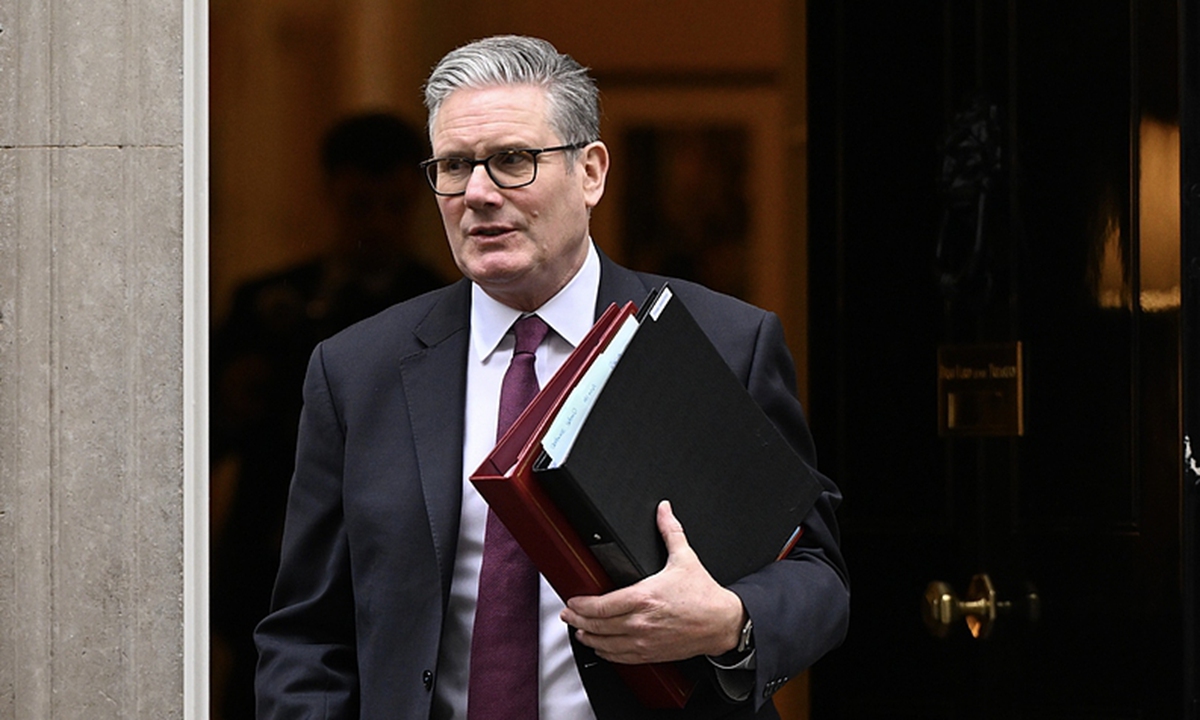
UK Prime Minister Keir Starmer leaves 10 Downing Street to attend the weekly Prime Minister's Questions session at Parliament in London, United Kingdom, on January 21, 2026. Photo: VCG
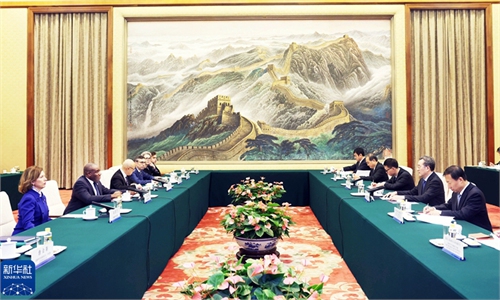
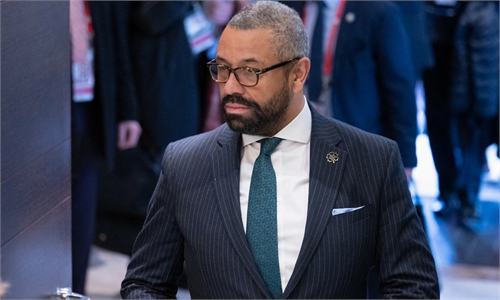
Britain and China will aim to revive a "golden era" business dialogue when Prime Minister Keir Starmer visits Beijing next week, with top company executives from both sides invited to participate, Reuters reported, citing three sources familiar with the initiative. Chinese experts said the news of the British prime minister's potential visit comes as major European powers face mounting external and internal pressures and are seeking to recalibrate and restore ties with China. If realized, the visit may mark a fresh breakthrough in rewarming bilateral relations, though sustained efforts will still be needed to overcome existing hurdles.
An exclusive Reuters report on Wednesday, citing sources, listed the British firms that are expected to join the revamped "UK-China CEO Council," which was originally conceived in 2018 during a period in the bilateral relationship both sides dubbed "a golden era."
Negotiations have been under way for some time, and details such as the group's official English-language name still need to be settled, according to the report.
Noting French President Emmanuel Macron's visit to China in December 2025 and reports by multiple German media outlets claiming that German Chancellor Friedrich Merz is set to make his first China visit in February, Zhao Chen, a research fellow at the Institute of European Studies under the Chinese Academy of Social Science, said major European powers are facing mounting external and internal pressures amid shifting global geopolitics, as well as growing domestic challenges in investment, trade and economic growth.
These factors, the expert noted, are prompting some European countries to seek a restoration of stable and normal relations with China. The trend also reflects a spontaneous adjustment driven by a more diversified global landscape and the accelerating changes of the world order, Zhao told the Global Times.
The news of Starmer's potential visit to China came after the UK's Housing Secretary announced he had given consent for the development of the plan for China's new embassy in London, Chinese Foreign Ministry spokesperson Guo Jiakun said on Wednesday during the press conference that the application and its approval are fully in line with international diplomatic practice as well as local legal regulations and procedures.
Zhao highlighted that the UK's correct and pragmatic decision has removed a major barrier to Starmer's potential visit to China. Therefore, the visit, if it materializes, may become a fresh breakthrough in rewarming and normalizing bilateral relations between China and the UK.
Also, Starmer's potential visit to China reflects his commitment to a more cooperative approach to China-UK relations. Since taking office in 2024, Starmer has gradually adjusted the tone of the relationship away from the Conservatives' emphasis on confrontation and perceived threats, said Li Guanjie, a research fellow at the Shanghai Academy of Global Governance and Area Studies under Shanghai International Studies University.
Starmer's reported visit is likely to be driven by economic considerations as trade remains the ballast of the bilateral relationship. Reinforcing this economic foundation will be essential to stabilizing ties and laying a firmer basis for the sustained and healthy development of China-UK relations, Li said.
The Reuters report on Wednesday said that a visit by Starmer to China would be the first by a British leader since 2018, with his administration aiming to reset ties with the world's second largest economy after successive Conservative governments shifted the UK from being one of Beijing's strongest backers in Europe to one of its "fiercest critics."
In December 2025, speaking at the annual Lady Mayor's banquet, traditionally used to set out foreign policy for the year ahead, Starmer told guests that his government will focus on the relationship with China, according to a report by the BBC.
Failing to navigate a relationship with China would be "a dereliction of duty," the prime minister said, as China is a "defining force in technology, trade and global governance," per the BBC.
Zhao noted that, despite positive recent steps, a genuine return to the golden era of China-UK relations still requires careful observation, as deep-rooted obstacles have yet to be resolved, including the Labour Party's stubborn stance on certain topics.
When responding to a question related to the potential visit, Chinese Foreign Ministry spokesperson Guo Jiakun said on Wednesday during the press conference that he has nothing to share at the moment. "In a turbulent and volatile world, China and the UK as permanent members of the UN Security Council will undoubtedly benefit the world and the two countries themselves by stepping up exchanges and cooperation," the spokesperson said.
On Wednesday, a report from the Guardian noted that Britain's delicate handling of relations with China also comes against the backdrop of the ongoing diplomatic crisis surrounding Greenland.
According to an analysis from the Guardian, US President Donald Trump's announcement that eight countries that have supported Greenland, including the UK, would face tariffs unless there was a deal to sell the territory to the US "was another hammer to the transatlantic alliance, mocking the notion that the US is Europe's ally." And it suggests that "Europe's strategy of flattering and appeasing the US president has failed."
Starmer said on Wednesday he would not back down over Greenland despite Trump's threat to impose tariffs, insisting that economic pressure on allies was "completely wrong." Starmer reiterated that any decision on Greenland's future "belongs to the people of Greenland and the Kingdom of Denmark alone," underlining Britain's stance amid rising tensions with Washington, the Xinhua News Agency reported.
Zhao said that although the situation in Greenland will not be the decisive factor determining the UK Prime Minister's potential visit to China, it underscores the contradictions between the UK and the US, which also adds an element of great-power coordination for his potential trip to China.
Li added that intensifying US pressure on the EU has also been felt in the UK, which may further prompt the Starmer administration to explore engagement with China as a means of easing Washington's diplomatic and policy constraints. Any shift in the UK's China policy may carry some influence for the US strategic posture in the Asia-Pacific region.
RELATED ARTICLES