Europe should seriously consider building a China-Europe community with a shared future: Global Times editorial
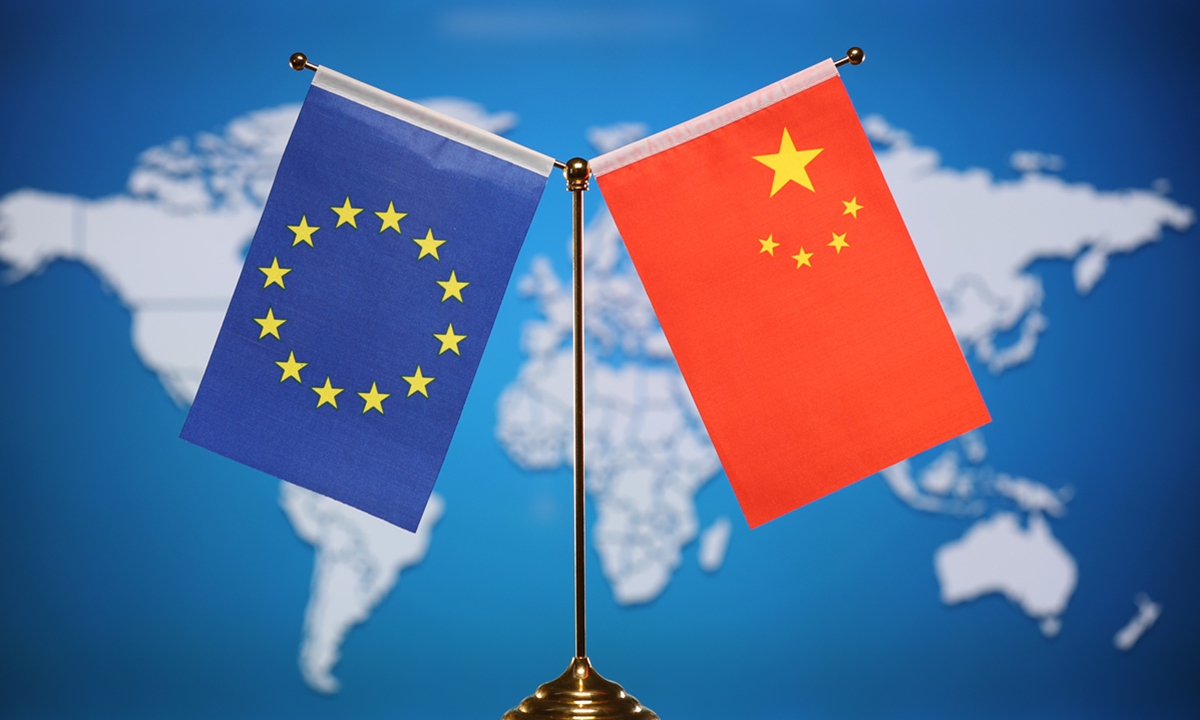
China EU Photo:VCG
A series of events at the beginning of 2026 has dealt a severe blow to multilateralism and global governance. People cannot help but ask: is the world sliding back into the law of the jungle? However, a divided world cannot address the common challenges facing humanity. The way forward lies in upholding and practicing genuine multilateralism and advancing the building of a community with a shared future for humanity. As comprehensive strategic partners that both advocate a multipolar world and multilateralism, China and the EU working together to build a community with a shared future is of great significance and comes at a timely moment.
Proposed by President Xi Jinping, building a community with a shared future for humanity is a major original concept. It is the most important public good China has offered to the international community and represents China's answer to the fundamental question of our times: what kind of world to build and how to build it. This important concept has been incorporated into resolutions of the UN General Assembly and Shanghai Cooperation Organization summit declarations for several consecutive years, incorporated multiple times into key bilateral and multilateral documents, and its core principles have been included in the UN's Pact for the Future. It has increasingly become an international public good of major symbolic significance in today's world. Currently, dozens of countries have reached important consensus with China on building bilateral communities with a shared future. The Belt and Road Initiative family now covers three-quarters of the world's countries, and the four global initiatives have received support from more than 100 countries and international organizations.
The vision of building a community with a shared future for humanity has guided international relations toward a historic leap - from seeking common ground while shelving differences to sharing responsibility for our common planet - pointing the way forward for global development at a critical historical juncture, earning widespread praise from the international community. However, EU countries are still not part of the larger family striving to build a community with a shared future for humanity, which, it must be said, is regrettable. This stands in contrast to the close China-EU ties in trade, culture, science and technology, and education. The reasons behind this deserve serious reflection, and one important factor may lie in problems with Europe's overall perception of China - the "master switch" shaping its policy approach.
Can China and Europe build a community with a shared future together? The answer is yes. Especially against the current backdrop of global threats posed by hegemonism, China and the EU, as two major powers, two major markets, and two great civilizations in today's world, share the responsibility to uphold the authority of international law and the purposes and principles of the UN Charter. Both sides need to move beyond trade frictions and political differences, using shared interests as a bond and common responsibilities as a guide to advance the building of a community with a shared future. In reality, both sides already possess a solid foundation to do so.
From the perspective of ideas and values, the Chinese nation has long upheld concepts such as "the world is one family," "everything under heaven belongs to the people," "giving consideration to both righteousness and profit," "upholding the path of benevolence and righteousness and live in amity with neighboring countries." These ideas lay a cultural foundation for the pursuit of fairness, justice, and win-win cooperation embodied in the vision of a community with a shared future for humanity. European philosophy, with its emphasis on cosmopolitanism, equality, and cooperation, likewise seeks to transcend ethnic and national boundaries in pursuit of the common interests of all humanity and universal peace. The European Community - the predecessor of today's EU - was itself a successful example of Europe exploring the idea of a community and putting it into practice.
From a material perspective, over the years, China and the EU have adhered to the principles of "extensive consultation, joint contribution, and shared benefits," with bilateral trade growing from $2.4 billion at the beginning of their diplomatic relations to $828.1 billion in 2025, and mutual investment stock increasing from almost zero to $280 billion. The China-Europe freight train service has operated 120,000 trips, reaching more than 200 cities in 26 European countries. China and the EU have played a significant leading role in addressing global challenges such as climate change and biodiversity conservation. During the China-EU summit in July 2025, the two sides issued a Joint statement on climate change by Chinese and EU leaders. China and the EU have formed a community of interdependent interests.
What can China and Europe do together to build a community with a shared future for humanity? Building a community with a shared future for humanity aims to "create five worlds" and is guided by the implementation of four global initiatives. Within this framework, China and Europe share broad common interests and a foundation for cooperation in areas such as climate change, technological innovation, health, and industrial and supply chains.
Specifically, both sides can strengthen dialogue and cooperation in maintaining international peace and security, and strive to build a new type of international relations characterized by mutual respect, fairness and justice and win-win cooperation; they can strengthen the alignment of the Belt and Road Initiative with the Global Gateway strategy, leverage their respective advantages, and promote global connectivity; they can strengthen people-to-people exchanges, promote a view of civilization based on equality, mutual learning, dialogue, and inclusiveness, and adhere to learning from each other's strengths and making progress together; and they can strengthen green cooperation, always acting as activists in green transformation and guardians of multilateral processes, and making China-EU contributions to addressing climate change and achieving energy transition.
Europe should be an important member of the community with a shared future for humanity. Differences between China and Europe are inevitable due to differences in ideology, history, culture, social systems, and stages of development. However, these differences should not lead to viewing each other as adversaries, nor should competition reduce cooperation, nor should disagreements lead to confrontation. Both China and Europe should act in accordance with their fundamental interests and the future of the world, stand on the right side of history, defend international rules and order, and jointly be pioneers of dialogue and cooperation, advocates of open development, practitioners of multilateralism, and promoters of mutual learning among civilizations, truly empowering one another and illuminating the world.
RELATED ARTICLES