IN-DEPTH / IN-DEPTH
An undeveloped frontier, quiet and peaceful – How Chinese visitors see Greenland
North of known
By Published: Jan 23, 2026 09:37 PM

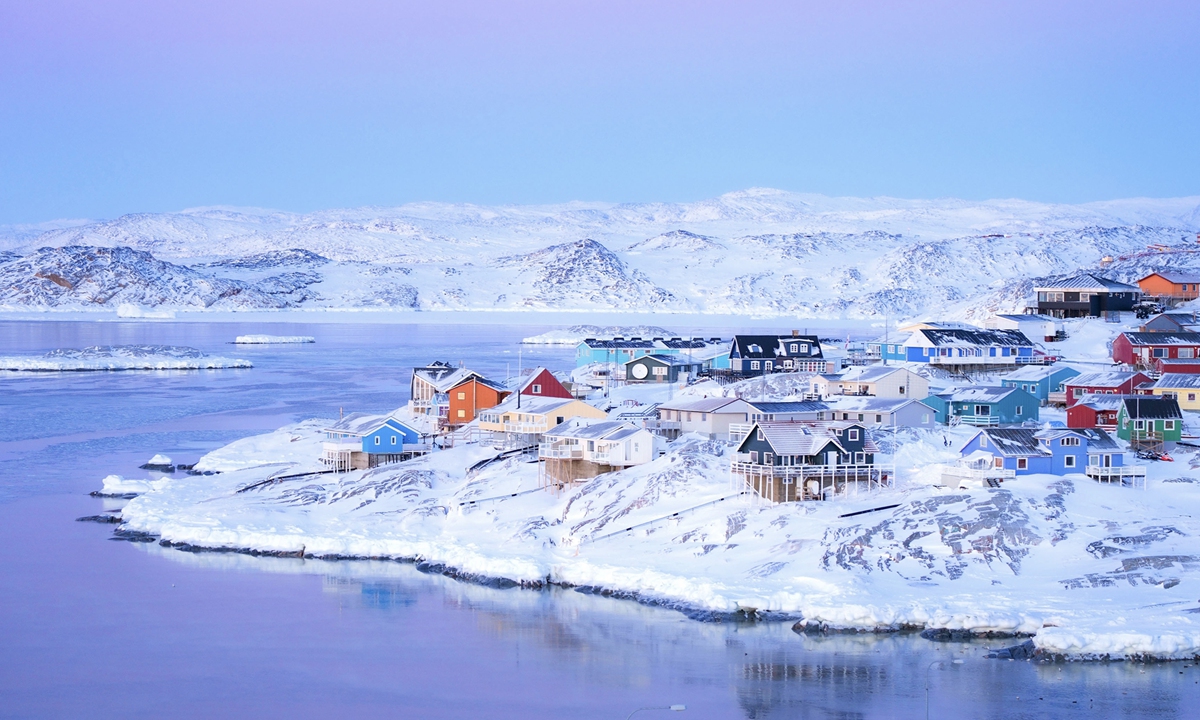
Scenery of Greenland Photo: Courtesy of Liu Xi
On world maps commonly used in China, Greenland is often positioned in the upper right-hand corner and is typically depicted in white.In Chinese middle school geography classes, students are taught that Greenland is the world's largest island.
But for most Chinese people, that is about all they know.
However, Greenland, the ice-covered island off the northeastern coast of North America with a population of just a few hundred thousand, has suddenly transformed into a focal point in global power politics.
On Tuesday, US President Donald Trump, speaking during the World Economic Forum in Davos, Switzerland, repeated his ambition to seize the island, claiming there was "no going back" on his goal to control Greenland, Reuters reported.
The proposal not only infuriated the Danish government and NATO allies, but also triggered a wave of "Greenland not for sale" protests on the island. European Commission President Ursula von der Leyen said on Tuesday that the EU stands firmly with Greenland and the Kingdom of Denmark, stressing that their sovereignty and territorial integrity are non-negotiable, according to the Xinhua News Agency.
It is this "sale" controversy that has, for the first time, sparked many Chinese people's curiosity about Greenland: What kind of place is it really? How do people live there? And how do its ice, snow and culture differ from the traditional images of the polar regions?
And when Chinese visitors set foot on this land shaped by glaciers and Arctic winds, what realities and emotions do they record and experience?
Quietly and peacefully
For Liu Xi, the journey to Greenland felt more like a slow, plotless pause in time.
A long-term solo traveler, Liu currently works in the US developing sustainable and environmentally friendly products. She is also a professional photographer who specializes in natural landscapes, starry skies and the aurora borealis.
In early 2023, she traveled alone to Greenland and spent more than two weeks in the western town of Ilulissat.
Reaching Greenland was no easy task. As it is not part of the Schengen Area, travelers must apply for a separate visa under the Danish system. Flights are mainly operated by Air Greenland and typically require layovers in Copenhagen or Iceland. Departing from a third country, Liu had to take four separate flights before finally landing in Ilulissat.
For Liu, the real Greenland only began to reveal itself after she settled in. She opted to stay in a local guesthouse, which brought her into daily contact with local residents. One evening, when the aurora suddenly intensified, the couple who hosted her knocked on her door to let her know.
"If it were not for them, I might have missed it," she recalled. That night's aurora spread across the entire sky - "the most breathtaking I've ever seen or photographed."
Living with a local family also introduced her to many details of daily life that she had never encountered before. At breakfast, the hostess invited her to try traditional fare - whale skin and the blubber underneath, cut into small pieces. "The taste was unfamiliar," she admitted, "but it felt like a genuine moment of integration."
During the day, she walked around town, scouting locations with her camera. At night, she returned to the spots she had marked, waiting for the aurora based on forecasts. The slow rhythm helped her realize just how different this place was from anywhere else she had been.
"While photographing at the seashore, I saw broken ice rising and falling with the waves, crashing into one another. The ocean kept rolling," she said. "That combination of fragmented ice, ocean waves and freezing temperatures - I had never seen anything like it before."
As a visitor, Liu did not experience any overt rejection. Though the town is small, it has bus stops, tour agencies and organized activities such as boating, skiing and hiking.
Winter tourists were relatively few, but the boat she joined was full, mostly of European travelers. While she was photographing on deck, visitors from Italy and Germany came up and asked to see her iceberg shots.
"My personal feeling is that the town was generally friendly to visitors," Liu said. But she also realized that such friendliness exists under conditions of manageable scale. Ilulissat is small, with multiple flight transfers and high time costs, making it unlikely to become a mass tourism destination.
In her memory, Greenland remained a place of calm and quiet. Most locals she encountered focused on their daily routines: taxi driving, fishing trips, deciding whether to spend the winter months in Denmark.
"During that trip, I mostly focused on what I saw, captured and experienced firsthand," she said.
Looking back, Liu believes the most meaningful part of the journey was experiencing sustained life in a town north of the Arctic Circle, rather than simply passing through. "I've been through snowstorms, photographed auroras and saw different shapes of icebergs on the sea every day," she said. "What I experienced was not just polar nature - but real, everyday life."
In her view, Greenland may not be for everyone, but it deserves to be understood as a place being lived in, not merely observed.

Aurora spotted in Greenland Photo: Courtesy of Liu Xi
Between wonder and warningBehind the arrival of researchers and independent travelers lies a broader trend: rising attention toward the Arctic region and growing investment in tourism, bringing this remote area onto the exploration map for more Chinese visitors.
One of the Chinese companies currently operating Arctic expedition cruises in Greenland is 66° Expeditions. According to the company, it has in recent years developed multiple routes in western Greenland, covering core destinations such as Ilulissat, Nuuk, Sisimiut and Eternity Fjord. These itineraries are designed around themes such as glacier fjords, Arctic Circle crossings, and Inuit cultural experiences.
"All programs must undergo local environmental impact assessments and obtain official approval before operation," Nicole Zheng, marketing director at 66° Expeditions, told the Global Times.
Within this framework, local authorities and tourism departments have introduced initiatives in which Inuit communities take part in cultural experience programs, sharing their daily life and traditions with visitors.
In Zheng's view, Greenland's true appeal lies in its irreplaceable uniqueness. "The permanent ice sheet, polar glaciers, auroras, polar day and night, and millennia-old Inuit culture together create an experience that cannot be replicated," she said. "This reflects growing global demand among high-end travelers for niche, in-depth and immersive journeys."
This shift has already been reflected in the Chinese market. The company reported a noticeable increase in Chinese interest in Greenland over the past two years. From online inquiries and offline promotional events to actual bookings, all indicators have seen a significant rise. Among these, customized private expeditions have emerged as a new growth area.
As for visitor profiles, the majority fall within the 35 to 65 age range - largely drawn from upper-middle-class groups with extensive outbound travel experience. No longer satisfied with conventional sightseeing, they prioritize uniqueness and depth of experience. Business owners, seasoned outdoor enthusiasts, and science and photography hobbyists form the core of this traveler base.
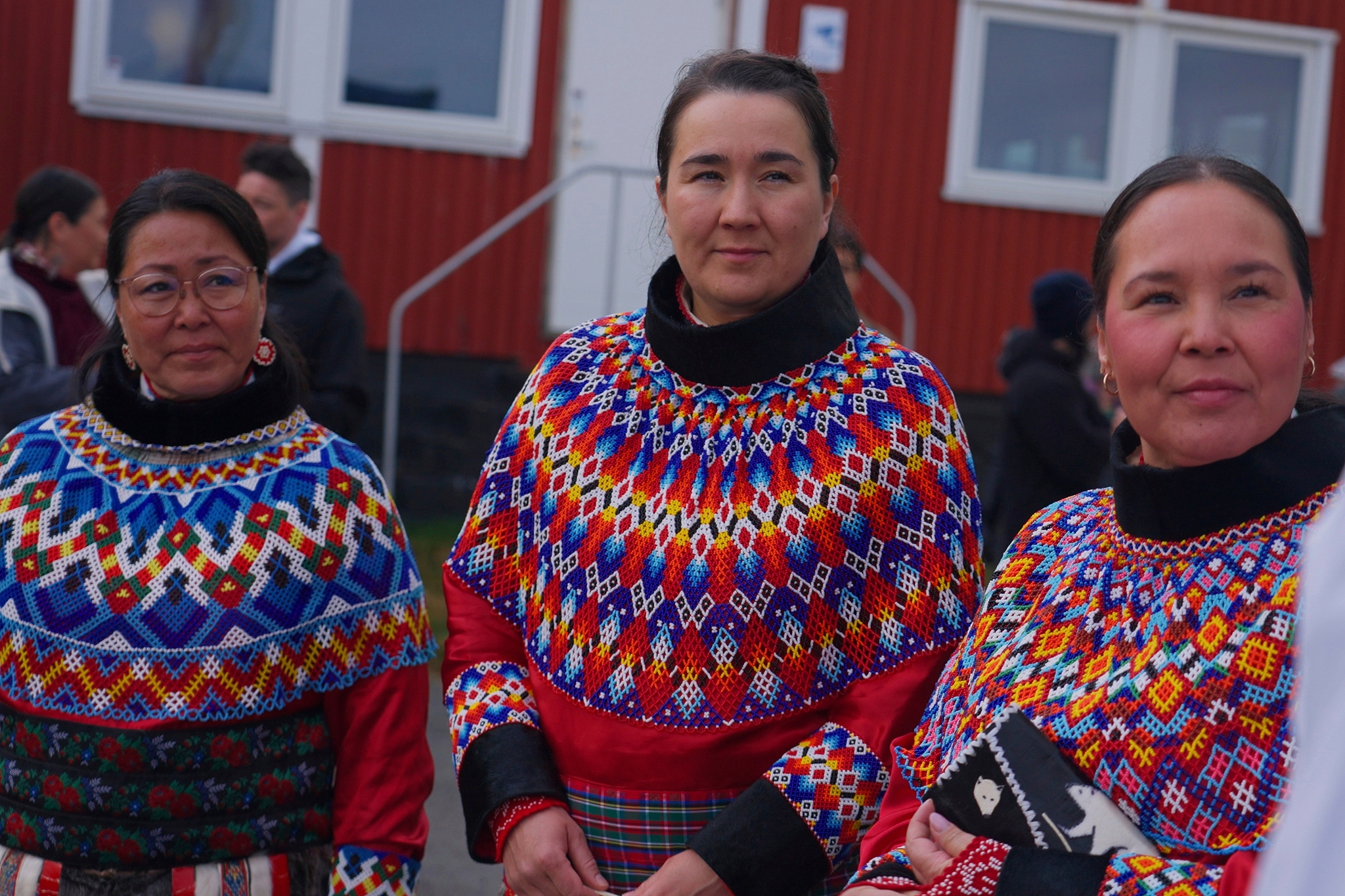
Locals wear traditional clothing made of pearl collars and seal hides on a day of celebration in Nuuk, Greenland. Photo: VCG
Yet for most Chinese tourists, Greenland remains a "high-threshold" destination. A separate visa must be obtained through the Danish system. Transportation within the island is limited and often disrupted by weather, while overall costs are relatively high.For instance, the Global Times found on travel platforms such as Trip.com, private car services with Chinese-speaking drivers, priced at 12,000 yuan ($1,690) per day, significantly higher than that of most mainstream international destinations. On social platforms such as Xiaohongshu, travel notes about Greenland remain few, mostly shared by seasoned outdoor travelers and photography veterans.
According to 66° Expeditions, Greenland tourism is expected to continue steady growth in the near term. On one hand, infrastructure and services such as airports and ports are gradually improving. On the other, Chinese awareness and acceptance of Arctic expeditions are also on the rise.
However, this growth is not about unchecked expansion; it must be grounded in sustainable development.
She recalled an experience from the previous summer: while the cruise ship was sailing through the Ilulissat Icefjord, a massive glacier suddenly calved, sending a block of ice several meters high crashing into the sea, creating powerful waves as the iceberg floated on the surface.
"In that moment, everyone fell silent," she said. An accompanying Inuit guide told the guests that this was not only a gift from nature, but also a reminder of responsibility. For generations, they have guarded this land, hoping that such awe-inspiring moments will continue into the future.
Unique yet fragile
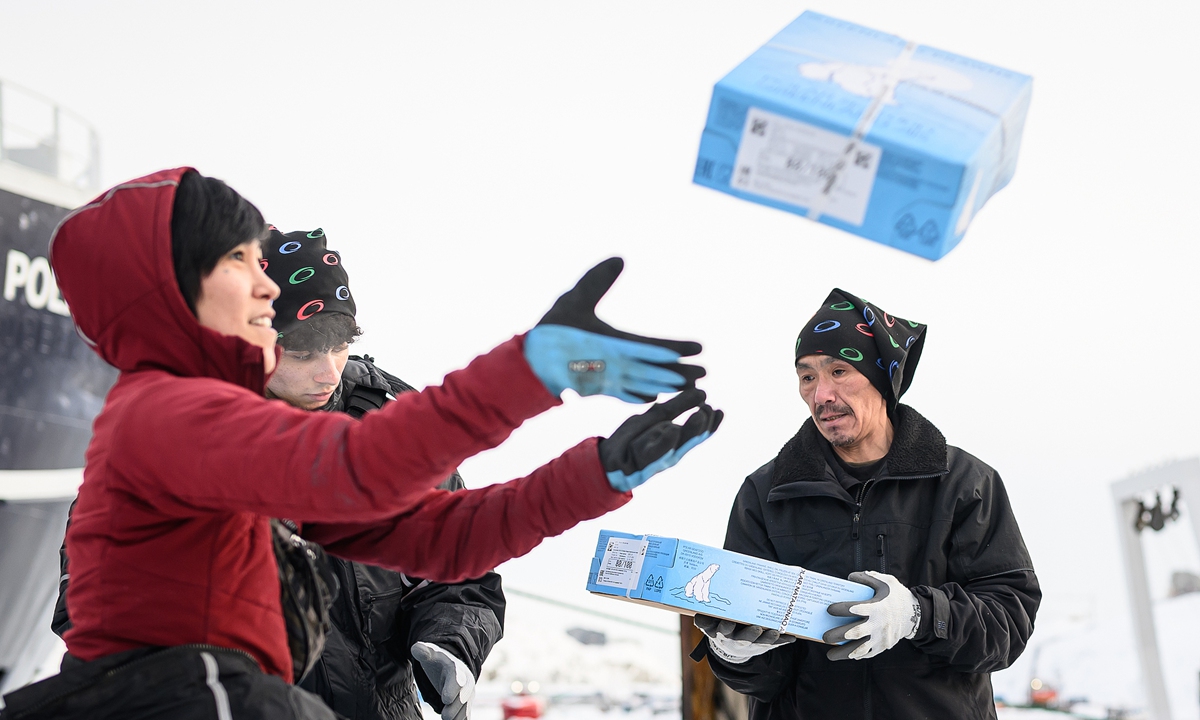
Members of a packing crew stack boxes of freshly-caught prawns after they are unloaded from the Polar Nataarnaq stern trawler, on March 27, 2025 in Nuuk, Greenland. Photo: VCG
Despite tourists, the pioneers from Chinese researchers have as well begun pioneering exploration in Greenland in recent years.In the summer of 2025, a team of Chinese university students and their teachers, setting off from Shanghai, arrived in Nuuk, Greenland's capital.
The group from Shanghai-based Tongji University, known as the Summer School of Polar Research on Climate Change and Global Governance, consisted of 20 students from various disciplines, including oceanography, environmental engineering, urban transportation, and architecture and urban planning, according to the official WeChat public account of National College of Elite Engineers at Tongji University.
During their expedition in Nuuk, team members explored how humans physically and mentally adapt to polar environments. They also used 3D laser scanners to collect urban spatial models and analyzed pedestrian activity on the streets to provide empirical support for optimizing urban planning in polar regions.
The team also boarded the training vessel Statsraad Lehmkuhl, known as the "Floating University," and conducted scientific research in the Greenland Sea. Braving winds and waves, they observed sea ice conditions and ocean current features, collected surface water samples from fjords, and conducted on-site pre-treatment, working alongside a Norwegian field research team to carry out sample analyses.
The students also had an immersive experience at the Greenland National Museum, which deepened their understanding of the social fabric, environmental issues and public concerns of contemporary Greenland.
Through a seminar, the team gathered with global Arctic scholars to discuss core topics such as the impact of climate change on Greenland, the scientific value of traditional indigenous knowledge, and sustainable resource development pathways.
"While collecting the necessary data in nature, we also explored the surrounding areas and felt the traces of the indigenous people's past," one student said. "This experience not only broadened our international horizons but also honed our empirical thinking through natural observation, and deepened our understanding of the academic value of our disciplines through humanistic exploration."
RELATED ARTICLES