There's no need to make a fuss about Western countries 'moving closer to China': Global Times editorial
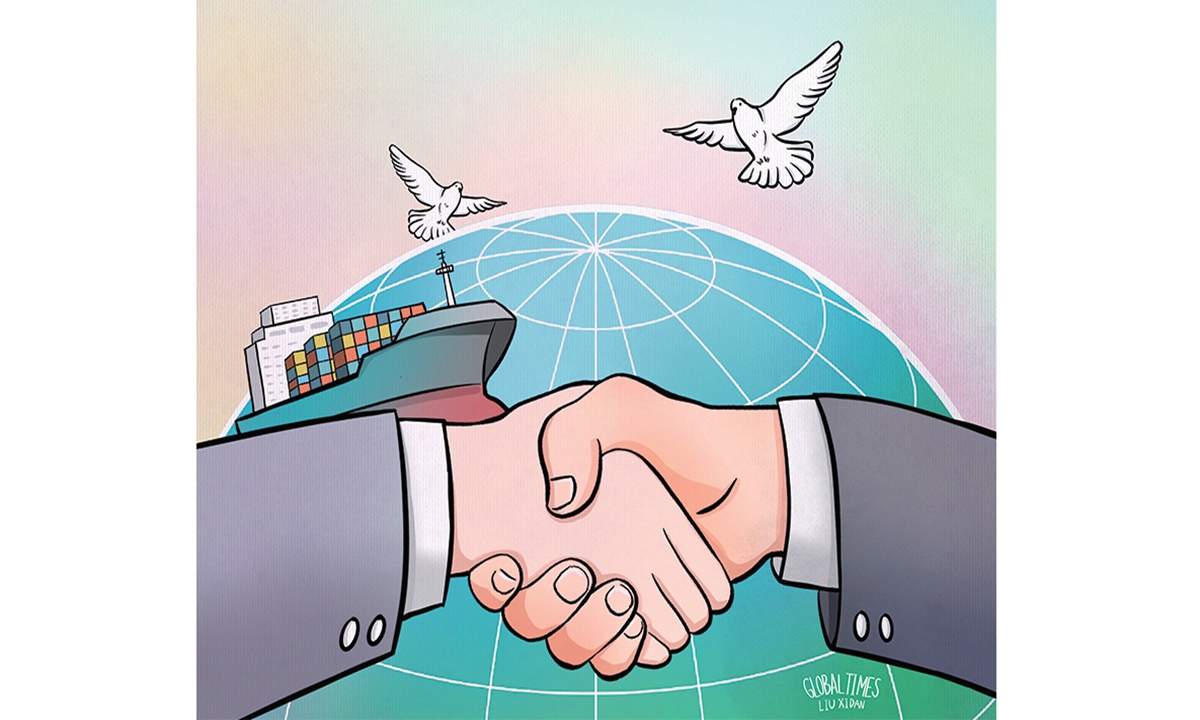
Illustration: Liu Rui/GT
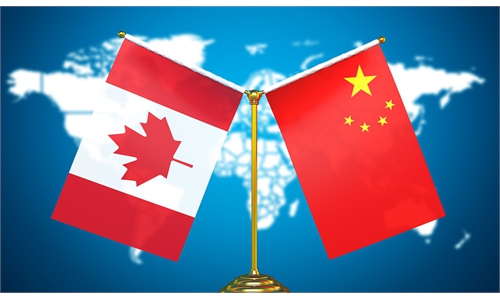
Anyone interested in international politics has recently noticed a trend: from the applause sparked by Canadian Prime Minister Mark Carney's remark at the Davos forum that "middle powers must work together" to a growing list of countries - including South Korea, Canada, Finland, the UK and Germany - whose leaders are either "successively visiting China" or openly expressing interest in doing so. Against the backdrop of unilateralism and hegemonism stirring up the world, strengthening cooperation with China is increasingly seen within Western countries as a developing momentum. These developments are clearly not isolated. Some observers argue that they may represent a symbolic turning point in a wave of profound transformation of the international order.
US public discourse has been highly attentive to these developments. Amid a flood of reports and analyses, several typical China-related misconceptions stand out.
One is the "China windfall" narrative, which argues that "fractures" between the US and its allies have created "opportunities" for China to exploit, even claiming that "China is winning" a new Cold War. Another is the "Second China Shock" argument, which holds that China's steadily advancing industrial chains are encroaching on the supposed "reserved turf" of Western countries, warning that strengthening cooperation with China amounts to allowing China to "devour" them. There is also a perspective that might be termed the "surrender to China" narrative, which portrays cooperation with China as a sign of "weakness," equates it with so-called "trading values for markets," and claims that China poses a "fundamental challenge" to Western civilization.
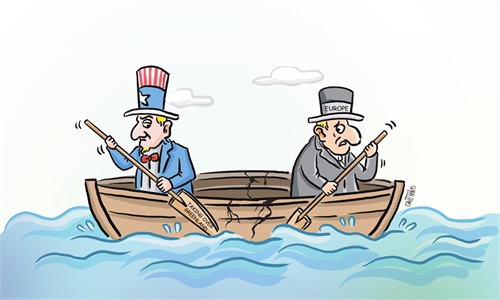
All these arguments are, at their core, variations of the "China threat" narrative dressed up in different guises. Fundamentally, they remain binary narratives rooted in Cold War thinking. They assume an international landscape defined by a "China-US bipolar rivalry," in which every country is forced to make an exclusive choice between the two - either aligning with the hegemon or gravitating toward China. Embedded in this logic is a thinly veiled intimidation of US allies: Want to cooperate with China? You will lose "strong alliance," lose "your industries," and even lose "your values." This form of ideological "brainwashing" deliberately sidesteps countries' genuine aspirations for autonomous development, distorts the nature of international cooperation through the lens of bloc confrontation, and in doing so misrepresents both China and the world itself.
Are Western countries choosing China? In a certain sense, yes. At the recently concluded Davos forum, "China opportunities" emerged as one of the most widely discussed topics, underscoring the international community's broad desire to further deepen cooperation with China. This is the natural result of China advancing its own development in ways that benefit the world, continuously injecting stability and certainty into the international community.
Countries are deepening cooperation with China because they recognize the vast potential of the Chinese market, the practicality and effectiveness of Chinese solutions, and the sincerity and reliability of China as a partner. The view that "China is a trustworthy and equal partner" has long been a widely shared consensus among countries of the Global South. It is therefore hardly surprising that a growing number of countries - including Canada and European nations - are coming to appreciate this reality. In fact, even the US itself won't easily give up dialogue and cooperation with China.
More significantly, rather than stating that these countries have chosen China, it is more accurate to say that they have chosen to align with the prevailing trends of the times. From the Global South's collective push for the expansion of BRICS cooperation mechanism to ASEAN nations adhering to a policy of non-alignment, and now to the collaboration among "middle powers," these trends clearly demonstrate that win-win cooperation has become an unstoppable force of the era. The more unilateral hegemonic actions surge against the current, the stronger the call for multilateralism will become. The reason China has become a "reliable partner" is not only due to the magnetic pull of being the world's second-largest economy but also because it consistently advocates for a multipolar world that is equal and orderly, as well as for inclusive and beneficial economic globalization, always standing on the right side of history.
In the 21st century, the primary aim of most countries' foreign policies is to pursue their own development and the well-being of their citizens. When Western leaders repeatedly assert that "the old order is dead," it does not indicate the collapse of the international order but rather marks the complete bankruptcy of Cold War thinking. The more countries liberate themselves from the constraints of bloc confrontation and steadfastly pursue independent development paths, the more they can steer the international landscape toward a more equitable and orderly multipolar direction. When more countries are able to express their demands independently and engage in negotiations as equals, the global governance system will become fairer and more just, with governance outcomes benefiting the peoples of all countries more broadly.
"We actively take on the world as it is, not wait around for a world we wish to be." This is a statement made by Carney in response to his trip to China. Behind this lies a clear recognition of the reality of interdependence among countries in the era of globalization; the world is not simply a black-and-white puzzle of opposing blocs. In the future, as more countries break free from the shackles of Cold War thinking, the international order will evolve toward a more inclusive future through transformation. This is the inevitable direction of historical evolution and the shared aspiration of peoples around the world.
RELATED ARTICLES