S.China's Guangdong records over 1 million newborns annually for six straight years: provincial govt report
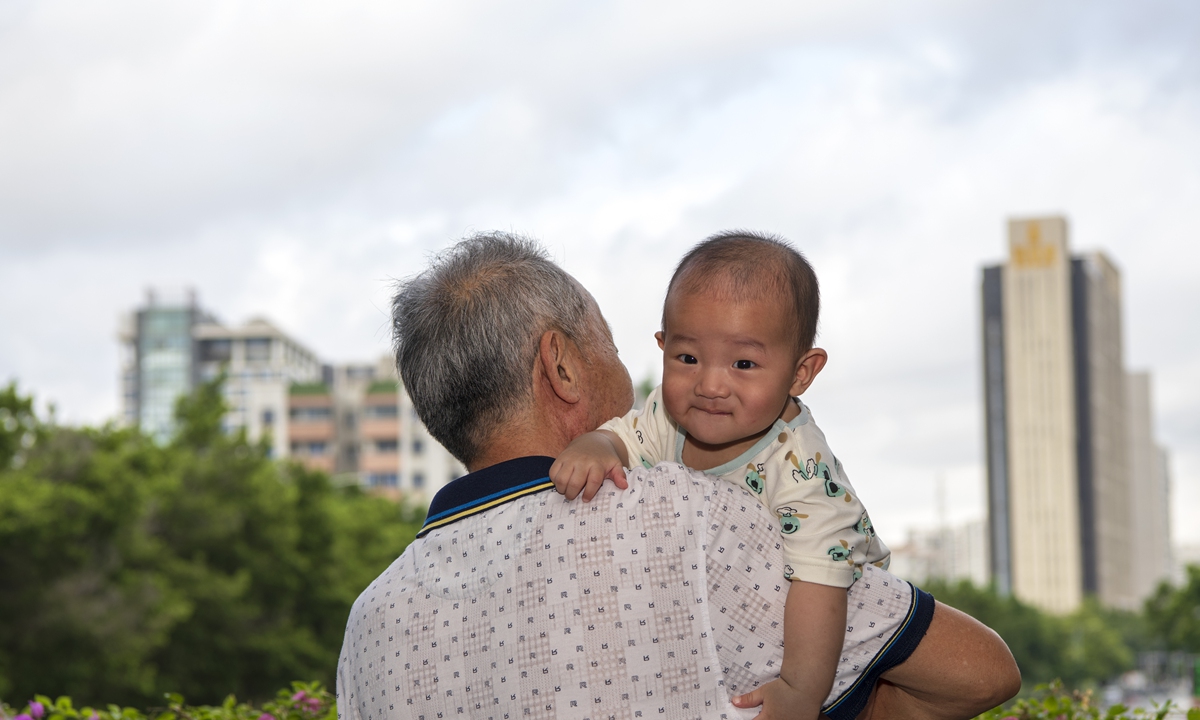
Photo: VCG
South China's Guangdong Province records over one million newborns annually for six straight years, according to the provincial government work report delivered on Monday during the fifth session of the 14th Guangdong Provincial People's Congress.
According to the provincial government work report delivered by Guangdong Governor Meng Fanli at the opening ceremony, in 2025, Guangdong added 500,000 new public school places in basic education, established three new undergraduate-level vocational schools, and implemented a policy of free education for the final year of preschool, benefiting 1.68 million children, Guangzhou Daily reported on Monday.
Several Guangdong cities, including Guangzhou, Shantou, Foshan and Dongguan reported birth rates above 10 per thousand in 2024, well above the national average and cities such as Zhuhai, Huizhou, and Maoming also reported birth rates above 9 per thousand. Guangzhou, as a major city increasingly chosen by young people to settle, in particular, recorded 114,300 registered newborns in 2024, with a birth rate of 10.72 per thousand, Nanfang Metropolis Daily reported based on the statistics released in the 2024 national economic and social development statistical bulletin by these cities.
Guangdong's strong economic growth, with its GDP consistently ranking the first nationwide, and abundant job opportunities, have driven a continuous population influx, independent demographer He Yafu told the Global Times on Monday.
Statistics show that by the end of 2024, Guangdong's permanent population reached 127.8 million, an increase of 740,000 compared to the previous year. The net inflow of migrant population and growing urban absorption capacity have provided a stable foundation for Guangdong to maintain a large reproductive-age population, Guangzhou Daily reported.
Guangdong's fertility advantage is partly attributed to its relatively younger population structure. According to the 2024 Guangdong Provincial National Economic and Social Development Statistical Bulletin, the province's 16-59 age group of its resident population amounted to 84.84 million in 2024, accounted for 66.38 percent of the province's total population, surpassing the national average by 5.46 percentage points. This large, young group in their prime childbearing years plays a key role in sustaining the province's fertility rate, Guangzhou Daily reported.
Guangdong's growing fertility rate is also supported by policies fostering a "childbearing-friendly society." In recent years, supportive policies covering child-rearing, housing, employment, and healthcare have been gradually implemented in Guangdong, covering almost every aspect of childbearing and child-rearing, Guangzhou Daily reported.
Public data show that in the first half of 2025, approximately 5 million people benefited from maternity insurance in Guangdong, with an average hospitalization cost for childbirth of around 5,700 yuan and an average maternity allowance of about 21,000 yuan, covered by the provincial maternity insurance, according to Guangzhou Daily.
Other policies, such as affordable childcare services, extended maternity leave, increased parental leave, and the childcare allowances or flexible work arrangements, have also provided policy support for Guangdong's population growth, Guangzhou Daily reported.
Besides, He also pointed out that in regions such as Chaoshan in eastern Guangdong and western Guangdong, the cultural influence of the "more children, more blessings" tradition has led to relatively higher fertility intentions.
RELATED ARTICLES