Chinese scientists find COVID-19 oral nucleoside drug shows significant antiviral activity against Nipah virus
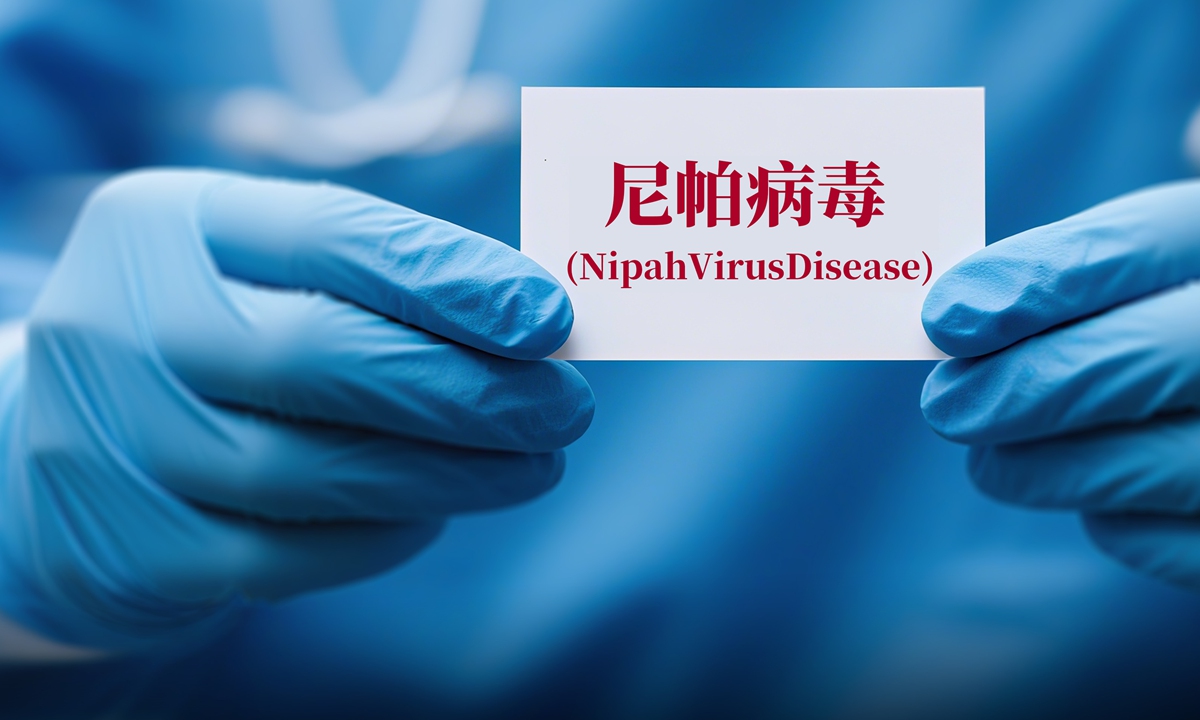
Photo: VCG
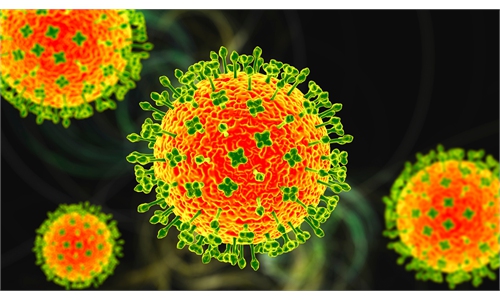
A joint research by Chinese scientists has recently found that the oral nucleoside drug VV116, approved for the treatment of COVID-19, shows significant antiviral activity against Nipah virus, bringing new hope for the prevention and treatment of this emerging fatal infectious disease, according to a statement released on Monday by the Wuhan Institute of Virology under the Chinese Academy of Sciences (CAS).
According to a statement released by the Wuhan Institute of Virology, since its first known outbreak in Malaysia in 1998, Nipah virus has emerged as a major public health concern with a 40 percent to 70 percent fatality rate. In January this year, India’s West Bengal state saw new cases and deaths, with about 100 close contacts placed under quarantine. Given no approved treatments or vaccines and a wide host range of the virus, the WHO has classified Nipah virus as a top-priority regional threat.
The joint research team from the Wuhan Institute of Virology, the Shanghai Institute of Materia Medica and Vigonvita Life Science Co recently published a paper titled “The oral nucleoside drug VV116 is a promising candidate for treating Nipah virus infection” in the international journal Emerging Microbes & Infections.
VV116 is an oral antiviral approved for the treatment of COVID-19 in China and Uzbekistan. The drug and its active byproducts have shown notable inhibiting effect on the Nipah virus, including both the “Malaysia strain” (NiV-M) and the “Bangladesh strain” (NiV-B), during experiments in vitro.
In a lethal-dose infection model using golden hamsters, oral administration of VV116 at 400 milligrams per kilogram of body weight increased the animals’ survival rate to 66.7 percent and significantly reduced viral loads in key target organs of the lung, spleen, and brain, according to the statement released by the Wuhan Institute of Virology, CAS.
The findings confirmed VV116’s therapeutic potential against Nipah virus infection, suggesting it could serve both as a preventive treatment for high-risk groups such as healthcare workers and laboratory personnel and as a readily available drug option for responding to current and future Nipah virus outbreaks.
Vigonvita Life Science Co said on Tuesday that the preclinical data indicate VV116 has the potential to be developed as a treatment for Nipah virus infection. Given the high fatality rate of the virus and the lack of approved vaccines or specific treatments, the company will closely track related outbreak trends, and launch clinical trials for treatment and post-exposure prevention when needed, thepaper.cn reported on Tuesday.
Some pharmaceutical industry experts also noted that while current research demonstrates the potential of VV116 for the prevention and treatment of Nipah virus, a series of rigorous clinical studies and extensive clinical trials are still needed before it can be used in practice, according to thepaper.cn.
On Monday, Wang Xinyu, deputy director of the infectious diseases department at Huashan Hospital affiliated with Fudan University, wrote in an article on the hospital’s WeChat public account that, according to monitoring data from the World Health Organization (WHO) and disease control centers in multiple countries, India is in an active phase of Nipah virus transmission. The data show that although the situation has not reached a large-scale epidemic, small-scale outbreaks with high fatality rates are occurring in certain areas in India, exhibiting characteristics of cross-regional spread and clustered infections within hospitals.
Wang said that no confirmed human cases of Nipah virus infection have so far been reported on the Chinese mainland. “The public does not need to panic, but should treat the virus with caution, maintain good hygiene habits, and trust in the effectiveness of scientific monitoring and prevention measures,” Wang wrote in the article.
Global Times
RELATED ARTICLES