Chinese FM responds to Canada’s reported rejection of whale exports to China; expert dismisses foreign media's hype of the issue
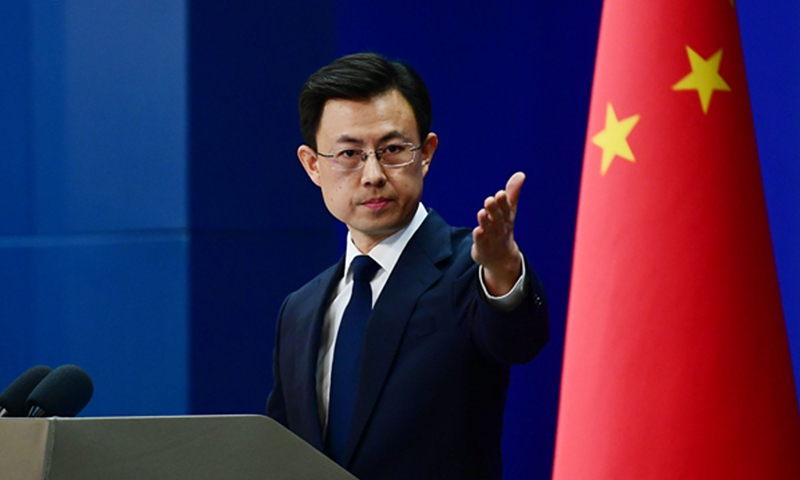
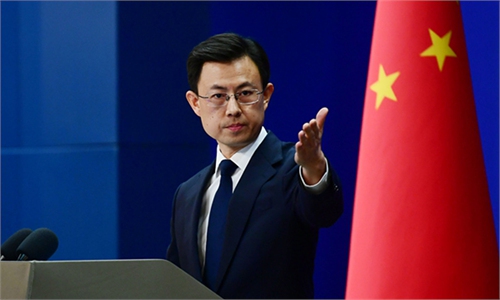
Photo: Chinese Foreign Ministry spokesperson Guo Jiakun
When asked by a foreign media reporter for comments regarding the Canada's federal government's approval for the financially troubled theme park to sell 30 beluga whales to parks in the US, after rejecting an export request to China on the grounds that it might perpetuate their exploitation, Guo Jiakun, a spokesperson for China's Ministry of Foreign Affairs, said at a regular press conference on Tuesday that "I'm not familiar with what you mentioned. We will not comment on the relations between Canada and the US."
"But let me stress that the sound and steady development of China-Canada relations serves the common interest of the two countries and is conducive to world peace, stability, development and prosperity. China's position on developing its relations with Canada is consistent and clear," the spokesperson added.
Canada's federal government on Monday gave Marineland conditional approval to sell its 30 imperilled beluga whales to parks in the United States, after rejecting an export request to China, according to AFP.
The park has been mired in controversy for years. Twenty animals, including 19 belugas, have died there since 2019, according to a tally by The Canadian Press.
Marineland, which is closed to visitors, thought it had a solution last year when it forged a plan to sell the whales to the Chimelong Ocean Kingdom, a lavish theme park in China.
Canadian Fisheries Minister Joanne Thompson rejected that plan, claiming it would perpetuate the whales' exploitation, according to the report.
Against the backdrop of Canadian Prime Minister Mark Carney's recent visit to China-where both sides signed cooperation documents in multiple fields-such question raised by certain foreign media appears to be a typical example of sowing discord and deliberate hype, by grafting a fundamentally commercial issue between Canada and the US onto China, Lü Xiang, a research fellow at the Chinese Academy of Social Sciences, told the Global Times on Tuesday.
Third-party issues should not be politicized, nor should they be exploited to create confrontation, said the expert.
RELATED ARTICLES