China rolls out services-consumption work plan, launches Spring Festival spending drive
Sectors have vast potential to reinforce growth stability beyond the short term: expert
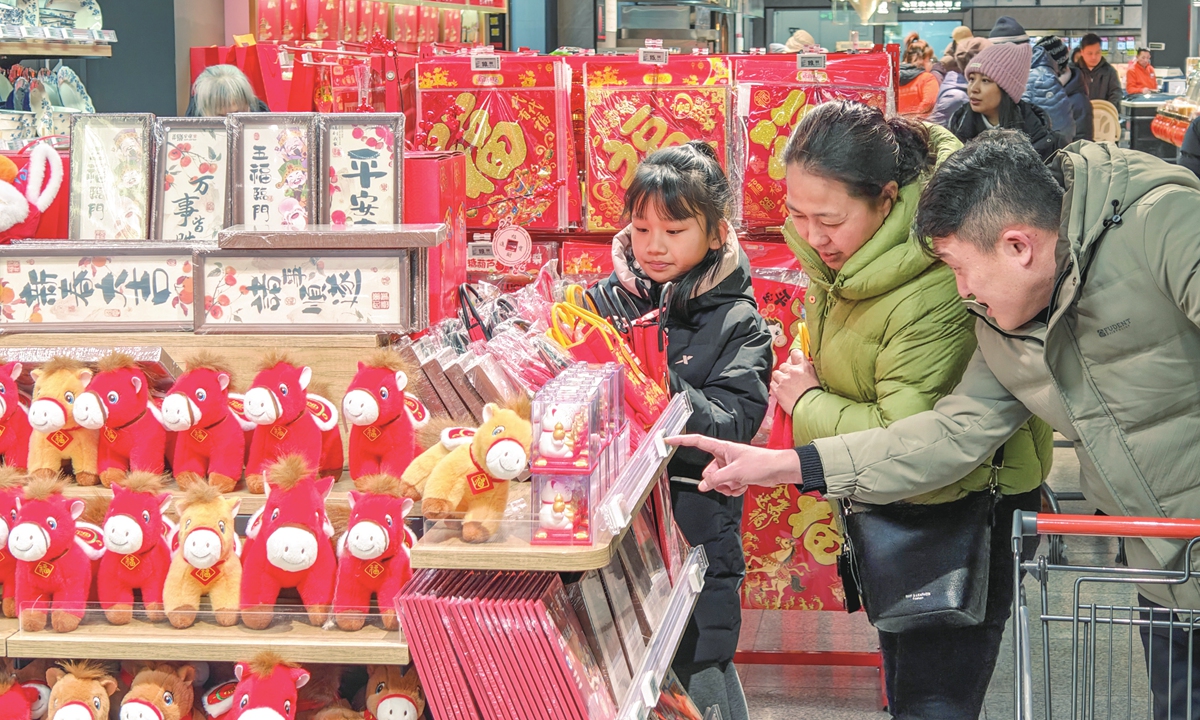
Consumers shop for festive decorations at a supermarket in Beijing on January 25, 2026, as demand is on the rise ahead of the upcoming Year of the Horse. Photo: VCG
China has unveiled a national work plan to cultivate new growth drivers in services consumption, and on Thursday it also launched the 2026 National Spring Festival culture and tourism consumption month, moves that analysts said are expected to better anchor consumption expectations and translate policy support into more stable demand momentum.
The General Office of the State Council recently released a work plan on accelerating the cultivation of new growth points in services consumption, outlining steps to expand and upgrade services supply and channel more consumption toward areas that directly improve people's livelihoods, as part of broader efforts to support the country's high-quality economic development, the Xinhua News Agency reported on Thursday.
The work plan sets out three areas of policy support, focusing on upgrading everyday and travel-related services, unlocking demand in high-potential consumption sectors such as performances and sports events, and strengthening institutional support through standards, credit systems and financial backing.
As policy support intensifies, consumption expansion centered on services and culture will be released in a concentrated manner at upcoming key moments, and will serve as an important pillar for stabilizing growth over a longer cycle, Hu Qimu, deputy secretary-general of Forum 50 for Digital-Real Economies Integration, told the Global Times on Thursday.
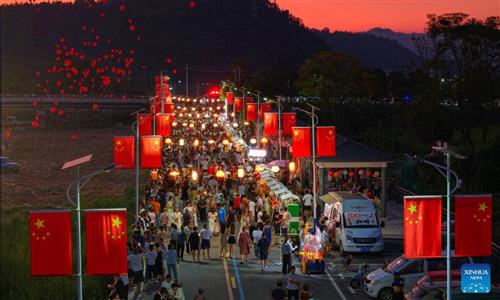
On Thursday, the Ministry of Culture and Tourism (MCT) officially launched a nationwide Spring Festival culture and tourism consumption campaign in Quanzhou, East China's Fujian Province, rolling out more than 360 million yuan ($51 million) in consumption subsidies to spur holiday spending, Xinhua reported.
This year's Spring Festival holiday will run for nine days from February 15 to 23, making it the longest break in recent years. As China's most important traditional holiday, the festival is widely seen as a critical test of households' willingness to spend and market vitality, particularly for services such as tourism, transport and cultural activities.
Under the nationwide campaign, which runs from late January to early March, local governments are expected to organize about 30,000 culture and tourism consumption activities, centered on traditional New Year customs, live performances, exhibitions, ice-and-snow tourism, winter resort travel and family-oriented trips.
More than 360 million yuan in consumption vouchers and subsidies will be issued nationwide, alongside measures such as ticket discounts and exemptions, ticket-stub-linked promotions and cross-regional tourism incentives, according to the MCT.
Hu said that as the consumption structure upgrades, incremental spending during this year's Spring Festival is more likely to flow into services- and culture-oriented sectors, where China still has significant untapped potential and further development could unlock consumption growth and create a more resilient growth engine.
"Compared with ordinary periods, consumers are naturally more willing to spend during the Spring Festival, and policy incentives further bolster expectations and confidence, making such measures especially effective in turning support into real demand over the holiday," Hu added.
During this year's Spring Festival consumption month, the Civil Aviation Administration of China, several major financial institutions, and leading online platforms and enterprises will roll out a range of preferential measures and integrated online-offline cultural and tourism consumption activities, according to the MCT.
China has in recent years placed growing emphasis on expanding domestic demand. At the Central Economic Work Conference held in December last year, policy-makers said that strengthening domestic demand would remain a key focus in building a robust domestic market in 2026, calling for special initiatives to boost consumption and to expand the supply of high-quality consumer goods and services.
Official data showed that China's total retail sales surpassed 50 trillion yuan for the first time in 2025, rising 3.7 percent year-on-year, with consumption accounting for 52 percent of economic growth - up 5.0 percentage points. The Ministry of Commerce (MOFCOM) said at a press briefing on Monday that the figures underscore the vitality and resilience of China's ultra-large consumer market.
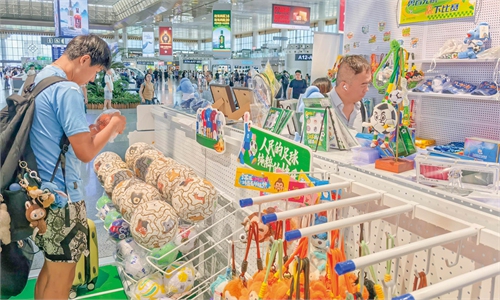
Retail sales of services grew 5.5 percent year-on-year, with segments such as culture, sports and leisure, tourism-related services, leasing and transport recording double-digit growth.
The resilience in China's consumption momentum is also being reflected at the company level, including among foreign-invested firms.
Starbucks, a US-based coffee chain, told the Global Times on Thursday that its China business has maintained strong momentum, with fiscal 2026 first-quarter revenue reaching $823.4 million, up 11 percent year-on-year - the fifth consecutive quarterly increase.
The company said that its store expansion is steadily extending into emerging county-level markets, underscoring its confidence in and long-term commitment to the Chinese market.
A MOFCOM official said on Monday that in 2026 China will continue to improve services supply, including by guiding foreign investment toward services consumption sectors and further removing unreasonable domestic market restrictions.
With external uncertainty rising and traditional investment space constrained, services consumption in 2026 is expected to play a more decisive role, supporting short-term demand stabilization while strengthening China's longer-term economic resilience, Hu said.
RELATED ARTICLES