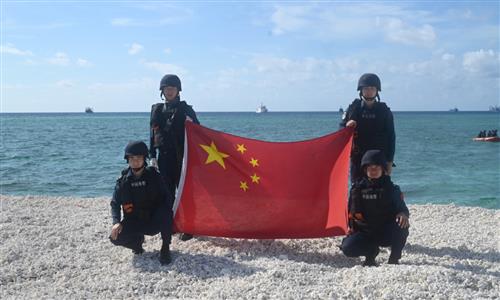
China Coast Guard conducted patrols around Diaoyu Dao for 357 days in 2025, underscoring China’s sustained maritime rights protection efforts
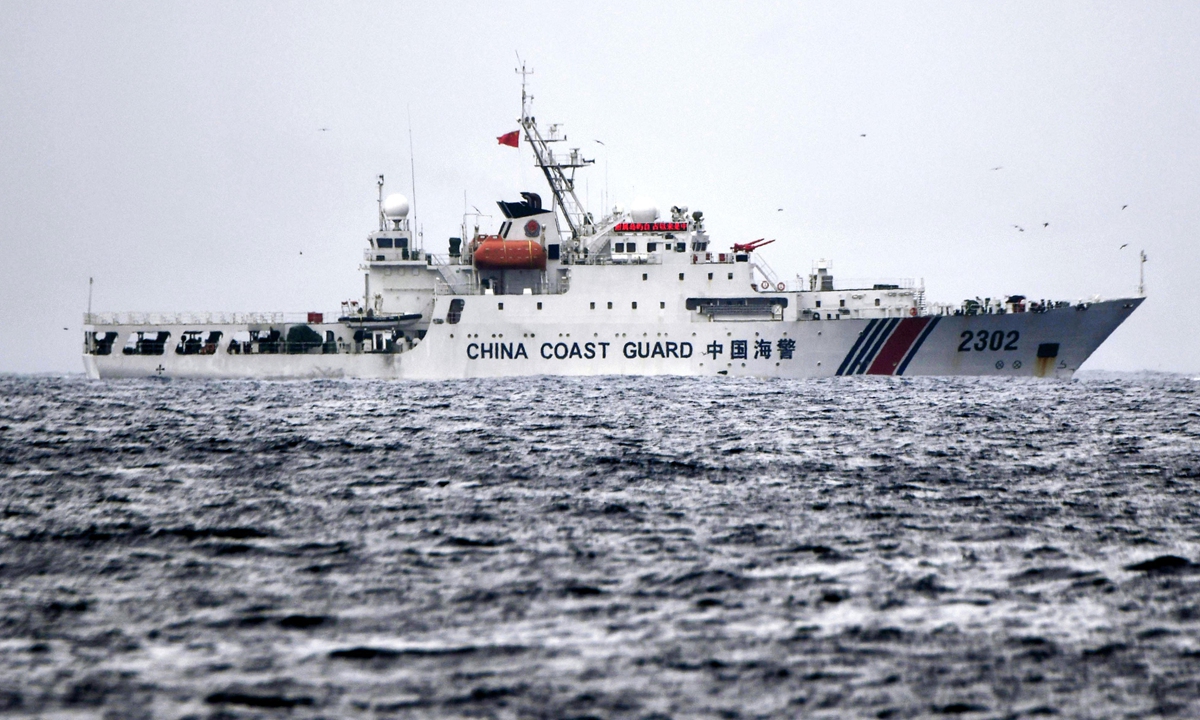
File photo of China Coast Guard vessel patrolling waters near Diaoyu Dao on April 27, 2024 Photo: VCG
The China Coast Guard (CCG) said on Friday that China carried out patrols around Diaoyu Dao for a total of 357 days in 2025, underscoring the country's sustained maritime rights protection efforts.The information was unveiled during a special maritime law enforcement briefing held on Friday morning marking the fifth anniversary of the implementation of the coastguard law. Zhang Jianming, head of the law enforcement department of the CCG, said that over the past five years, the CCG has deployed vessels more than 550,000 times and aircraft more than 6,000 times to carry out maritime rights protection and law enforcement missions.
Zhang said that the CCG organized 134 patrols in the territorial waters of Diaoyu Dao over the past five years, with patrol days reaching 357 in 2025 alone.
Zhang stressed that the CCG has resolutely safeguarded China's maritime sovereignty, effectively stabilized the maritime situation through fulfilling its duties and responsibilities, and firmly implemented the decisions and deployments of the Central Committee of the Communist Party of China.
The CCG has adhered to a situation-based approach and acted strictly in accordance with the law to prevent and regulate infringement and provocations by relevant countries, effectively deterred the so-called "Taiwan independence" separatist activities, and resolutely safeguarded China's territorial sovereignty and maritime rights and interests, Zhang added
"Over the past five years, we have conducted regular rights protection patrols in the East China Sea, South China Sea and Yellow Sea, carried out law enforcement patrols in waters surrounding the Taiwan island and its affiliated islands, and strengthened law enforcement control in the territorial waters of Huangyan Dao and surrounding areas," Zhang said.
Zhang added that the CCG has continued to innovate operational strategies, optimize control models, and strengthen capacity building, enabling timely detection, rapid response and effective handling of foreign infringement activities. These efforts have achieved new breakthroughs in integrated maritime and aerial patrols around Diaoyu Dao, shaped a new posture in maritime rights protection, and established a new pattern of law-based governance of the Taiwan Straits in accordance with the one-China principle.
On Friday, the CCG carried out law enforcement patrols in the territorial sea of Huangyan Dao and its surrounding areas. Since the beginning of January, China Coast Guard has carried out law enforcement patrols over relevant areas, regulated vessels engaged in illegal activities and provocations in accordance with laws and regulations, resolutely safeguarded national territorial sovereignty and maritime rights and interests. Also, China Coast Guard conducted search and emergency rescue operations in China's jurisdictional waters and successfully rescued Filipino crew members over board, and upheld maritime safety and order, the CCG said in a statement published on Friday afternoon.
Chen Xiangmiao, a research fellow at the National Institute for South China Sea Studies, told the Global Times on Friday that CCG's law enforcement patrols around Huangyan Dao and its humanitarian rescue of foreign crew members demonstrate both China's exercise of sovereignty and maritime rights and its fulfillment of humanitarian responsibilities under international conventions.
China's patrols and law enforcement activities in the surrounding waters are a legitimate exercise of rights granted under international law, Chen said, adding that following incidents such as the 2010 boat collision and Japan's 2012 so-called "islands purchase," China began implementing normalized patrols and control measures around Diaoyu Dao, which have since been carried out on a regular basis.
According to Chen, the high frequency of the patrols reflects China's response to unilateral actions by the Japanese side and serves to deter disruptive moves, prevent escalation, and help keep the overall situation and stability in the Diaoyu Dao area under control.
RELATED ARTICLES