GT on the spot: China-Russia visa-free travel turns distant journeys into routines, boosting cross-border tourism, jobs and medical co-op
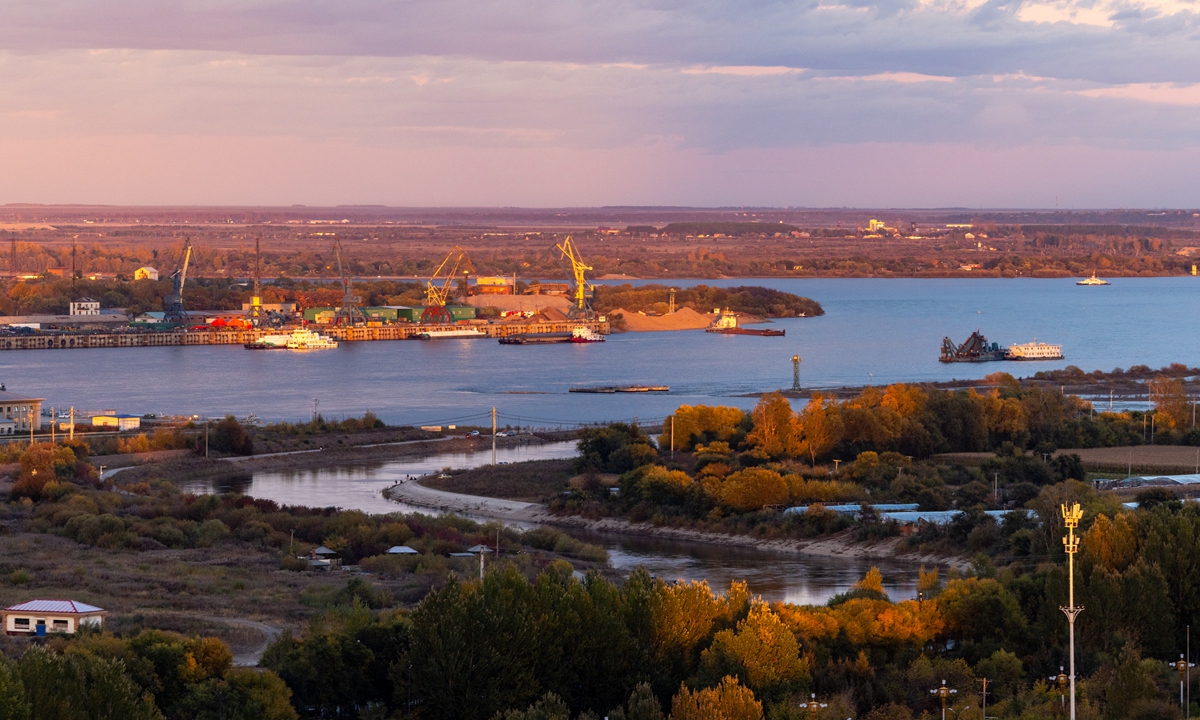
An aerial photo captures from Heihe, Northeast China's Heilongjiang Province, overlooking a city in the Russian Far East across the Heilongjiang River. Photo: VCG
There is a Russian saying, when rendered into English, reads "like walking to China," a phrase that evokes a journey that is long, arduous and demanding — a metaphor for goals that require endurance to achieve. Yet with the implementation of a bilateral visa-free policy between China and Russia, walking to China is no longer a distant metaphor but an everyday reality for many border residents.In Heihe, a border city in Northeast China's Heilongjiang Province, facing Russia's Blagoveshchensk across the Heilongjiang River, daily life has become increasingly intertwined between the two sides. A reporter from the Global Times recently visited this border city, finding that more Russians are traveling to China for tourism, shopping and even long-term stays, and more Chinese tourists are also choosing Russia as their destination for short-time getaways. This reflects a broader two-way integration unfolding along the 4,300-kilometer China-Russia border.
A stroll along Heihe's busiest pedestrian street offers the reporter a vivid snapshot of this transformation. Instead of churches or souvenir shops, the most striking "Russian elements" are bilingual Chinese-Russian shop signs and the steady presence of Russian shoppers.
Compared with what the reporter observed during a visit to the city last year, noticeably more Russian faces are now seen on the streets. The change followed China's rollout of a one-year visa-free trial for Russian residents on September 15 last year, which was matched by Russia's own one-year visa-free trial for Chinese citizens starting December 1. These mutually beneficial measures are increasingly weaving the daily lives of residents on both sides of the border more closely together.
Renewed vitality
During the recent New Year holidays, this growing connectivity was reflected in a surge of cross-border visits, as Chinese and Russian residents made what many described as a friendly "neighborly call" across the border.
From digital devices to food and clothing, Russian visitors purchase nearly everything they need in the city. Chinese shop owners conversing fluently in Russian and Russian customers speaking Putonghua have become a common sight.
Such scenes of vibrancy were not always part of Heihe's story. In recent years, the city faced harsh climatic conditions and limited economic opportunities, resulting in a population decline. Data from the local government's official website shows that Heihe's permanent population stood at 1.21 million at the end of 2024, down from 1.697 million in 2014.
The outflow had raised concerns among local residents over employment prospects and weakening consumer demand. A Heihe resident surnamed Wang told the Global Times that as people left, the locals became increasingly worried about shrinking job opportunities and sluggish consumption.
"Now, with the rebound of border trade and tourism, along with emerging sectors linked to the ice-and-snow economy, people are starting to see new job opportunities," Wang said, noting a shift in local sentiment.
In Heihe, the Global Times reporter spoke with a Russian couple who came to China to study and work. They said that since the visa-free policy took effect, more of their friends and family members have chosen to visit China.
Diversifed and flexible options
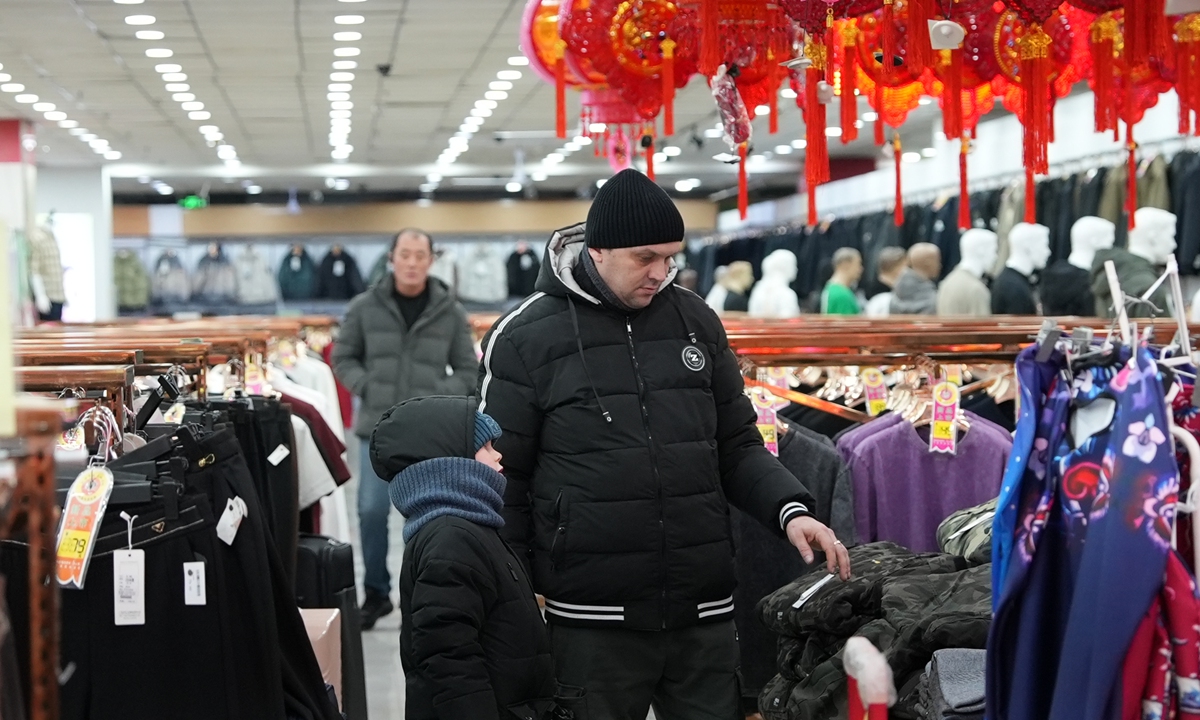
A Russian visitor shops for clothes with his child at a mall in Heihe, northeast China's Heilongjiang Province, on January 17, 2026. Photo: Feng Fan/GT
Thanks to convenient land and water crossings, China has become one of the most popular destinations for tourism and shopping among some Russian residents, they said."During the recent Christmas and New Year holidays, ferry tickets from Russia to China were sold out weeks in advance. People lined up to come to China, hold parties in Heihe and watch New Year fireworks," said Xinyu, a Russian resident living in Heihe, using a Chinese pseudonym. "In the past few weeks, I saw more Russians than Chinese on the streets of Heihe."
The profile of inbound travelers has also diversified beyond short-term tourists. Family members of Russian students studying in China — previously constrained by visa requirements — can now visit more flexibly. Furthermore, more residents of Blagoveshchensk now regard Heihe as a destination not only for consumption and leisure, but also for medical services. Cross-border movement is shifting from occasional visits to everyday life.
Outbound tourism trends have also changed. A travel agency manager surnamed Bao told the Global Times that previously, travel to Russia largely depended on group-based visa-free arrangements, requiring at least five people to form a tour group. This severely limited travel options, often confining trips to fixed itineraries with strict schedules and cumbersome procedures.
"After the visa-free policy, couples or families can travel independently and experience Russia more deeply," Bao said. "It's no longer just about 'visiting museums,' but also experiencing local customs and traditional cuisine. Entry and exit times are no longer strictly limited, allowing travelers to stay longer."
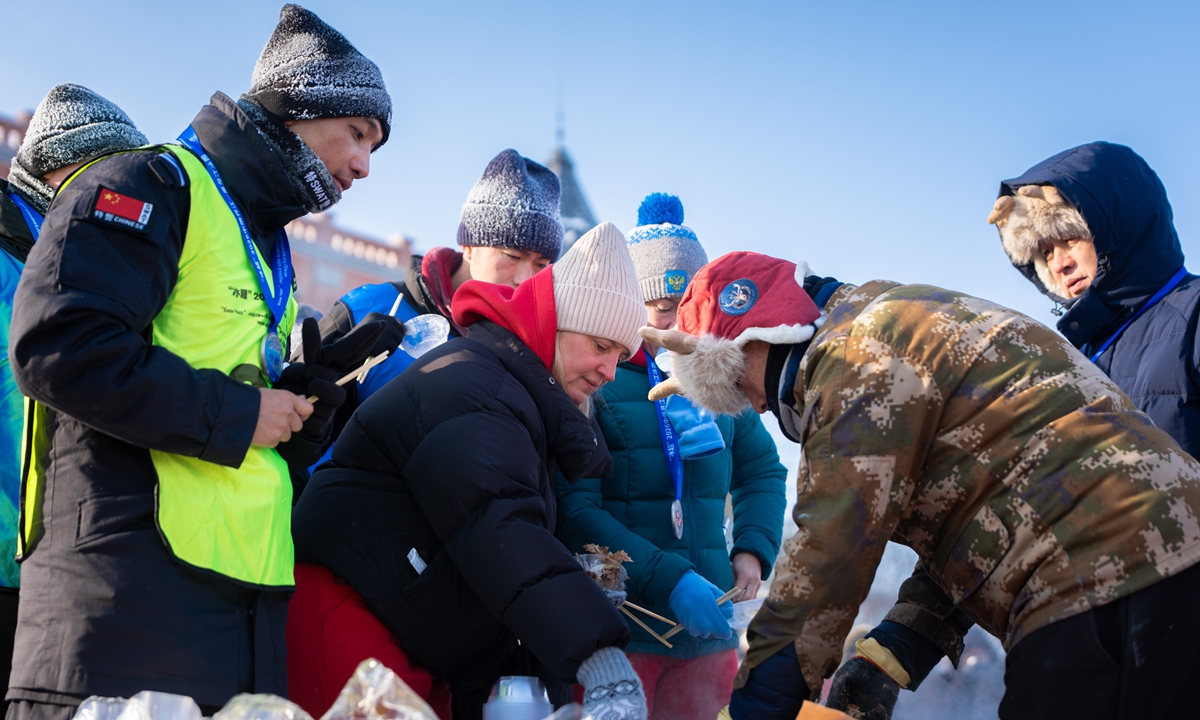
Chinese and Russian runners, spectators enjoy local Chinese cuisines after an ice running event held on January 18, 2026 on the frozen Heilongjiang River. Photo: Courtesy of organizers
TCM experienceA few kilometers away, another form of cross-border interaction is unfolding in a traditional Chinese medicine (TCM) hospital. Russian patients can be seen receiving treatments such as massage, bone-setting and other TCM therapies. The hospital said that several Russian patients are now undergoing long-term physical therapy there, with TCM-based conditioning proving particularly popular.
During a recent cultural event with the theme of experiencing Chinese New Year, Russian visitors also experienced TCM consultations, massage therapy and herbal treatments on site.
Ekaterina, a 43-year-old Russian tourist, told the Global Times that with the visa-free policy in place, more Russians are choosing to come to China for medical treatment. At the event, she experienced traditional diagnostic practices, including pulse diagnosis and massage.
"Without the need for a visa, it's much more convenient for Russians to come to China. Medical treatment is one of the major reasons for making the trip," Ekaterina said. "Medicine here is more accessible than in Russia."
Inside the hospital, signs in Russian are ubiquitous. The hospital has deployed seven Russian interpreters to assist Russian patients with registration and navigation. Most departments now feature bilingual signage, and brochures on medical services are available in both Chinese and Russian.
According to the hospital's president, the number of Russian patients treated there stood at just 780 in 2024 but exceeded 2,000 in 2025 — with most arriving after the visa-free policy took effect. "We expect this number to rise further in 2026," the president told the Global Times.
Data from the Heihe exit and entry border inspection station underscores this trend. Since the implementation of the bilateral visa-free policy, the number of inbound travelers has increased significantly. Daily inbound arrivals previously averaged 500 to 600, however, this number has now doubled, exceeding 1,000, said Dai Chen, deputy captain of the first duty team of the station, according to a release of China's Ministry of Public Security.
During the 2026 New Year holiday period, the average daily number of travelers passing through Heihe's road and waterway ports reached 4,080, an increase of 70 percent compared with the average daily number of inbound and outbound passengers in December, read the release.
Through visiting this border town, the reporter saw that by leveraging its unique strengths, it enables Russian tourists to experience the distinctive allure of China and fills them with a strong sense of fulfillment during their visit to the country. In the meantime, the town itself has also reaped the rewards from this and fostered its own development.
RELATED ARTICLES