Detective Conan’s China agent responds to backlash over collaboration with boycotted Japanese manga
By and Xu Yelu Published: Feb 01, 2026 04:06 PM

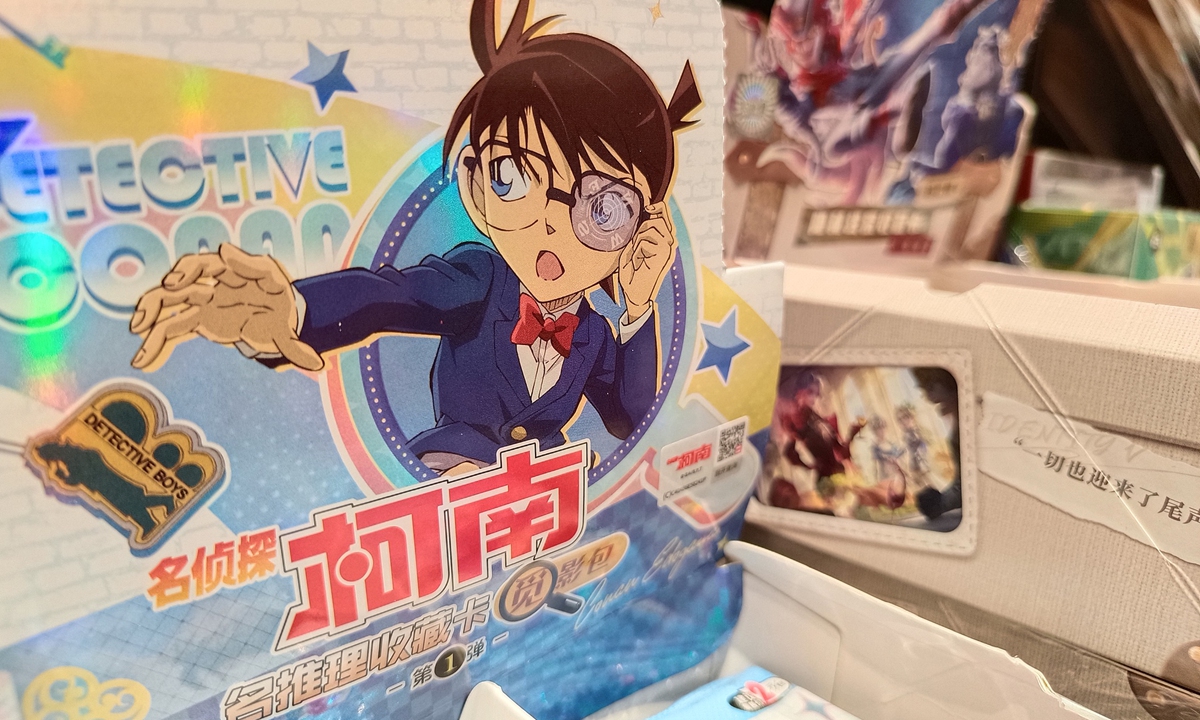
Collection cards of Japanese anime Detective Conan Photo:VCG
The response came shortly after the collaboration of commemorative visual between Detective Conan, which celebrated its 30th anniversary this year, and My Hero Academia, whose TV anime will mark its 10th anniversary in April, sparked backlash among Chinese netizens, as My Hero Academia previously was subject to boycott from Chinese netizens and then removed from video platforms for insulting the feelings of Chinese people, according to Japanese entertainment website mantan-web.
Created by Japanese manga artist Kohei Horikoshi, My Hero Academia is a series serialized in the Japanese manga magazine Shonen Jump. Its anime and manga adaptations once had a large fans base in China. In 2020, the work was boycotted by Chinese netizens and subsequently removed from video platforms — including Tencent Video and Bilibili — due to content widely viewed as insulting to Chinese people, according to previous media reports.
In Chapter 259 of the series, a villain character named "Maruta Shiga" conducts human experiments. The character's name "Maruta" is a derogatory term used by the Imperial Japanese Army's Unit 731 during Japan's invasion of China to refer to victims of human experimentation, while "Shiga" is derived from the Japanese bacteriologist Kiyoshi Shiga, after whom "Shigella bacteria" is named, China News Week reported.
Unit 731 was the codename for a covert Japanese military medical unit from 1932 to 1945, responsible for bacterial warfare and human experiments that killed over 3,000 Chinese, Korean, Soviet and Western prisoners of war in brutal tests.
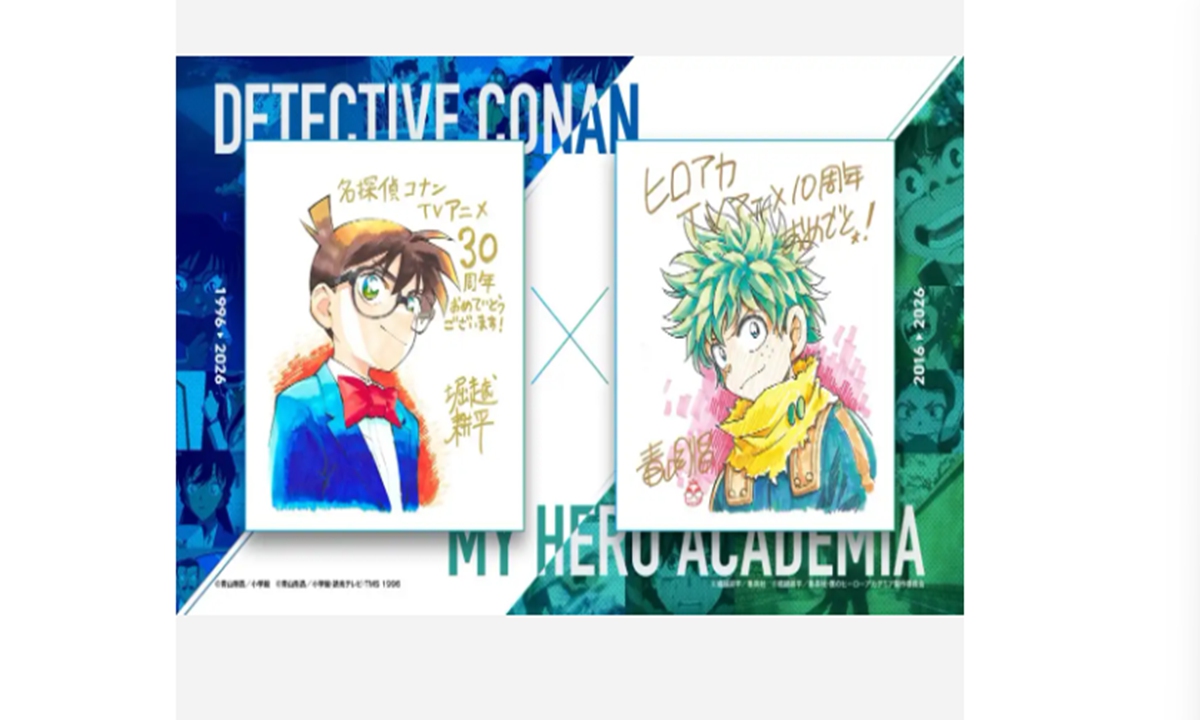
The controversial collaboration of commemorative visual between Detective Conan and My Hero Academia Photo: screenshot of Japanese entertainment website mantan-web
The collaborative visual has sparked widespread attention on Chinese social media platform Weibo. On Saturday, a netizen reposted the collaboration announcement with the comment, "Isn't it better to just focus on making money? Why do you have to be so reckless?" The post drew hundreds of comments, with many netizens expressing disappointment that Detective Conan's collaboration with My Hero Academia — a series already known for including content that insults Chinese people.
In response to the backlash, the Shanghai Character License Administrative Company - the exclusive copyright agent in the Chinese mainland - released a statement on Weibo, saying that Detective Conan marks the 30th anniversary of its anime broadcast this year. To commemorate this milestone, the Japanese copyright holder organized a collaboration campaign involving multiple Japanese anime titles.
"The intention was solely to foster friendly interaction between the works and carries no stance or implication. The Japanese copyright holder has consistently supported friendly cultural exchanges between China and Japan and hopes to convey positive values through its works," the statement read.
The Chinese agent said it "will continue to work alongside the Japanese copyright holder in steadfastly supporting peace, respecting and cherishing Chinese culture," adding that "we will continue to strengthen communication with the copyright holder to ensure that the content conveyed better aligns with the expectations of Chinese fans and broader social consensus. We appreciate everyone's supervision and support."
Meanwhile, the statement failed to allay the anger of Chinese netizens, but instead triggered even more discontent, with many netizens criticizing the agent for lacking sincerity and evading the core issue.
"What we want is an apology and correct attitude. What is this statement supposed to be?" a Weibo user wrote. "The official response evaded the key issues and failed to address them directly, showing a lack of sincerity," another netizen said.
A netizen interpreted the underlying subtext of the company's statement as: "We did collaborate, and we don't think we did anything wrong."
With a population of 1.4 billion, China is a crucial market for Japanese cultural products — including films and anime. Whether they are Japanese IP holders, publishers, or cultural dissemination agencies, the foremost requirement is to respect history — that is, to acknowledge Japan's invasion of China and demonstrate a sincere attitude of reflection, Da Zhigang, director of the Institute of Northeast Asian Studies at the Heilongjiang Provincial Academy of Social Sciences, told the Global Times.
In a recent case, Pokémon, a Japanese media franchise, has been mired in controversy after netizens discovered its plan to hold a card game event at the notorious Yasukuni Shrine, a symbol of Japanese militarism and wars of aggression.
The move has triggered criticism from Chinese netizens, with many saying that Japanese companies are profiting from China while undermining China's interests should not be tolerated.
Pokémon issued an apology on Friday in both Japanese and Chinese, saying that the company will fundamentally revise and strengthen its review and verification processes for event information to prevent similar issues from recurring.
The reactions of Chinese netizens reflect the lingering estrangement between the peoples of the two countries stemming from differing reflections on war, Da said. Some actions may be described by organizers as "unintentional," but whether intentional or not, once they cross the emotional red line of the Chinese people, they may face market repercussions, Da emphasized.
RELATED ARTICLES