Rifts over pricing, trade cast doubt on prospects as around 20 economies, including G7 states, push critical minerals alliance
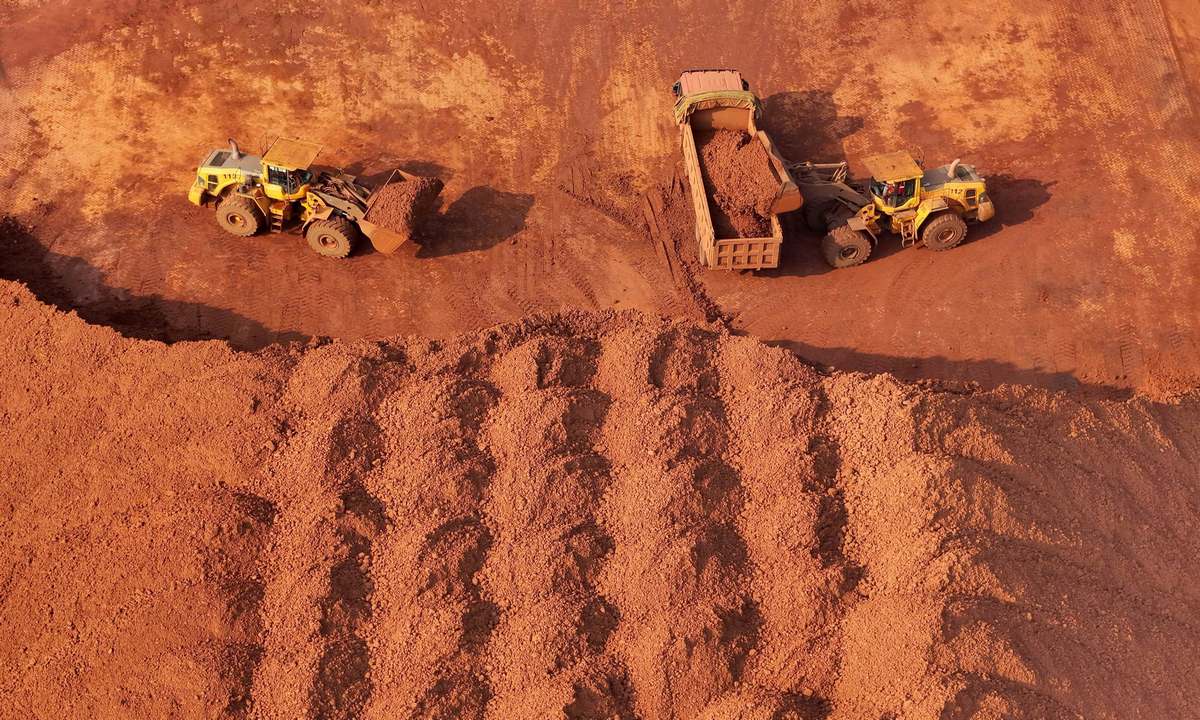
Rare earth resources Photo: VCG
Western economies are accelerating talks over a critical minerals alliance, but rifts over funding mechanisms, price guarantees and trade commitments are already raising questions about its viability. Analysts warned that cooperation with China would be a more practical approach to tackle supply chain challenges than building politicized industrial blocs.
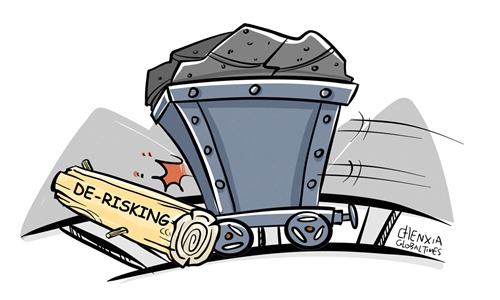
Ministers from the US, EU, the UK, Japan, Australia and New Zealand will meet in Washington this week to discuss a strategic alliance over critical minerals, The Guardian reported on Sunday. The move has been described as a step to repair transatlantic ties fractured by a year of conflict with the US and pave the way for other alliances aimed at "de-risking" from China, including a proposed steel-focused bloc.
As the second summit on the issue within a month, the meeting will involve about 20 countries, including G7 members - the UK, the US, Japan, France, Germany, Italy and Canada - as well as India, South Korea, Mexico, Australia, New Zealand and possibly Argentina, according to the report.
Western economies' push to form so-called industrial alliances, driven by strategic anxiety, is hardly surprising, He Weiwen, a senior fellow at the Center for China and Globalization, told the Global Times on Monday. He said that the real issue lies in the feasibility and effectiveness of such arrangements, noting that politically driven initiatives are unlikely to replace China as a major supplier.
Critical minerals have featured repeatedly in discussions among Western economies in recent years, including a rare-earth deal struck between the US and Australia last October and the establishment of a G7 "critical minerals production alliance." However, tangible outcomes from these initiatives have remained limited.
"These arrangements are unlikely to fundamentally reshape the global rare-earth supply chain in the short term, as the core challenge is not raw material shortages but a lack of high-standard refining capacity," He Weiwen said, adding that given technological, environmental and cost constraints, in the foreseeable short or medium term, it will be difficult for them to build an industrial system comparable to China's.
Internal debates, particularly over minimum price guarantees, have also emerged as a key test of the proposed alliance. According to The Guardian, one focus of the upcoming summit will be calls for the US to agree to a minimum price mechanism for critical minerals and rare earths.
However, Washington has recently stepped back from the idea, a move seen as a tacit acknowledgment of insufficient Congressional funding and the complexity of setting market-based prices, Reuters reported last week, citing multiple sources.
Two senior US administration officials told US minerals executives at a closed-door meeting in January that their projects would need to demonstrate financial viability without government-backed price support, according to the Reuters report.
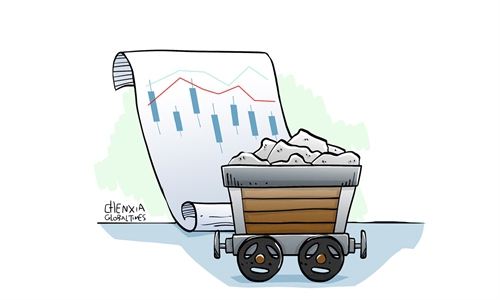
Washington's retreat from the proposal has sent related shares downward in Australia, which has been positioning itself as a critical minerals alternative to China with a decision to stockpile elements such as antimony and gallium, according to the Guardian report.
Disagreements over minimum price guarantees will directly constrain the alliance's progress, He Weiwen said, noting that underlying structural contradictions make it difficult for the US, driven by its own interests, to align with its allies.
"Without price guarantees, rare-earth projects in these countries struggle to form sustainable business models under high-cost conditions," the expert said. "But if minimum prices are introduced, the US would have to step in during downturns, assuming financial and market risks, which makes such arrangements unattractive to Washington."
For the EU, the minerals talks are unfolding amid ongoing disputes with the US over steel-related tariffs. According to The Guardian, the bloc is expected to use the summit to press Washington to roll back its global steel derivative tariffs, which would impose punitive levies on a wide range of products that contain steel.
Trade-level disputes are increasingly undermining trust and policy coherence within the proposed critical minerals and rare-earth alliance, calling into question its prospects for sustained long-term coordination, according to analysts.
Critical mineral and rare-earth supply chains are highly internationalized, and China has never imposed a blanket ban on rare-earth exports, He Weiwen said, adding "The rational and viable choice for Western economies remains cooperation with China, rather than attempting to exclude China and rebuild supply chains from scratch."
In April last year, China announced export controls on seven categories of medium- and heavy rare-earth-related items, citing the need to better safeguard national security and interests and fulfill non-proliferation and other international obligations. Since then, Chinese authorities have repeatedly stressed the use of facilitation measures, including general licenses, to promote compliant trade in dual-use items and safeguard the stability of global supply and industrial chains.
On December 18, China's Ministry of Commerce spokesperson He Yadong said that some Chinese exporters had preliminarily met the basic requirements for applying for general licenses, adding that a number of applications submitted by Chinese exporters had already been approved.
RELATED ARTICLES