US President reportedly to launch $12 billion critical mineral stockpile; Chinese expert says reconstructing supply chain can hardly be achieved through simple or superficial measures
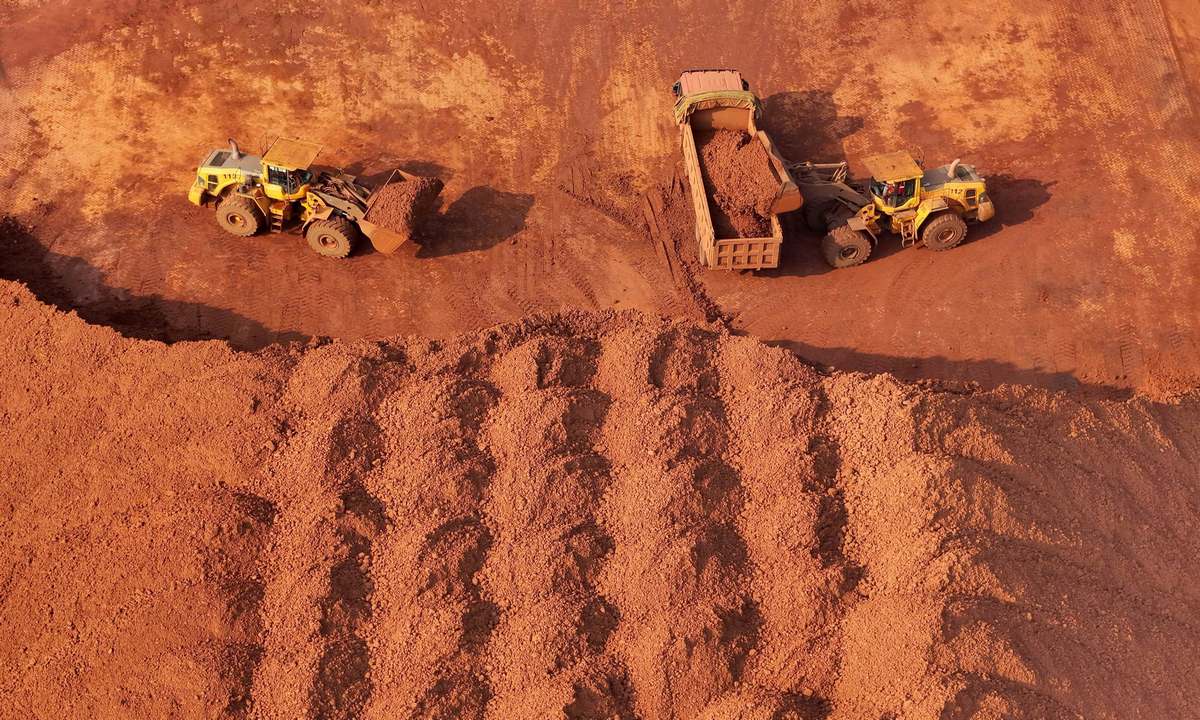
Rare earth resources Photo: VCG
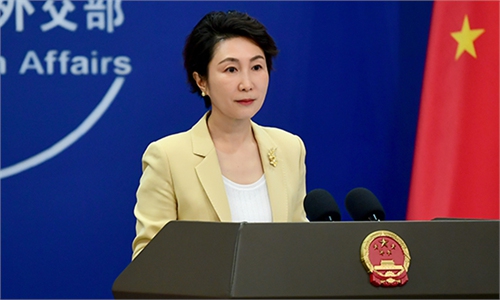
China's position has not changed on keeping the global industrial and supply chains of critical minerals safe and stable, Lin Jian, a spokesperson of China's Foreign Ministry, told a press conference on Tuesday, noting that all parties have the responsibility to play a constructive role in this regard.
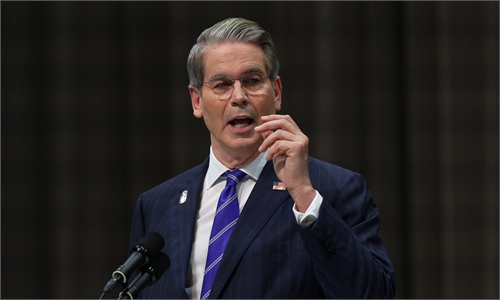
Reuters reported that US President Donald Trump announced plans on Monday to launch a strategic stockpile of critical minerals backed by $10 billion in seed funding from the US Export-Import Bank. Lin made the remarks in response to a request for comment on the fact that the US move comes at a time when Washington is seeking to reduce its dependence on China for rare earths and other resources.
A Chinese expert said that the US move is unlikely to achieve its goals in the short term, as the real challenges - acquiring advanced technology and scaling up production capacity - cannot be resolved through simple or straightforward actions.
According to Bloomberg, the venture, dubbed Project Vault, is set to marry $1.67 billion in private capital with a $10 billion loan from the US Export-Import Bank to procure and store the minerals for automakers, technology firms and other manufacturers.
The initiative would be the first such stockpile for the US private sector. The stockpile is expected to include both rare earths and critical minerals as well as other strategically important elements that are subject to price volatility, according to the report.
"The US has long harbored concerns regarding the security of supply for critical minerals. On one hand, it seeks to maintain stable imports of these essential critical minerals from China; on the other hand, it is actively pursuing diversification and independence for its supply chain.To this end, the US has allocated funds to increase investment in storing critical minerals, with the aim of ensuring the stability of its critical mineral supply chain," Zhou Mi, a senior researcher at the Chinese Academy of International Trade and Economic Cooperation, told the Global Times on Tuesday.
Independent rare-earth analyst Wu Chenhui told the Global Times on Tuesday that this would represent a new attempt for the US, but it's also doubtful whether it can truly achieve its goal. "The project is essentially about stockpiling rather than production. It functions more as a short-term buffer than a fundamental solution," Wu said.
Under the arrangement, companies that make an initial commitment to purchase materials at a specified inventory price later and pay up-front fees will be able to present Project Vault with a list of preferred materials they need, Bloomberg reported.
The project will seek to procure and store the materials, with the manufacturers charged a carrying cost for the expenses associated with interest on the loan and holding the elements. A key element of the venture's design is that manufacturers that commit to buy a specified amount of materials at a set price also commit to repurchase the same amount at that same cost in the future. The administration sees that acting as a stabilizing mechanism, helping suppress volatility, said the report.
Lü Xiang, a research fellow at the Chinese Academy of Social Sciences, told the Global Times on Tuesday that unlike strategic oil reserves, which benefit from numerous and diverse procurement sources, rare earths, particularly heavy rare earths, have relatively concentrated and limited supply origins.
Current production levels in the US and its allies are far from sufficient to meet the required demand, so procurement for this plan is likely to present a significant challenge, the expert said.
Zhou noted that the supply of critical minerals is more fundamentally constrained by whether companies have adequate real-world production capacity and execution capability. "This structural challenge remains largely unaddressed in the US today," the expert said.
Current US efforts remain at the preliminary stage of "throwing money at exploration and mining," yet funding and prospecting are merely the easiest and most straightforward components of rebuilding the supply chain. At this stage, the real challenges in reconstructing America's rare-earth supply chain lie in acquiring advanced technology and scaling up production capacity, two fundamental issues that cannot be resolved through simple or superficial measures, Wu noted.
John Helveston from the Department of Engineering Management and Systems Engineering at George Washington University told the South China Morning Post that a strategic reserve would do "little to combat China's dominance on the actual supply chain."
Helveston said that the time needed to develop an alternative supply is on the order of years if not decades, the newspaper reported.
As some details about the project's structure were not immediately known, its actual operational effectiveness and any potential impact on China will require further observation, Lü said.
Over the long term, China's advantages in resource reserves and processing capabilities mean it will not be readily replaced or overtaken, Zhou said.
The US has taken frequent measures in the field of rare earths and other critical minerals. According to Bloomberg, the US administration has already signed cooperation agreements with Australia, Japan, Malaysia and other countries on the issue. It will press even more nations to pursue such pacts during a summit of almost 20 countries set to take place in Washington on Wednesday (US time).
China has consistently stressed that export approvals for rare earths will be granted to qualified applications in accordance with regulations, and it remains dedicated to ensuring the stability and unimpeded flow of global supply chains. Washington's push to build exclusive groupings in the rare-earth domain to eliminate its so-called dependence on China violates market rules and interferes with the normal functioning of global industrial and supply chains, Lü said.
RELATED ARTICLES