Illustration: Xia Qing/GT
Editor's Note:In late January, the "Global Dialogue - China-EU Resonance" media and think tank forum, hosted by the Global Times (GT), was held in Brussels, Belgium. Ondrej Dostal (Dostal), a Czech member of the European Parliament, attended the forum and advocated for deeper China-EU cooperation. In an interview with GT reporter Wang Cong on the sidelines of the forum, Dostal shared his views on the current state of China-EU ties amid a volatile transatlantic relationship.
GT: From your professional perspective as a member of the European Parliament, how would you assess the current state of China-EU relations?
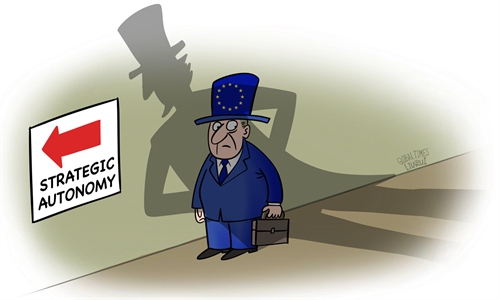
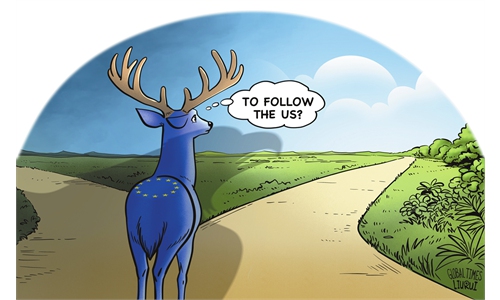
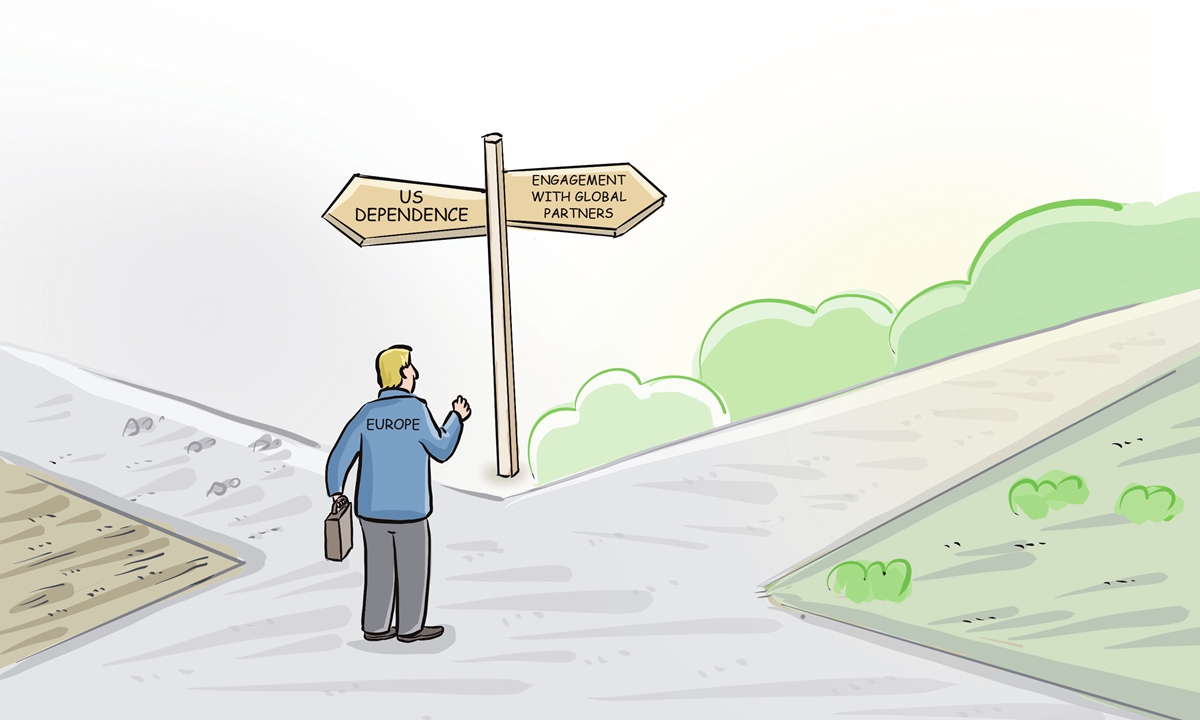
Dostal: China-EU relations can be understood within the crisis facing Europe itself. Europe is currently at a historical juncture - a crossroads. For decades, the EU has been deeply intertwined with the transatlantic system and oriented toward the US. That orientation is now being abruptly challenged. With US President Donald Trump's return to power, developments that once unfolded slowly are now happening at a breakneck speed. The EU has suddenly found itself in the same position as many other countries affected by the US hegemony. The reliability of the transatlantic security architecture is increasingly in doubt.
The deeper cause of this situation lies in structural economic conditions. The US capitalist system is approaching the limits of its productivity - wealth is concentrated in very few hands, while overall growth is declining relative to the rest of the world. The US can no longer sustain its global hegemony and is attempting to consolidate power by retreating from some regions and focusing on its core interests in the Americas and the Middle East.
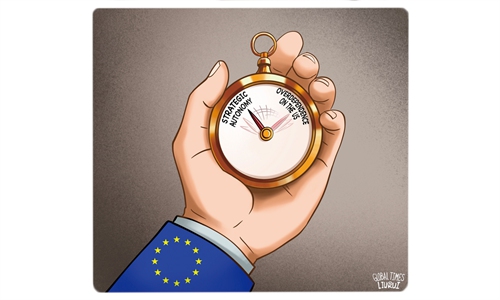
This creates a critical moment for Europe. Trump has tested which partners will resist and which will concede. China resisted firmly and did not lose. Europe, by contrast, acted as a belly-up negotiator, which has left it vulnerable and, in my view, abused. Despite its population of 450 million and large economy, the EU lacks the capacity to act as an autonomous power. It remains militarily dependent on the US, has weakened its energy autonomy by cutting off Russian supplies, and has dismantled parts of its industrial and energy base.
In this context, Europe faces a clear choice: either accept this dependency and its costs, or seek to rebalance its position by strengthening relations with other global partners. This creates an opening for renewed engagement with countries such as China.
GT: The US new national security strategy warns that Europe faces a "civilizational erasure," suggesting that it might be "unrecognizable" in the future. As a member of the European Parliament, do you agree with this assessment?
Dostal: I do not fully agree with it. The EU is not a single state but a highly sophisticated international organization. While the recent leadership in Brussels has not been proficient, this should not be mistaken for civilizational decline. Europe possesses deep historical roots, strong institutions, educated societies and a substantial industrial base. From my perspective - and likely that of citizens in Germany, Austria or the Czech Republic - European social and cultural cohesion remains strong, in many respects stronger than that of the US.
GT: European media coverage often highlights negativity and rivalry between China and the EU. In your view, where should China-EU relations be heading? And how can cooperation be forged in such a challenging climate?
Dostal: The EU today is largely shaped by its major member states, especially Germany and France. Changes in Berlin or Paris inevitably influence Brussels. Therefore, the key question is how Germany and France choose to act.
Europe now faces two possible paths. One option is further separation - not only from China but from the wider Eurasian region. This would divide the world into isolated markets, and as a European, I am not optimistic that this path would make us stronger.
The alternative is to move beyond the mind-set of strategic rivalry and security competition and instead focus on cooperation. Europe should identify the sectors where it remains productive and technologically advanced and connect them to major global markets, including China, other Asian countries, and countries across the African continent. Trilateral cooperation among Europe, China and other developing countries is just as important as bilateral China-EU ties.
There are many areas where Europe and China can jointly participate in global supply chains, creating benefits for the broader world. The Chinese market itself is also highly attractive for European industries. At the same time, Europe needs Chinese investment in areas where China is more technologically advanced, such as EVs and batteries. The example of BYD's new factory in Hungary shows how Chinese and European competencies can merge into successful products.
GT: Certain European politicians hesitate to engage in communication with their Chinese counterparts for fear of being seen as "too close" to China. Are you afraid of being labeled "pro-China" or facing political accusations?
Dostal: I am not afraid. I am not doing anything wrong or illegal. I am not a mainstream politician; in fact, I spent 20 years working as a lawyer in healthcare systems and bioethics. That experience taught me the gap between public perceptions and hard realities. If policymakers truly want to serve the public, they must start from reality.
Two or three decades ago, I would have said Europe's future lay unquestionably with the US and the Western capitalist model that prevailed after the Cold War. But after returning to China in 2024 and 2025, I was struck by the scale of its progress. I have seriously studied how the Chinese system evaluates economic problems, and it is clear that it has generated highly productive forces.
Europe cannot respond to this reality through hostility, rhetoric or confrontation. Instead, we must examine what works in the Chinese model and consider what can be adapted to Europe's own culture and institutions. I would be far more concerned if fear prevented me from acknowledging reality and resulted in policies that harm the voters I represent.
GT: Your pragmatic approach toward China seems closely aligned with how China prefers to engage. Is your perspective a minority view within the EU system, or do you see more politicians and decision-makers gradually adopting this approach? Are you optimistic about this shift?
Dostal: I am optimistic because I am realistic. I am not alone in the European Parliament, nor in the business community. Responsible business leaders and managers must work with facts, not wishful thinking. People will increasingly see that growth, prosperity and future opportunities lie in China and in regions beyond the transatlantic space.
But empires have inertia. Economic models that worked well for decades do not disappear easily; when they begin to lose effectiveness, they often struggle to preserve themselves. In our part of the world, much of the media is privately owned, and ownership interests inevitably shape narratives and, in turn, electoral outcomes.
GT: There are still significant political or perceptual obstacles that hinder China-EU cooperation. How should these obstacles be addressed, and how can a more constructive and inclusive dialogue be built between the two sides?
Dostal: What matters most is identifying shared goals, such as the well-being of society as a whole. Europe must also overcome misconceptions - especially the false idea that cooperating with China means abandoning European values. Better understanding China's language, culture and economic system is also essential.
RELATED ARTICLES