Illustration: Liu Rui/GT
Editor's Note:
At the beginning of 2026, a clear "looking East" trend has emerged on the international diplomatic stage. Several Western countries, including Ireland, Canada, Finland, and the UK, have successively visited China. This is not merely a political spectacle, but a move driven by deeper international and strategic considerations. At the same time, Washington's shift in its European policy has placed transatlantic relations under the most severe test since the end of World War II. Against this backdrop, the Global Times has launched a commentary series, "The Widening Transatlantic Rift," inviting scholars and experts at home and abroad to share their views.
The classics of Greece hold life lessons that resonate throughout history, like the waves that have come and gone since the days when they kissed the warships in the three harbors of Piraeus. I imagine the poet Euripides, one morning, writing the verses of the satirical drama The Cyclops, in which Polyphemus mocks the Achaeans and prepares to devour them, defying the laws of the gods. In my opinion, this reflects the same untamed nature of the US violating international law.
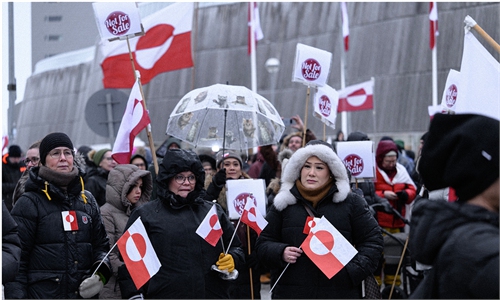
The question isn't whether the US will take Greenland, but how it will do so. We either fight to the death, paying a heavy price, or humiliatingly sign territorial exploitation agreements, sacrificing our dignity for the sake of interest. This so-called European ally, a superpower, behaves in a truly chilling manner.
What is the role of NATO and the European Union in this matter?
Regarding a potential NATO implosion in the event of an invasion, it's worth remembering that the US is its main architect and financial backer, so it could effectively end the partnership. It would be legitimate for NATO to raise its voice in defense of Denmark's territorial integrity, but it has never been known for its egalitarian democratic values; everyone in the group knows who's in charge.
European Commission President Ursula von der Leyen refused to confirm that Greenland is covered by Article 42.7, the EU's mutual assistance clause. She stated that Greenlanders can count on Brussels "politically, economically and financially." As you may have noticed, she did not use the word "militarily." These statements highlight the EU's current geopolitical position, as it remains neutral in the face of a direct confrontation with a superpower.
As a Southern European, I find this posture deeply unsettling, yet I can hardly fault it - we simply lack the substantive leverage to sustain a hardline stance. Coupled with the EU's persistently tense relations with Russia, this has only reinforced my belief that in recent years Europe has been drawn into confrontation with Russia at the deliberate instigation of the US, whose aim is to pit the two sides against each other and let them bleed each other dry.
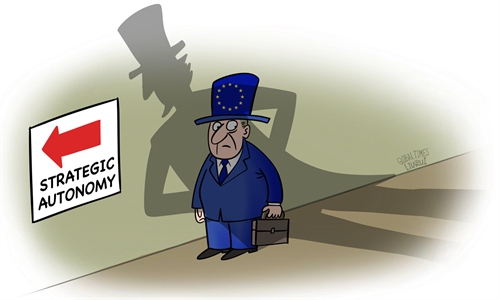
Moreover, what exactly does so-called "political support" mean? Many Europeans have long grown weary of those grandiose condemnations and no longer take them seriously. Our generation witnessed the disintegration of the Balkans at the end of the 20th century, an experience that has left me perpetually skeptical of the EU's capabilities. Although EU Defense Commissioner Andrius Kubilius recently emphasized in Sweden that bloc needs to enhance its military autonomy from the US, replacing the 100,000 US troops stationed in Europe would require logistical resources that the EU can hardly muster.
As for economic and financial support, witnessing Germany's energy crisis this winter makes it difficult to imagine the EU rallying substantial unity for Greenland. In early January, Berlin experienced a five-day blackout in subzero temperatures, demonstrating that Europe's ability to cope with adversity is far more fragile than expected. Can such an EU realistically counter the US presence in Greenland? Many Europeans are deeply skeptical, just as the US confidently claims that European military deployments in Greenland "would not affect" the US goal.
Although Greenland's mineral resources are undeniable, their profitability lies more in the future than in the short term, which contrasts sharply with the US haste in this matter. Yet the commercial value of the Arctic shipping route is rapidly emerging. In October of 2025, a Chinese container ship arrived at the port of Felixstowe in the UK via the Arctic-China Route, in just 20 days. This brand-new commercial route greatly saves fuel costs and transit time. But this obviously does not sit well with the US - they are even willing to sacrifice NATO to keep control over the Arctic shipping lanes in their own hands.
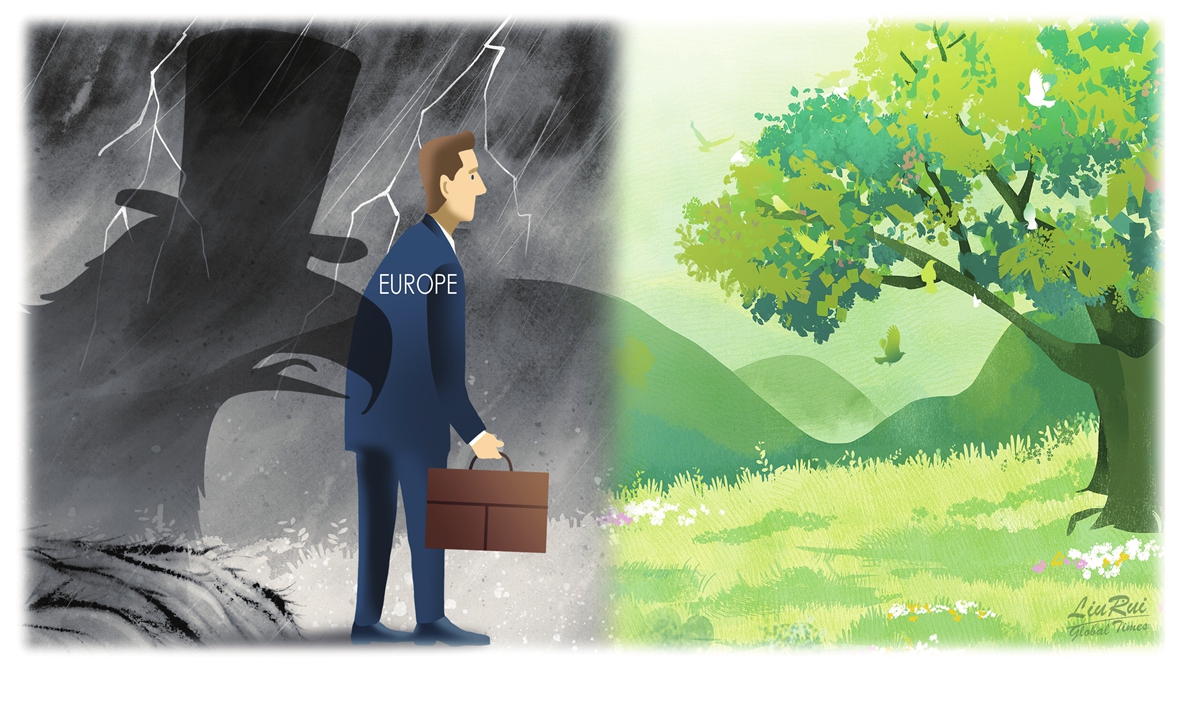
Many Europeans are now reflecting on whether it was wise to place our trust in such an ally - one that regards us as "servants" who can be discarded at any time. In my opinion, the EU should assert itself through the free trade agreement with Mercosur, signed on January 17, in Paraguay.
It must be admitted that Europe's military capabilities have fallen behind, resembling more the legacy of the last century. Militarily, Europe cannot contend with the US; diplomatically, our so-called "moral superiority" is like turning on the heater in the middle of summer - utterly useless. At present, the only leverage we have left is to make use of the EU's advantage as a massive market.
A Chinese diplomat once told me, "China faces tremendous challenges, but also possesses concrete solutions." Applying this thinking to the EU's current predicament, my advice is clear: strengthen ties with China - a partner that has consistently demonstrated through practical actions its willingness to share the future of the world with all humanity.
The author is a Spanish writer. opinion@globaltimes.com.cn
RELATED ARTICLES