Illustration: Liu Rui/GT
As the Spring Festival approaches, robot vacuum cleaners can be found on the shopping lists of some Chinese households. Pre-holiday deep cleaning has long been part of family life, but in some cases the task is now shared with machines rather than carried out entirely by hand. The change is easy to miss and difficult to quantify. Yet it points to a broader reorganization of how everyday household tasks are managed, as incremental advances in consumer technology enable machines to take on tasks previously done by hand, helping to create a market centered on automated convenience.The trend is reflected in market data at home and abroad. According to an IDC report, China's smart robot vacuum market maintained its momentum in the first three quarters of 2025, with cumulative shipments reaching 4.63 million units, up 27.2 percent year-on-year. Overseas demand has also been evident. A report reposted by Shenzhen Fabu noted that in the first 11 months of 2025, Shenzhen's exports of vacuum cleaners, including robotic models, reached 11.12 billion yuan ($1.6 billion), up 71.8 percent year-on-year. Taken together, these figures point to a market that is expanding steadily.
Several factors have contributed to the market's development, with technological progress being an important factor. Early models were relatively simple, but newer products offer features such as high-temperature mop cleaning and intelligent mop attachment and removal, making them more convenient to use. These improvements have encouraged households to increasingly adopt robotic vacuums for household tasks.
As technology continues to advance, tasks that once occupied people's leisure time are increasingly being handled by machines, contributing to a consumer market with growth potential. This market extends beyond robotic vacuums to other areas of household services. With ongoing technological and product developments from Chinese companies, service robots are beginning to offer consumers more intelligent and customized solutions for household tasks traditionally performed by hand.
The use of household service robots is expected to extend into a variety of areas, including eldercare, children's education, and smart home services, with comprehensive functional and contextual upgrades. In each subcategory, two dynamics are at play. First, ongoing technological advances make products more convenient and services more effective. Second, as technologies improve, consumer demand grows, gradually expanding the market for these offerings. These dynamics are mutually reinforcing, each supporting the other in driving market development.
On the production side, new technologies and products continue to emerge. According to media reports, one such device is designed to track infant digestion, equipped with humidity and highly sensitive odor sensors, serving as an auxiliary tool for childcare in some households.
Many Chinese cities are supporting the development of emerging industries. In February 2025, Beijing unveiled a robot industry cultivation plan, setting out priorities that include products designed for emotional companionship, health monitoring, anomaly detection, assisted mobility, and smart household services.
At a press conference held on January 13, 2026, an official from the Ministry of Industry and Information Technology said that the ministry would focus on the needs of the silver economy, aiming to "increase varieties and improve quality," while stepping up research and development of eldercare robots to address seniors' daily life challenges.
On the consumption side, the market for these products is evolving rapidly, creating new opportunities. According to a CCTV News report in December, a senior care facility in Shenzhen is equipped with more than 100 eldercare robots of various types that perform multiple functions. Lower-limb exoskeleton robots help residents stand gradually by securing their legs and supporting them with motorized seats.
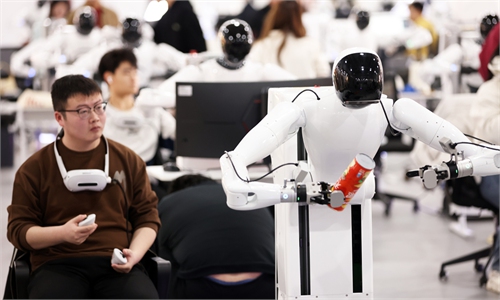
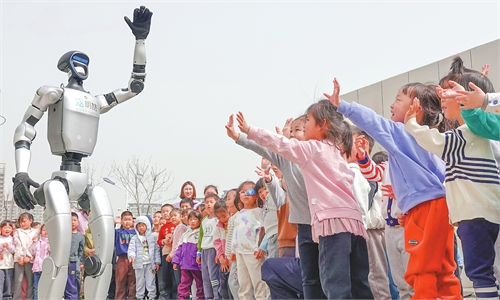
Chinese robots are increasingly versatile: some can dance and perform tai chi. Robotic vacuums represent only a small segment of the wider industry. As China continues to develop consumer-oriented robots for diverse life scenarios - including home care, elderly assistance, and multifunctional household services - these products are expected to see broader adoption in consumer markets.
Competitive pricing, advanced functionality, and integration within broader product ecosystems have made Chinese robots increasingly competitive internationally, boosting exports while supporting consumer markets. By providing versatile and reliable products, manufacturers are creating new opportunities across household and care applications.
The growth of robotic vacuum consumption is a microcosm of this trend. It shows how Chinese technology and products are driving both exports and domestic adoption, highlighting the wider potential of service-oriented robots in home care, elderly assistance, and multifunctional household services.
The author is a reporter with the Global Times. bizopinion@globaltimes.com.cn
RELATED ARTICLES